India's push for a domestic EV battery supply chain
India is working to build a self-sufficient battery ecosystem for its growing electric vehicle market, while in Europe, a new factory is ramping up production of utility-scale battery storage systems.
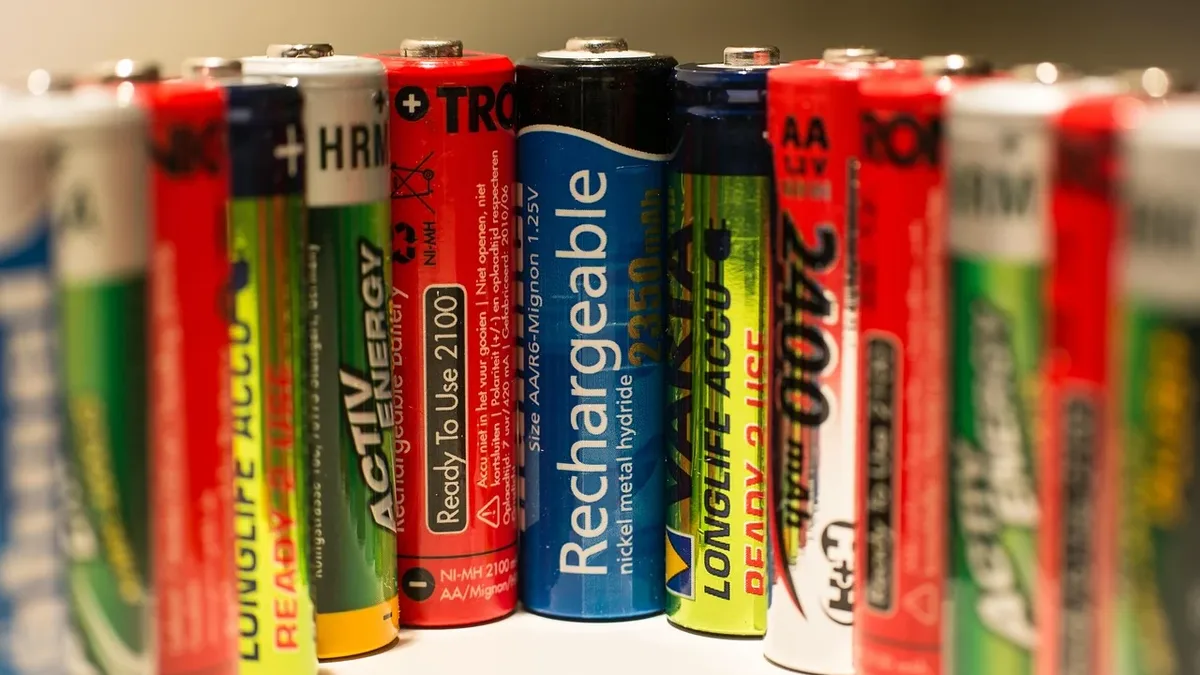
Two separate developments highlight the industrial scale of modern energy storage. India is grappling with the complex challenge of building a complete domestic supply chain for electric vehicle batteries. Meanwhile, a new factory in Turkey has begun manufacturing large containerized battery systems for grid-scale projects.
India's Battery Ecosystem Ambition
India registered 2.55 million electric vehicles in the 2025-26 financial year, representing about 8.5% of all new vehicles. The country's goal of building a self-reliant battery ecosystem now hinges on domestic cell manufacturing, material sourcing, and recycling. For years, the focus was on vehicle assembly and charging infrastructure, but battery production has become central to the conversation.
The government's Production-Linked Incentive scheme for Advanced Chemistry Cell battery storage, with an outlay of 18,100 crore rupees for 50 gigawatt-hours of capacity, was designed to spur this shift. Progress has been slow. A review found only 1.4 GWh, roughly 2.8% of the target, had been commissioned by October 2025, all by Ola Electric. Outside the scheme, Exide commissioned the 6 GWh first phase of its cell plant near Bengaluru in September 2026, starting with lithium iron phosphate cells. Amara Raja and Tata's Agratas are also building plants. Despite this, India's cell output was only around 1 GWh at the end of 2025, and most battery packs assembled in the country still use imported cells.
Material sourcing presents another hurdle. India imported over 3 billion U.S. dollars worth of lithium-ion batteries in FY2025, with China supplying about three-quarters. The country has little ready access to lithium, cobalt, and nickel. This is one reason manufacturers are leaning toward LFP chemistry, which uses no nickel or cobalt and is cheaper. BloombergNEF's 2025 survey put average LFP pack prices at 81 U.S. dollars per kilowatt-hour, compared to 128 dollars for NMC packs. The National Critical Mineral Mission, approved in January 2025 with a government outlay of 16,300 crore rupees, aims to support exploration and domestic processing.
The carbon footprint of battery manufacturing is also a concern, given coal produced about 70% of India's electricity in 2025. Captive or open-access green power for cell plants is seen as a direct way to address this. Recycling forms the final pillar of the strategy. Under the Battery Waste Management Rules of 2022, producers must ensure 90% material recovery from EV batteries from FY2026-27. New EV batteries must contain at least 5% domestically recycled material from FY2027-28, rising to 20% by FY2030-31. In September 2025, the Union Cabinet approved a 1,500 crore rupee incentive scheme to build recycling capacity.
Maxxen's European BESS Factory
Maxxen Energy has opened a 20,000-square-meter containerized battery manufacturing facility in Aydın, Turkey, which began operations in 2026. The factory, a 35 million U.S. dollar investment, is designed to supply utility-scale battery energy storage system projects across Europe and the Middle East. The Swiss-headquartered company is a wholly-owned subsidiary of the Turkish renewable energy specialist Kontek Energy.
The plant has a nameplate annual production capacity of 5 gigawatt-hours and is currently operating at a utilization of 1.5 GWh per year as it continues to ramp up. From January to September 2026, the company sold 664 megawatt-hours of storage capacity across 21 global projects. Maxxen's main product is a 5 MWh DC Box container, with an optional MV Power Station offering power outputs of 2.5 MW, 5.0 MW, or 10 MW. The facility is TÜV Accredited, ISO 27001 certified, and LEED Certified for being 100% self-sustained.
A key strategic element is a supply agreement with Chinese battery cell manufacturer Hithium, which currently provides 314 amp-hour LFP cells for assembly. Approximately 5,000 of these cells are packed into a single DC Box container. Ruben Valiente, Maxxen's Managing Director, indicated the site will transition to using larger 587 Ah cells by the end of 2027. The factory employs a high degree of automation, including KUKA robotic arms for picking and packing cells and modules, but retains on-site staff for visual inspections and key actions.
The assembly process includes a fully automated Cell Pre-Charging & Testing stage. Here, each prismatic LFP cell undergoes open-circuit voltage testing and 100% barcode scanning for traceability. Energy used in the pre-charging process is captured within the site's own storage system, with charging losses compensated by on-site solar generation, contributing to the facility's self-sustained energy criteria. This section of the factory is sealed off as a controlled environment.