Floating Solar
| Country of origin | United Kingdom |
|---|---|
| First created | 2000s |
| Original use | electricity generation |
| Typical water body | reservoir, lake, pond |
| Platform type | buoyant modular |
| Anchoring | mooring lines |
| Capacity range | kilowatt to gigawatt |
| Key benefit | land saving |
Origin and history
Floating solar technology, also known as floating photovoltaic (FPV), originated in the late 20th century. The first documented concept and patents for solar panels on water were filed in the 1990s. Early development was largely driven by research efforts in countries facing land scarcity, such as Japan and Israel. The first commercial-scale installations began to appear in the early 21st century, with significant pilot projects launched in the 2000s. Japan is widely credited with deploying some of the earliest practical floating solar plants due to its limited available flat land. The technology gained broader international traction in the 2010s as costs decreased and the benefits for water-intensive industries became clearer.
What it is for
Floating solar is primarily used to generate electricity from photovoltaic panels mounted on structures that float on bodies of water. Its core function is to produce renewable energy without occupying valuable terrestrial land, making it suitable for land-constrained regions. A key application is the installation of floating arrays on man-made water bodies like irrigation reservoirs, drinking water reservoirs, and quarry lakes. The technology is also deployed on hydroelectric dam reservoirs, where it can complement existing hydro power infrastructure and utilize existing grid connections. It serves industries and utilities seeking to reduce water evaporation from storage ponds while simultaneously generating power. Furthermore, floating solar is implemented on operational water treatment and storage facilities to offset the high energy costs of water management.
Pros and cons
A significant advantage of floating solar is its efficient use of space, allowing for energy generation on otherwise unused water surfaces, which is particularly valuable in densely populated countries. The cooling effect of the water can also improve photovoltaic panel efficiency compared to land-based systems, leading to a higher energy yield. Additionally, the floating arrays reduce algae growth and significantly decrease water evaporation from the reservoirs they cover, conserving a vital resource. However, a genuine drawback is the higher initial capital expenditure due to the specialized floating structures, mooring systems, and more complex electrical wiring, which can deter projects with tight budgets. Corrosion and material degradation from constant exposure to a humid environment present long-term maintenance challenges that are less pronounced in ground-mounted systems. A common mistake is underestimating the impact of extreme weather, such as high winds or fluctuating water levels, on the structural integrity of the installation, leading to costly repairs. Some operators regret choosing standard, non-marine-grade components, which fail prematurely in the demanding aquatic environment.
Who it suits
Floating solar is ideally suited for countries, regions, or industries with high population density and intense competition for available land. It is a practical solution for water-intensive industries, such as water treatment plants and agricultural irrigation districts, that own large reservoirs and seek to offset their operational energy costs. Mining companies with tailings ponds or flooded quarries are also strong candidates, as they can repurpose these disturbed lands for energy production. Utilities managing hydroelectric dams find it complementary, as it allows for hybrid power generation using existing infrastructure. Municipalities responsible for drinking water reservoirs can benefit from both power generation and reduced evaporation. It is less suited for sites with very deep water, highly variable water levels, or recreational primary uses, where infrastructure conflicts and technical challenges increase substantially.
Latest Floating Solar news
Latest reporting
Emulsion buffer layer mitigates screen printing degradation in copper-plated HJT solar cells
Researchers at LONGi Green Energy Technology have developed an emulsion buffer layer that prevents screen mesh contact, limiting efficiency...
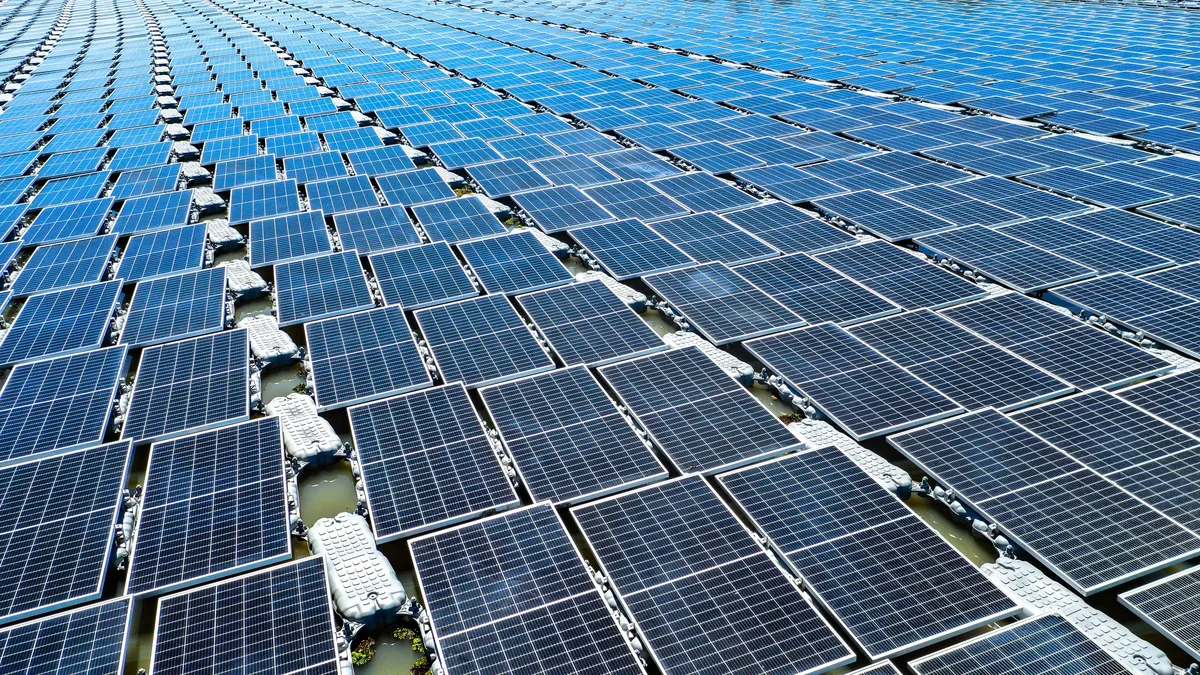
Shinsung E&G launches bifacial solar modules for ground and floating PV
Shinsung E&G has introduced two new series of high-power bifacial TOPCon solar modules, designed for ground-mounted and floating photovoltaic...
UK and Japan launch industrial compact to accelerate floating offshore wind
The UK and Japan have formalised a new Offshore Wind Industrial Compact, aiming to unlock up to £9bn in Japanese investment for 5.9GW of floating...
SolarEdge shuts down Australia and New Zealand operations
SolarEdge is ending direct sales and local operations in Australia and New Zealand, with a final order deadline of 20 November 2026. Support will...
SunDrive and Space Machines Company develop Australian solar arrays for spacecraft
Australian companies SunDrive and Space Machines Company are collaborating to develop lightweight, copper-based solar arrays for spacecraft, aiming...
Corporate PPA market cools as hybrid solar storage deals emerge
Corporate renewable energy procurement in Europe is declining, with PPA volumes down 9.7% in 2026. Buyers are increasingly turning to complex hybrid...