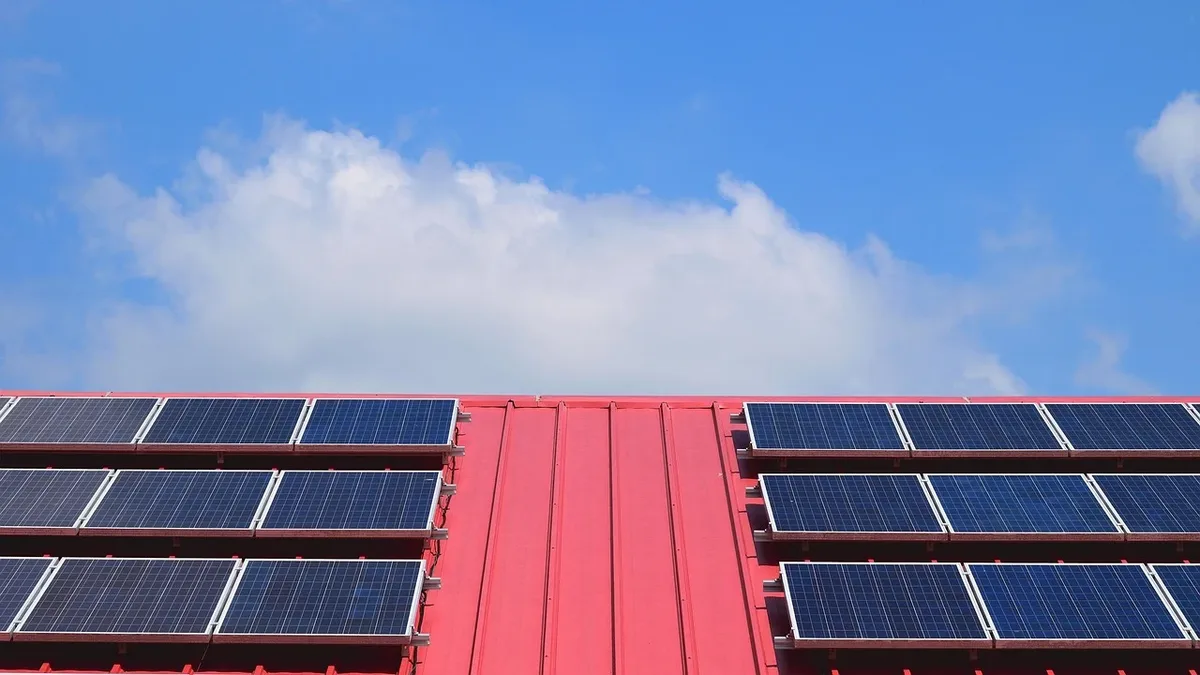
BIPV Façade Study Reveals Grid and Economic Benefits
A global IEA study of 357 BIPV configurations finds vertical façades smooth solar generation curves and improve economic viability by displacing

A major new study has demonstrated that integrating solar panels into building façades, not only roofs, can significantly smooth daily energy generation and improve economic feasibility. The research simulated 357 building-integrated photovoltaic (BIPV) design configurations across 44 cities on six continents using a standardized 1 m² module. It evaluated eight BIPV application types to assess their performance and value.
Generation patterns and grid integration
Vertical east- and west-facing BIPV façades generate power earlier and later in the day than rooftop systems, which peak around solar noon. Their combination with rooftop solar flattens the aggregate daily generation curve considerably. This complementary generation profile improves alignment with grid demand and building load patterns. The research found many high-performing façade configurations were not equator-facing, proving that east and west orientations offer valuable design flexibility for capturing morning and afternoon sun with minimal energy penalty.
Design and performance trade-offs
While vertical façades require more surface area than optimally tilted roofs to generate the same electricity, the study concludes this area penalty stays within reasonable limits for most building projects. Optimizing a system for generation smoothness and complementarity barely increases area requirements compared to systems designed purely for maximum yield. For façade-integrated systems, steep near-vertical tilts around 75 degrees consistently outperformed true vertical installations for capturing irradiance. True vertical installations remained strong performers, especially at higher latitudes.
Economic feasibility and material displacement
The economic performance of BIPV systems depends heavily on the conventional building materials they displace. Double-skin façades and skylights consistently performed best because they replace expensive conventional materials like high-performance glazing. Shading devices lagged economically because the alternatives they replace are comparatively cheap. The study argues that standard financial metrics like Net Present Value (NPV) and Levelized Cost of Electricity (LCOE) undervalue BIPV by treating it only as a power asset and ignoring these avoided material costs.
Value drivers and policy implications
Long-term electricity price growth emerged as the strongest predictor of BIPV project value, stronger than initial generation output or module price. A sensitivity analysis showed outcomes are driven by interactions between variables, not single inputs. Cutting BIPV product prices alone, without addressing financing, installation costs, and local electricity markets, is unlikely to unlock large-scale adoption. The authors position their work as a macro-level screening tool for early investment and policy design. They call for standardized financial models that include avoided material costs and better international data-sharing to overcome fragmented, city-specific datasets. The study does not capture all real-world variables like rear-ventilation or self-shading, framing it as a foundational tool rather than a predictive model for specific projects.