Hysata launches AI electrolyser manufacturing platform
Hysata has commissioned its AI-powered HysataFab manufacturing platform at Port Kembla, backed by a $49 million ARENA grant.
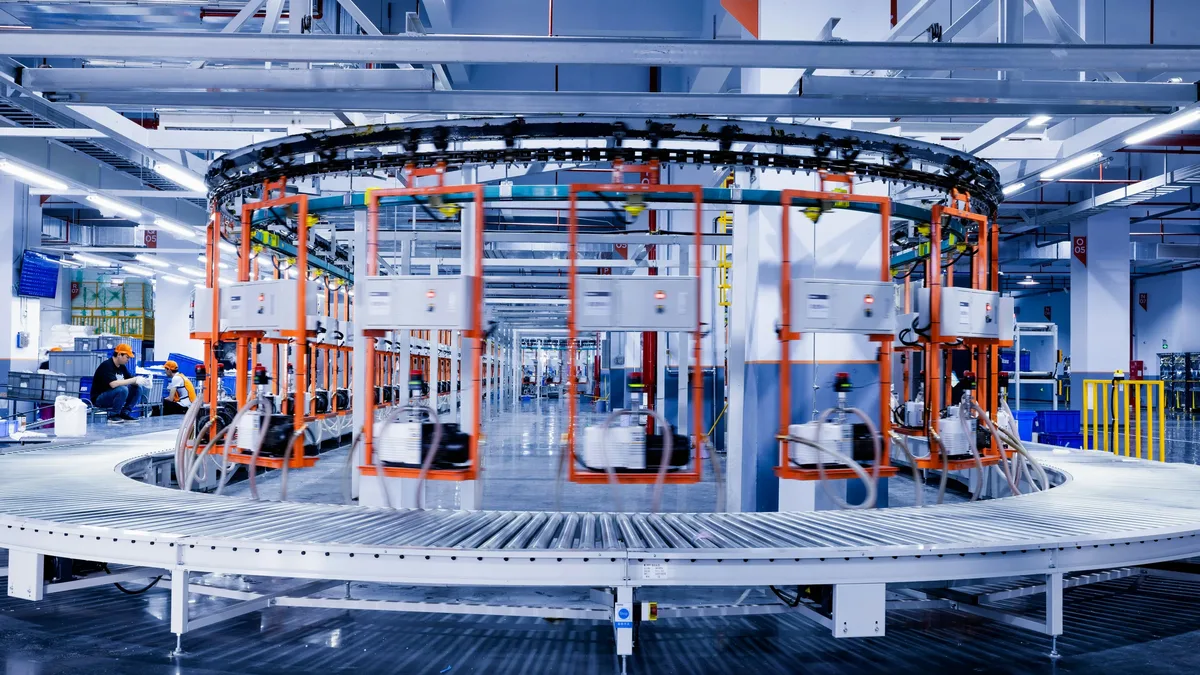
Hysata has launched HysataFab, an AI-powered manufacturing platform at its Port Kembla headquarters, designed to increase output and efficiency in electrolyser production. The first production line was commissioned at the company’s 8,500-square-metre facility in Port Kembla, New South Wales. HysataFab uses artificial intelligence, robotics, real-time monitoring and inline quality testing. It is a repeatable manufacturing template for deployment elsewhere, designed to squeeze more output from existing factory capacity. The system can produce up to 15 per cent more product from the same physical production line.
Government funding supports domestic scale-up of electrolyser technology
The launch coincides with a $49 million Australian Government grant to Hysata through ARENA under the Future Made in Australia Innovation Fund. The first deployment at Port Kembla represents a project worth close to A$100 million. The ARENA grant covers approximately half of the Port Kembla project cost, with the remainder funded by Hysata through private capital. Industry and Innovation and Science Minister Tim Ayres announced the funding during a visit to the site. ARENA Chief Executive Officer Darren Miller said the funding is intended to support the transition of Hysata’s electrolyser technology from an Australian innovation into commercial-scale domestic manufacturing.
Facility scales toward 200 MW annual capacity with job and innovation benefits
The Port Kembla facility has an initial manufacturing capacity of 50 MW per year on a single-shift basis. The electrode production line has commenced operations, with the remaining lines due to follow. Continuous operations could increase the facility’s production capacity to 200 MW per year. At that scale, it would be the largest electrolyser manufacturing facility in the Southern Hemisphere. Climate Change and Energy Minister Chris Bowen said the project would support manufacturing, skilled employment and clean-energy technology development in the Illawarra region. The project includes three production lines covering electrode, membrane, and cell and stack manufacturing.
The AI system creates a digital record for each electrode and uses real-time data to identify process variations. AI agents analyse manufacturing data and feed the findings back into process controls to improve production quality and yield. Hysata said the AI system conducts close to 10,000 analytical queries each day. The company has raised more than A$220 million from global investors to date.
HysataFab enables global export orders and technology replication
Hysata has secured its first binding megawatt-scale export order with a global heavy-industry company. The order was signed in June 2026, with electrolyser systems scheduled for delivery during the first half of 2027. Electrodes for the export order will be manufactured at HysataFab. The company is working with tier-one customers across a multi-gigawatt pipeline, particularly in hard-to-abate sectors. Hysata has completed a field trial with ACWA Power in Saudi Arabia and has joint development agreements with POSCO and Vestas.
Chief Executive Officer Paul Barrett said the company's focus is on industrial applications where hydrogen is difficult to replace. He argued that hydrogen does not need to compete with electrification, but should be used where a molecule is needed, not an electron, such as in steel, fertiliser and refining. Barrett stated the challenge is producing clean hydrogen at an affordable price, noting that cheaper renewables are opening new markets in green steel and efuels. Hysata plans to replicate the HysataFab platform at additional sites as demand grows, with potential to scale toward gigawatt-level manufacturing capacity.