China urged to back local solar finance in Global South
Analysts say China, the world's top solar equipment exporter, should help catalyze local capital for off-grid solar projects in the Global South instead of
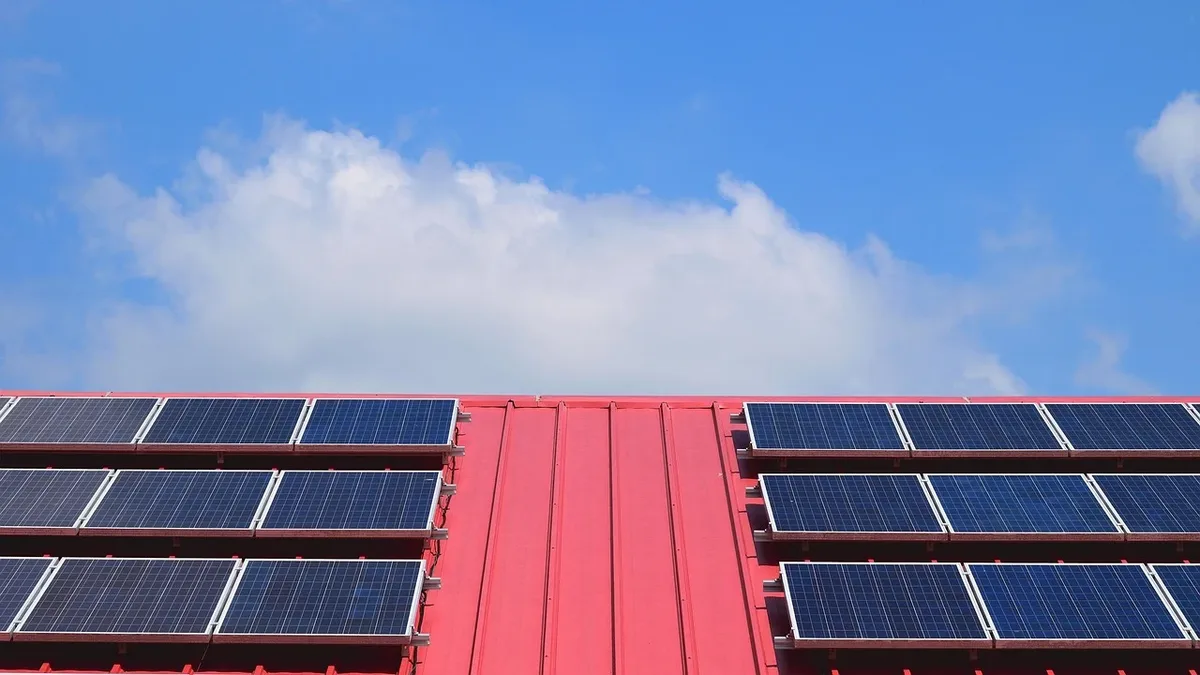
China exported $29 billion in solar power equipment last year, with sales to the Global South growing rapidly. Research institutions and NGOs say the country is rarely involved in financing the small, off-grid projects that need it most.
Prior to 2020, China's overseas renewable energy involvement was almost entirely in large, grid-connected projects. Communities needing off-grid solutions in remote rural areas were outside its scope. From 2021, its cooperation began to include low-cost "small and beautiful" projects designed for rapid community benefit.
One example is the Africa Solar Belt Program, launched in 2023. It aimed to provide basic electricity access to 50,000 poor households over three years. However, only about $14 million in public funds were committed. This is orders of magnitude smaller than China's utility-scale projects on the continent, which can cost hundreds of millions of dollars.
The global preference for large projects
This preference for larger projects is a common problem in global development finance, not unique to China. Some multilateral financial institutions have long favoured large, grid-connected generation and transmission networks. The outside world wants China to rapidly shift direction, but this overlooks how many Global South countries could do more to mobilise their own funds.
Relying on external development financing reduces a country's ability to guide its own renewables development. Many nations have "dormant capital", investible funds sitting in low-yield assets rather than being invested in real-economy projects.
| Country/Region | Institution/Asset Pool | Total Assets | Allocation to Energy/Infrastructure |
|---|---|---|---|
| South Africa | Public Investment Corporation | $137.5 billion | 0.6% in energy investments |
| Nigeria | Pension fund assets | $14.7 billion | 0.95% in infrastructure projects |
| Africa (whole) | Institutional investors (pension funds, insurers, sovereign wealth funds) | ~$4 trillion | <2.7% allocated to infrastructure and productive sectors |
According to AfDB statistics, South Africa invests less than 20 per cent of its portfolios in riskier assets. In Nigeria, around 62.7 per cent of pension assets were held in federal government securities. Waiting for China to fill the funding gap would miss an opportunity for local capital markets to step up.
Kenya's model of local solar finance
Some Global South countries have acted to direct local money towards community renewables. Kenya has created a complete funding chain for community renewable energy systems without external development funding. The country now has Africa's best-established off-grid solar market.
Broadly, Kenya's model is a system of local finance allowing buyers to spread the cost of a solar power system. Using the local payment provider M-Pesa, companies offer a pay-as-you-go model. A buyer pays a small deposit to get a solar system with an embedded smart meter. Then, via M-Pesa, they pay small daily or weekly instalments. If payments lapse, the system can be locked remotely. Once fully paid off, ownership is transferred.
The firms selling the systems can package the payment agreements and sell them to banks, a process called "securitisation." This gets the companies significant cash quickly, reducing liquidity risks. The securities are stratified by credit rating agencies according to the risk of default.
Emerging market securitisation trades are bundled into two or three tiers by risk. "Senior" securities have the lowest risk and are paid back first, followed by the medium-risk "mezzanine" tier, and finally the highest risk "junior" tier. Local commercial banks, bound by prudential rules, will only hold the senior ones. When development finance institutions buy the mezzanine tranche as "catalytic capital," they protect the senior tier and complete the capital structure.
Off-grid solar company Sun King is an example. It says it has lent almost $1.3 billion to 10 million customers in Africa. After a $130 million securitisation in 2023, it worked with Citi to complete a similar $156 million deal in 2025. Local and overseas commercial banks bought the senior tier, while development finance institutions, British International Investment, Dutch development bank FMO and Norway's Norfund, supported the mezzanine tier.
A World Bank report found East African companies, including those in Kenya, won at least 60 per cent of all global investment in off-grid solar from 2012 to 2019. The Kenyan model proves that when local capital, regulators, and financial infrastructure work together, control over renewable energy development can be kept local.
A proposed shift for China's role
As a participant in South-South cooperation, China could consider changing its approach. Research institutions, think-tanks and NGOs call for it to plug the Global South's gap in funding for off-grid and microgrid solutions. They say it should shift from leading financing to supporting ecosystems.
China could act as an "anchor investor," buying up off-grid solar debts issued by local banks. It could also act as an "asset builder," using its expertise in poverty relief to help communities create assets and find innovative income streams to pay for local financing models. Chinese policy banks could take up medium-risk tranches in securitisation deals, playing the catalytic role currently filled by Western development financial institutions. This support would use private and commercial bank purchases for a stable return.