ARENA Funds Lightspeed Trial to Cut Solar Farm Costs
The Australian Renewable Energy Agency (ARENA) has committed AU$25 million to a three-year Lightspeed project testing autonomous robots and other
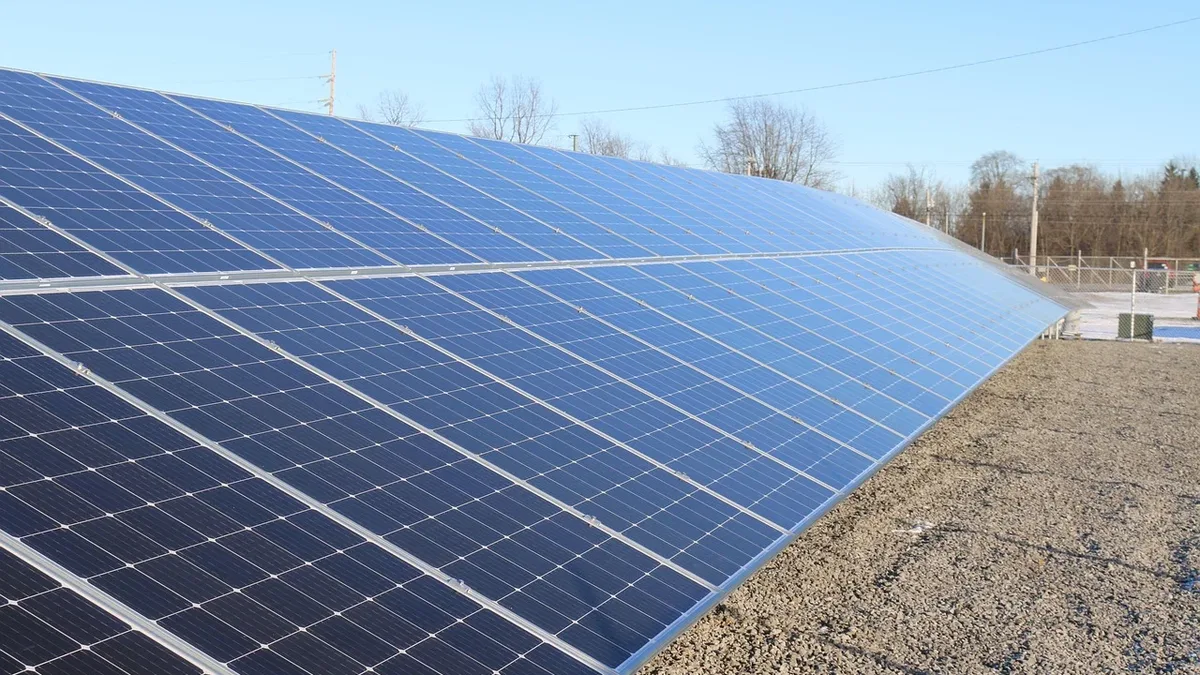
ARENA has committed AU$25 million to Equans Solar & Storage for a three-year Lightspeed project testing up to 10 technologies across five categories to reduce the levelised cost of electricity for utility-scale solar in Australia. The trial begins with the deployment of the Nextpower Ranger, an autonomous inspection robot making its first appearance at an Australian solar farm.
The Lightspeed project is a three-year programme funded by the Australian Renewable Energy Agency (ARENA) with $25 million (USD 17.5 million) to gather robust, long-term data. The trial is led by Equans Solar and Storage, headquartered in NSW. The first technology deployed is the Nextpower Ranger, an autonomous inspection robot from US-headquartered clean energy technology company Nextpower (NX).
The NX Ranger uses advanced artificial intelligence (AI) and dual thermal-optical cameras. It handles row-by-row beneath solar modules using four-wheel drive (4WD) mobility, can operate on terrain with up to a 30-degree incline, and has up to 18 hours of operation on a single charge with a 6-hour recharge turnaround using a standard 120V outlet. This autonomous electric robot is part of the operations and maintenance testing phase.
Broader technology test programme targets balance-of-system costs
Lightspeed will test up to 10 technologies across five categories to reduce labour-intensive activities and lower the levelised cost of electricity for utility-scale solar. The project tests construction and operations technologies across Equans Solar & Storage's Australian solar and storage project pipeline.
The innovations span five operational areas: civil works, mechanical works, electrical works, operations and maintenance, and digital coordination. The deployed technologies include construction robotics and automated piling systems. The technologies aim to reduce labour-intensive activities, improve construction efficiency, increase productivity, enhance project delivery, and reduce levelised cost of energy (LCOE) of solar.
The federal funding underwrites financial risks of adopting unproven commercial technologies. The traditional baseline for solar farm maintenance relies on human personnel for physical inspections and manual cleaning. Autonomous electric robots can operate continuously, handle complex arrays with precision, and use integrated sensors to detect microscopic panel defects. ARENA's mandate is to support technologies that alter the economics of clean energy generation.
The project requires Equans to demonstrate measurable improvements in the levelised cost of energy. The introduction of autonomous robots shifts human labour distribution in the solar sector, creating demand for skilled technicians to program, maintain, and repair autonomous units. The project could establish a new operational standard for utility-scale solar farms in Australia. If successful, adoption of autonomous robots may accelerate across the industry.
Builds on prior innovation hubs and aligns with ARENA’s long-term solar vision
The project follows models from Fortescue’s Pilbara Solar Innovation Hub and supports ARENA’s 30-30-30 goal to cut solar costs by 2030. The Pilbara Solar Innovation Hub produced a first milestone report and a dedicated report on Built Robotics' autonomous piling technology trialled at the 190MW Cloudbreak solar PV power plant.
An ARENA white paper published in July 2026 found Australia's weighted-average installed cost for utility-scale solar had stalled at AU$1.52 per watt. Balance-of-system costs (labour, civil works, grid connection, project delivery) are now the dominant component of total project costs and are largely resistant to reduction despite falling module prices. The white paper directly named Nextpower among companies testing advanced piling and tracking technologies under ARENA's broader push.
ARENA general manager for solar Dan Sturrock said Australia needs utility-scale solar generation costs to roughly halve to around AU$25-30/MWh on an LCOE basis to unlock 10GW of annual capacity additions. Currently, only 2-3GW of utility-scale solar reaches financial close each year in Australia. ARENA’s ambition is to achieve 30% module efficiency at an installed cost of 30 cents per watt by 2030. The Lightspeed project builds on learnings from Fortescue’s Pilbara Solar Innovation Hub. ARENA stated that the portfolio-style approach allows innovations to move from concept to real-world deployment faster and share lessons across the industry.
Part of wider ARENA funding push for solar R&D and early-stage deployment
Lightspeed complements ARENA’s August 2026 R&D commitment and Launchpad programme, both aimed at accelerating solar innovation under the 30-30-30 framework. ARENA committed up to AU$105.6 million to 20 research and development projects in August 2026, aiming at reducing the cost of large-scale solar. The funding was split between cell and module technology and balance-of-system and operations costs. ARENA described this as its largest single investment in solar PV research and development to date.
ARENA launched Launchpad the following month (September 2026), an AU$30 million programme for early-stage clean energy startups. Launchpad offers smaller, faster grants for construction and deployment innovations. Both the August 2026 R&D commitment and Launchpad are oriented around ARENA's '30-30-30' vision.
The project will test up to 10 emerging technologies over three years to gather robust, long-term data on cost reductions in utility-scale solar construction and operations.