UK and Japan launch industrial compact to accelerate floating offshore wind
The UK and Japan have formalised a new Offshore Wind Industrial Compact, aiming to unlock up to £9bn in Japanese investment for 5.9GW of floating wind projects.
The UK and Japan signed an Offshore Wind Industrial Compact on 10 November 2026. Energy Minister Michael Shanks and Japan's State Minister of Economy, Trade and Industry, Takagi Kei, formalised the agreement, which builds on a memorandum of cooperation signed in March 2025.
Michael Shanks said: "The UK and Japan have signed an Offshore Wind Industrial Compact to strengthen cooperation on fixed-bottom, floating and deepwater offshore wind." The compact provides a framework for increased cooperation to strengthen supply chains, encourage investment, and enhance energy security in both countries. It leverages the UK's experience in policy and project delivery with Japan's industrial and manufacturing expertise.
Investment and pipeline
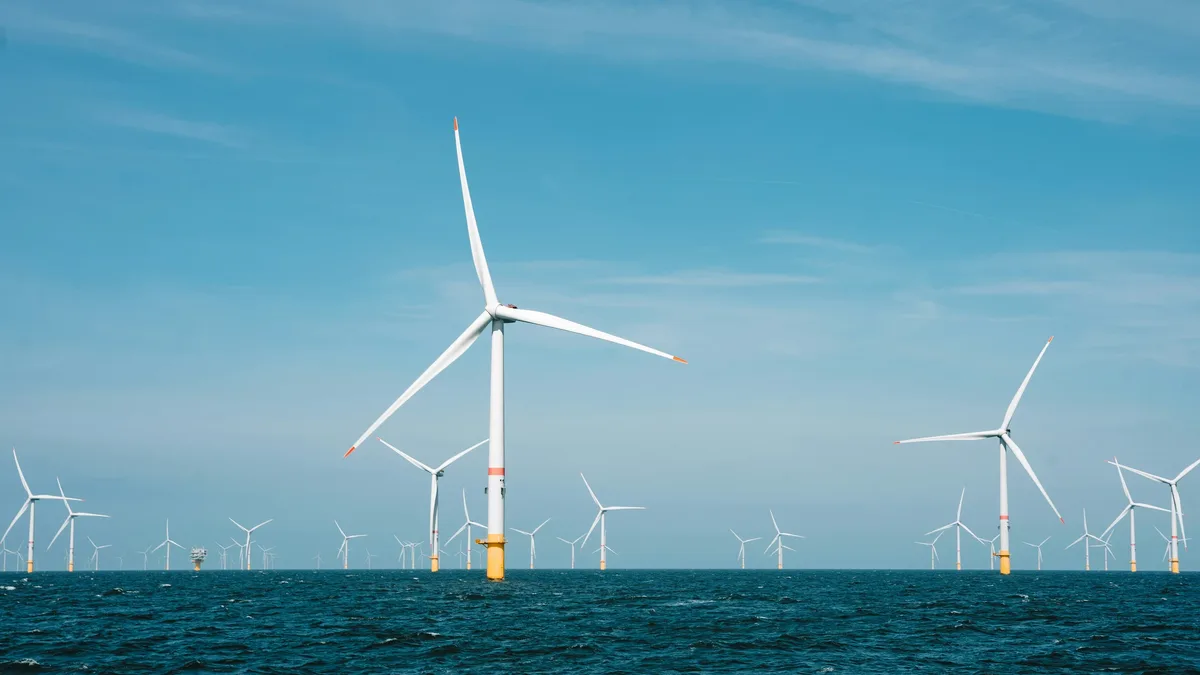
The compact aims to unlock up to £9bn in Japanese investment. This capital will support the development of 5.9 gigawatts of floating offshore wind projects in British waters. The identified projects include Ossian and Green Volt in the North Sea and Erebus in the Celtic Sea. Once built, these projects are expected to generate enough clean electricity to power approximately 8 million homes.
Cooperation pillars
The agreement establishes four specific areas for bilateral work. Both countries will explore further joint investment opportunities involving developers, the publicly owned Great British Energy, and financial institutions. A second pillar focuses on testing and demonstrating floating and deepwater technologies, including foundations, subsea engineering, robotics, and digitalisation. This will build on existing collaboration between Japan's Floating Offshore Wind Technology Research Association and the UK's Offshore Renewable Energy Catapult.
The third area is supply chain development. Cooperation will focus on creating secure and diversified sources for equipment and components, particularly wind turbines. It will also support adapting fixed-bottom technologies for floating applications. The final pillar covers the exchange of expertise on policy and regulatory frameworks. The UK will share knowledge in project financing, market frameworks, grid integration, and skills development to support Japan's domestic offshore wind market.
Implementation and context
Governance will include annual director-level discussions, potentially through the existing UK-Japan Energy and Climate Dialogue. Since the 2025 memorandum, the two countries have held public-private workshops on auction systems and testing facilities. Japanese companies have already participated in UK floating wind projects within recent contracts for difference allocation rounds. Commercial cooperation is exemplified by ventures like JERA Nex BP.
The agreement will be implemented by Great British Energy and the Department for Energy Security and Net Zero on the UK side, alongside Japan's Ministry of Economy, Trade and Industry.