Agrivoltaics Winter Wheat Yield Increase 2026 at Austrian
EWS, an Austrian agrivoltaics specialist, reports a 14% higher winter wheat yield in 2026 at its Sonnenfeld research site compared to a control area
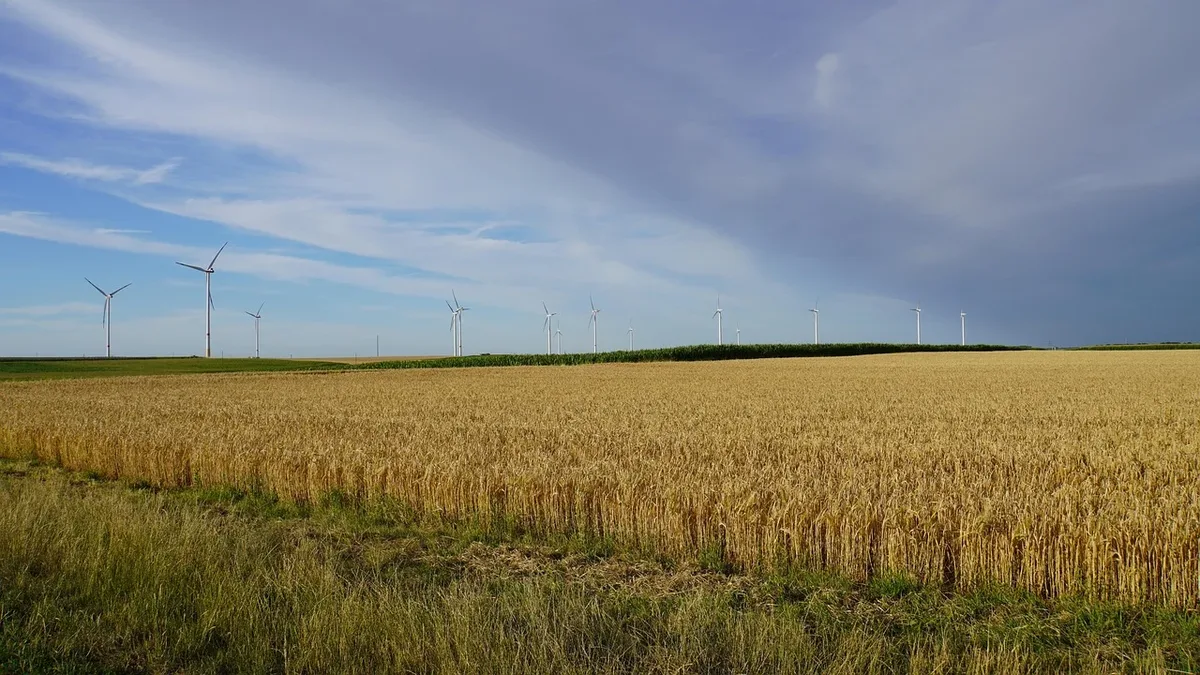
An Austrian agrivoltaics specialist reports a 14% winter wheat yield increase in 2026 at the Sonnenfeld site compared to unshaded controls, with findings currently under evaluation. EWS recorded the result in 12-meter-wide cultivation strips during the dry summer of 2026 at its research and demonstration project in Bruck an der Leitha, developed with the University of Natural Resources and Life Sciences Vienna (BOKU). The facility, built in 2022, uses movable module tables installed at different center-to-center distances to assess impacts on both electricity and agricultural production.
BOKU is analyzing the 2026 winter wheat harvest. The final report is scheduled for completion by the end of 2026. Findings are expected to be incorporated into that document.
Shading and Microclimate Effects Confirmed
EWS attributes the yield increase partly to shading and microclimate changes beneath tracking PV arrays. The company notes that agricultural yields depend on multiple factors, and longer-term research is still needed to establish agrivoltaics effects. Site characteristics, crop type, weather conditions, and soil compaction during construction can all influence results.
The system uses trackers that follow the sun during normal operation. For agricultural work, farmers can move modules into a horizontal position. During harvesting, module rows can be tilted away from each other by up to 70 degrees for machinery clearance. Partial shade from PV modules may shield crops and soil during high temperatures, and the modules influence soil moisture and temperature. EWS credited progress at a separate site in Pischelsdorf in part to shielding from harsh solar radiation by elevated PV modules. The effect of the system on the soybean harvest at Pischelsdorf is still to be established.
Research Infrastructure and Site Details
The Sonnenfeld project uses varied row spacings to evaluate effects on electricity and agricultural output. The installation allocates around 80% of its area to agriculture, 18% to biodiversity measures, and 2% to PV system components. The movable module tables are installed at specific distances, which correspond to standard cultivation widths.
| Module Table Spacing (Center-to-Center) | Cultivation Width |
|---|---|
| 8 meters | 6 meters |
| 11 meters | 9 meters |
| 14 meters | 12 meters |
EWS also operates an agrivoltaic facility in Pischelsdorf am Engelbach, Upper Austria, where about 80% of the area is dedicated to agriculture. At both sites, the tracker rows can reach heights of up to 2.8 meters. Soybean yield data from Pischelsdorf has not yet been published.
BOKU's analysis of the 2026 winter wheat harvest results will be incorporated into the final report scheduled for completion by end of 2026.