Module And Cell Price Indices And Anti Dumping Duties
| Technology type | Solar photovoltaic power generation |
|---|---|
| Project component | Photovoltaic modules and cells |
| Country of origin | Varies by manufacturer |
| First created | Late 20th century |
| Original use | Converting sunlight into electrical power |
| Primary function | To track and adjust for changes in the cost of key project components |
| Legal context | International trade remedy measure |
Origin and history
Module and Cell Price Indices and Anti-Dumping Duties are not a single technology but a framework of economic and trade instruments developed primarily by national governments and international bodies. Their origin lies in the global photovoltaic (PV) manufacturing industry that expanded rapidly from the 2000s onwards. The price indices emerged in the 2010s as analytical tools to track the rapidly declining cost of solar modules and cells. Anti-dumping duties, as a legal trade concept, have a much longer history under World Trade Organization (WTO) rules but were applied specifically to solar products from the early 2010s. Major regions implementing these duties against solar imports include the United States, the European Union, and India. The development of these tools is directly tied to international trade disputes over solar manufacturing dominance, particularly involving China.
What it is for
This framework is for regulating international trade and providing market transparency in the solar photovoltaic industry. Module and cell price indices serve to benchmark component costs for project developers, financiers, and policymakers, reducing information asymmetry. Anti-dumping duties are imposed to counteract the alleged selling of solar products below their normal value in an export market, a practice known as dumping. The primary stated purpose of these duties is to shield domestic manufacturing industries from what is deemed unfair foreign competition. Consequently, these instruments directly influence the sourcing strategies and total installed cost of solar energy projects. They are fundamentally for managing the economic and industrial policy dimensions of the renewable energy transition.
Overview
Module and cell price indices are regularly published metrics, often weekly or monthly, that track the average selling prices of photovoltaic components in key markets like Europe, the United States, and Asia. These indices are compiled by independent market research firms using data gathered from manufacturers, distributors, and project developers. Anti-dumping duties are tariffs levied on imported solar products, calculated as an additional percentage of the product's value or a specific monetary amount per unit. Their application requires a lengthy legal investigation by a national authority to prove material injury to a domestic industry. A project's financial model must account for both the indexed component prices and any applicable tariffs on the chosen equipment. This framework creates a complex landscape where equipment cost is not purely a function of technology but of geopolitical and trade policy.
What to know
Price indices can vary significantly between geographic markets due to the inclusion or exclusion of tariffs, shipping, and insurance costs, so the provenance of an index is critical. Anti-dumping duties are not permanent; they are typically imposed for a five-year period but can be extended following a sunset review. The scope of these duties is precisely defined, often down to specific cell technologies and module wattages, affecting some products but not others. Project developers must conduct thorough due diligence on the manufacturing origin of all components, as duties can apply to cells made in one country and assembled into modules in another. Legal challenges to these duties are common at the WTO and within national court systems, leading to a fluid regulatory environment. Ignoring this framework can lead to severe budget overruns, customs delays, and the disqualification of projects from local content incentives.
Common questions
What is the difference between anti-dumping and countervailing duties? Anti-dumping duties address low prices, while countervailing duties target foreign government subsidies. How are price indices used in project contracts? They are often used in escalation clauses to adjust equipment purchase prices between the signing date and the delivery date. Can a project avoid these duties by sourcing from a different country? Yes, but manufacturers may have complex global supply chains, and duties often follow the origin of the cell, not the final module assembly. Do these duties apply to all solar projects? They typically apply to utility-scale and commercial projects using imported equipment, while residential or off-grid systems may use exempted volumes. Why do prices in markets with duties sometimes fall below the duty-inclusive price? This can occur if domestic manufacturers lower prices to compete, or if loopholes in the duty rules are exploited. Are these measures effective at protecting domestic manufacturing? Outcomes are mixed, as duties can raise costs for the domestic installation industry and sometimes lead to manufacturing moving to other non-targeted countries.
Pros and cons
A primary pro is that price indices bring transparency and data-driven rigor to project financing and procurement, allowing for more accurate risk assessment. For proponents, anti-dumping duties can provide a critical buffer for nascent domestic manufacturing industries to develop scale and technological parity. A significant con is that these duties increase the levelized cost of energy (LCOE) for solar projects in the implementing region, potentially slowing renewable deployment. Project developers and EPC contractors often regret not building a sufficient tariff contingency into their bids, which is a common and costly mistake. The framework can create market distortions, such as encouraging the use of lower-efficiency or higher-cost equipment simply to comply with origin rules. Furthermore, the complexity and uncertainty of ongoing trade cases can stifle long-term investment planning in the solar sector.
Who it suits
This framework primarily suits government trade officials and domestic manufacturers seeking to establish or protect local production capacity. It suits market analysts and financial institutions that rely on precise, indexed price data to model market trends and asset valuations. Large-scale project developers with in-house legal and procurement teams are best positioned to navigate this landscape, as they can manage supply chain due diligence. The system does not suit small developers or installers who lack the resources to verify complex supply chains and absorb unexpected tariff liabilities. It also does not suit policymakers whose sole objective is to achieve the fastest possible decarbonization at the lowest cost, as the duties inherently conflict with that goal. Ultimately, it is a tool for those who prioritize industrial policy and trade reciprocity alongside the energy transition.
Latest Module And Cell Price Indices And Anti Dumping Duties news
Latest reporting
India's Solar Manufacturing Surge Faces Cell Supply
India added 50.6GW of solar module and 9.7GW of cell capacity in H1 2026, but a critical shortage of domestic cells is slowing production and project
TOPCon Module Pricing Holds Amid U.S. Trade Policy
Solar module prices in China and the U.S. Showed divergent trends ahead of Section 232 enforcement, with U.S. Spot prices stable and Chinese domestic...
Section 232 tariff drives solar module prices up over 40%
A new 15% tariff on polysilicon imports, effective December 4, has already pushed median U.S. solar module prices from $0.27/W to $0.38/W.
Websol Secures West Bengal Land for 4GW Solar Plant
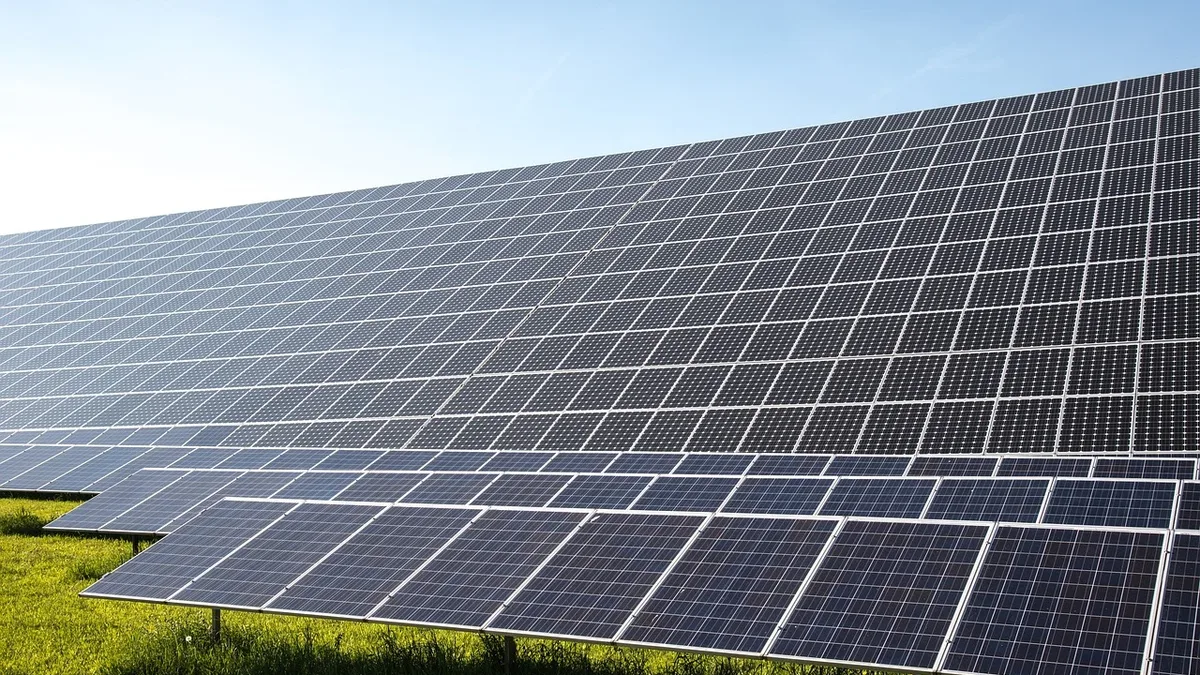
Websol Energy System has obtained 21.9 hectares in West Bengal's Falta Industrial Park to build a 4GW solar cell and module factory, with the first...
US solar module production passes 100 GW
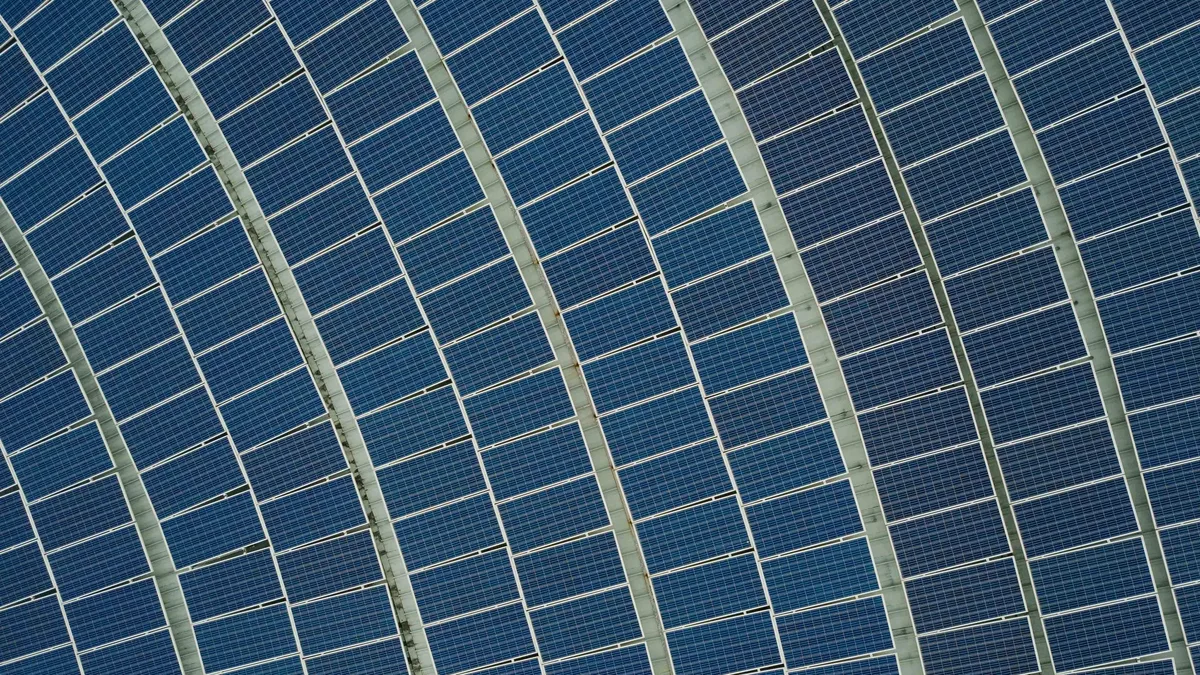
Cumulative US solar module manufacturing has reached 100 GW, a landmark achieved in Q2 2026. More than 70% of this total was added after the...

ES Foundry commits $1.5M to MIT US
US solar cell maker ES Foundry is joining an MIT research initiative with a $1.5 million commitment. The partnership aims to apply AI and automation...