US solar module production passes 100 GW
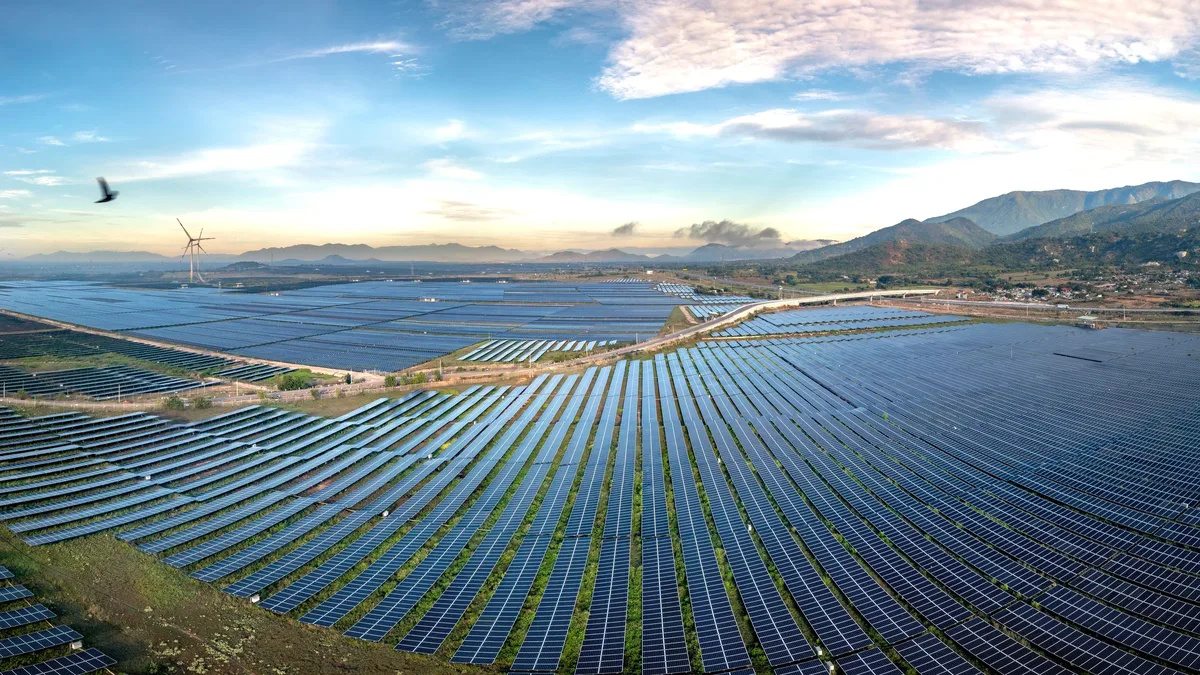
Cumulative US solar module manufacturing has reached 100 GW, a landmark achieved in Q2 2026. More than 70% of this total was added after the Inflation Reduction Act's passage in late 2022.

The United States has manufactured 100 gigawatts of solar photovoltaic modules domestically. This cumulative production milestone was reached during the second quarter of 2026, according to analysis presented at the Solar Manufacturing USA 2026 conference in Austin, Texas.
More than 70% of this total was added after the introduction of the Inflation Reduction Act in late 2022. The 100 GW figure represents modules physically produced at US factories over more than five decades, based on bottom-up company and site-level data. The research was conducted by a market analyst ahead of the September conference.
A history of cycles and false starts
US solar PV manufacturing began in the 1970s. The industry has since experienced repeated cycles of investment, expansion, retrenchment, and reinvention. Many announced factories were never built. Others operated at low rates or closed before producing meaningful volume.
Until 1985, the US had produced about 100 megawatts of modules, accounting for almost all global sales at the time. Companies like Arco Solar and Solarex had annual production in the mid-megawatt range. "This was global solar production leadership status at the time," the analyst noted.
During the 1990s, Japan became the first country to build PV plants at scale. Its production exceeded US volumes by the end of the decade. Japanese firms like Sharp and Kyocera then established US module assembly plants to supply the local market.
The thin-film era and a major exception
The period from roughly 2007 to 2012 saw a dramatic manufacturing cycle focused on thin-film technology. Companies like Unisolar, Solyndra, and Abound Solar attracted substantial capital. "The investment footprint was large, but significant production volumes failed to materialize," the analysis states. This era showed that capacity announcements could dominate headlines for years without translating into sustained output.
First Solar is the major exception. Its cadmium telluride (CdTe) manufacturing base in Ohio provided continuity. Recent factory builds in Alabama and Louisiana have boosted volumes. Through Q2 2026, First Solar accounted for approximately 39% of all solar modules ever made in the US.
The modern manufacturing build-out
For crystalline-silicon modules, a recovery began before the Inflation Reduction Act. The Section 201 safeguard period encouraged new factories from companies including Qcells, JinkoSolar, LG Electronics, Silfab, and Heliene.
The change arrived with the Act's Section 45X Advanced Manufacturing Production Credit. The lucrative module credit provided an immediate economic windfall for domestic assembly. First Solar's vertically integrated operations were uniquely positioned to benefit from the additional upstream credits for cells and wafers.
The analyst's research now turns to tracking production of ingots, wafers, and cells with similar factory-floor scrutiny. The 100 GW milestone marks a point to look back before the next phase of the US solar manufacturing build-out.