India's Solar Manufacturing Capacity Surges Beyond 200 GW
India's solar manufacturing sector is expanding rapidly, with annual module capacity now exceeding 200 GW, as showed by a packed industry expo.
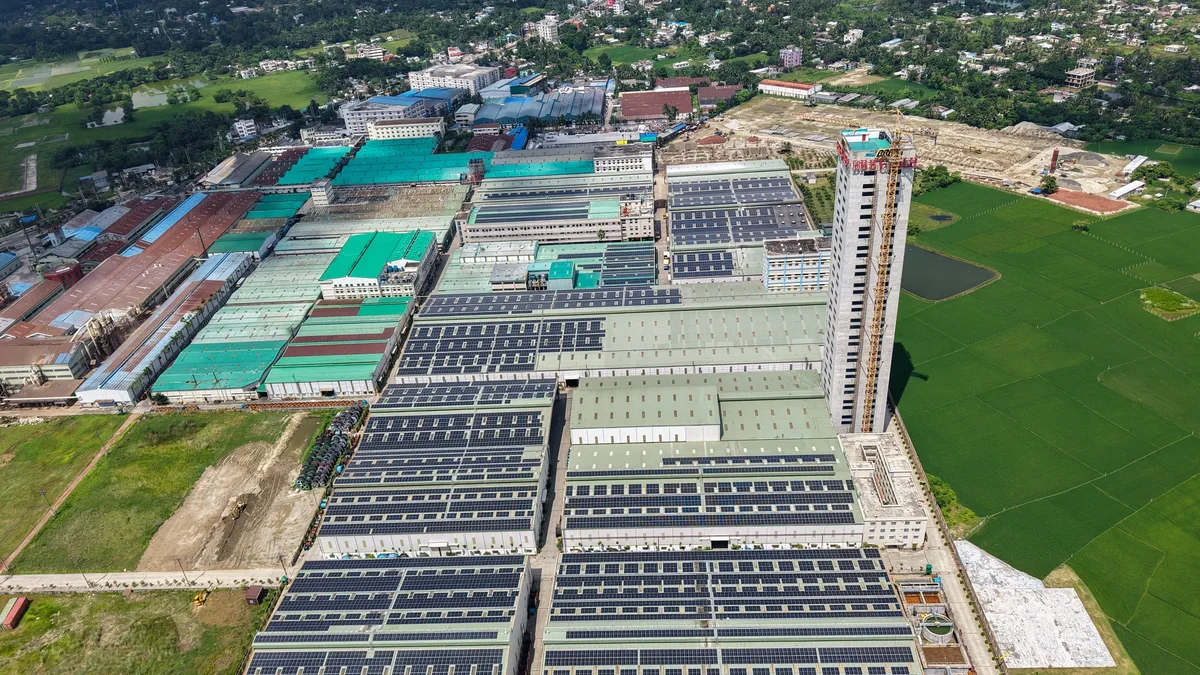
Over 54,000 visitors attended the Renewable Energy India Expo 2026 in Greater Noida, with more than 1,000 exhibitors filling the venue beyond capacity. This surge in activity highlights an industry scaling at a remarkable pace. India now has more than 200 gigawatts of annual solar module manufacturing capacity, a figure that far exceeds the expected 50 to 60 gigawatts of new installations needed each year through 2030.
Policy shifts drive domestic manufacturing expansion
A key policy change is accelerating India's move toward a self-reliant solar supply chain. In 2026, the government extended domestic content requirements to the solar cell sector. This mandate has temporarily slowed some new project development, but analysts expect the disruption to be short-term. The move is driving massive investment in local production. Domestic cell manufacturing capacity is projected to reach 80 gigawatts by the end of 2027.
Major industrial groups are leading the charge. Reliance Industries is constructing a 20 gigawatt supply chain focused specifically on heterojunction cell technology. This expansion is part of a broader wave of investment across the photovoltaic value chain.
Global technology partnerships advance cell innovation
International technology firms are deepening their collaboration with India's growing manufacturing base. TCL Zhonghuan used the expo to show its X-series silicon wafers, which are optimized for high-efficiency cell production. These wafers are compatible with the mainstream TOPCon technology, as well as heterojunction and back-contact cell designs, aiding process optimization and performance.
The company also displayed advanced module technologies tailored for challenging Indian conditions. Its T5 Pro module is designed to generate 17% more power than conventional modules under partial shading, with a temperature coefficient of -0.26% per degree Celsius. Its C2 module uses back-contact technology with a zero-gap design for a larger power-generating area and better performance in low light.
Innovation is looking beyond silicon. Partnerships, such as those with Caelux, are paving the way for the next generation of solar technology. Perovskite tandem cells are expected to become commercially available in the Indian market by 2028.
Diversified component ecosystem supports market needs
Indian manufacturers are rapidly diversifying their offerings to create a complete domestic ecosystem. Borosil, a longstanding solar glass maker, is now expanding into module production. Companies like Waaree Energies are producing inverters, while Gamechange Energy and Delta Electronics are expanding into transformers and other critical balance-of-system components.
This diversification supports applications ranging from massive utility plants to commercial and industrial sites and residential rooftops. High temperatures, dust, and coastal salt environments place unique demands on product durability and electrical performance. The component expansion is designed to meet these diverse material requirements.
Energy storage is becoming an integral part of the offering. TCL Zhonghuan's BlueArk storage solutions, for example, range from the integrated X1 unit for homes and small businesses to the X5 system that can coordinate with solar arrays and diesel generators for use in remote areas and industrial parks. The BlueArk W10 model for commercial and industrial use incorporates liquid cooling and AI-powered early-warning systems for energy management.
The sector's momentum is clear. Continued expansion of domestic cell manufacturing capacity will be key to meeting India's projected installation targets of 50 to 60 gigawatts annually through the end of the decade.