Solar Trackers And Their Yield Gain
| Technology type | Photovoltaic (PV) solar array enhancement |
|---|---|
| Original use | To increase the energy yield of a fixed-tilt photovoltaic system |
| Yield gain principle | Tracking the sun's path to maintain optimal panel angle |
| Typical yield gain over fixed-tilt | 15% to 25% (varies by latitude) |
| Tracking axis types | Single-axis (horizontal or vertical) and dual-axis |
| Key mechanical component | Actuator or motor drive system |
| Key control component | Sun-position algorithm (astronomical) and/or sensor-based controller |
| Common project scale | Utility-scale solar farms |
Origin and history
The fundamental concept of tracking the sun to increase solar energy capture has origins in antiquity, with sundials and heliostats. The application to photovoltaic (PV) arrays began in earnest during the late 1970s and early 1980s, alongside the development of the modern solar industry. Early research and commercial prototypes emerged primarily in the United States, Israel, and Japan, driven by high early PV costs which made maximizing output per panel critical. These initial systems were often complex, single-axis trackers used in large-scale demonstration projects. The technology matured through the 1990s and 2000s as reliability improved and costs decreased, making trackers more viable for utility-scale projects. Today, solar trackers are a standardized technology deployed globally, with major manufacturing and innovation centers in the United States, China, and Europe.
What it is for
A solar tracker is a mechanical system that orients a photovoltaic panel or concentrated solar power apparatus to follow the sun's path across the sky. Its primary purpose is to increase the total amount of solar irradiance captured by the panel surface compared to a fixed-tilt installation. This is achieved by minimizing the angle of incidence between incoming sunlight and the panel, which reduces cosine losses. The technology is specifically for maximizing the energy yield and improving the economic return of a solar power project. It is deployed to enhance the capacity factor of a solar plant, making its power output more predictable and valuable, especially during morning and afternoon hours. The system is for applications where increased energy production justifies the added capital cost, complexity, and maintenance of moving parts.
Overview
A solar tracker is an assembly that includes a support structure, a drive mechanism, a controller, and often sensors. The two main types are single-axis trackers, which rotate on one axis (typically north-south), and dual-axis trackers, which rotate on two axes to follow the sun both azimuthally and in elevation. The controller uses algorithms, sometimes supplemented by GPS data or optical sensors, to command the drive motors to precise positions throughout the day. The yield gain from using a tracker is not a fixed percentage but varies significantly with geographic latitude, local climate, and the specific tracker technology; generally, gains are higher at lower latitudes. This gain is realized by producing more kilowatt-hours (kWh) of electricity per installed kilowatt-peak (kWp) of panel capacity over the year. The technology is now a dominant feature in utility-scale solar farms in regions with high direct normal irradiance.
What to know
The quoted yield gain for a solar tracker is highly site-dependent and should be modeled using specific project data, not a generic percentage. Single-axis trackers are the industry standard for large projects, offering a balance of gain, cost, and reliability, while dual-axis trackers are rarer and used for specific high-concentration or research applications. Trackers introduce additional considerations including increased land use due to necessary spacing to prevent shading, a more complex foundation design to handle dynamic loads, and ongoing maintenance of motors and moving parts. Energy gain is most pronounced in seasons and times of day when the sun's path is lower in the sky, effectively extending the production curve. The financial justification hinges on the levelized cost of energy (LCOE), where the incremental energy must pay back the tracker's premium and its operational costs. Wind load calculations are critical in tracker design and can force a "stow" position during high winds, temporarily halting tracking to prevent damage.
Common questions
What is the typical energy gain from using a single-axis tracker? While often cited in a broad range of 15-25%, the actual gain must be determined by simulation for the exact site, as it depends on latitude, local weather, and array layout. How do trackers affect operations and maintenance costs? O&M costs are higher than for fixed-tilt systems due to the maintenance of motors, gearboxes, controllers, and the potential for software issues. Do trackers work with bifacial solar modules? Yes, trackers can significantly enhance the yield from bifacial modules by optimizing the angle for both direct front-side light and reflected rear-side light. What happens during a power outage or system fault? Modern trackers typically have a safe mode, often returning to a flat or stowed position, and may have backup power for critical controls. Are trackers suitable for all ground conditions? No, sites with high slope, poor soil stability, or restrictive geotechnical factors may require prohibitively expensive foundations or be unsuitable. How does tracking affect grid integration? The smoother, more extended power production curve can be beneficial for grid matching, but the rapid movement of clouds over a large tracked array can create steeper ramping rates.
Pros and cons
Pros: The primary advantage is a substantial increase in annual energy yield, which directly improves project revenue and can lower the levelized cost of electricity. Trackers produce a more consistent power output throughout the day, with a flatter generation curve that better matches peak demand periods in many grids. This technology maximizes the utilization and financial return on the often-significant investment in the photovoltaic modules themselves. Modern tracker designs and controls have improved reliability and reduced maintenance concerns compared to earlier generations. The enhanced performance can make marginal sites with less-than-ideal solar resources economically viable for development. Cons: The system adds significant capital cost for structure, drives, controls, and more complex installation compared to fixed-tilt racks. It introduces moving parts and electrical drives that require scheduled maintenance and are subject to failure, increasing operational complexity and lifetime costs. Trackers require more land area per megawatt of capacity to avoid self-shading as they rotate, which can be a constraint. Projects in high-wind or high-snow-load regions face greater engineering challenges and risks, potentially requiring more frequent stowing that reduces yield. A common mistake is underestimating site-specific conditions like terrain, soils, or wind, leading to costly foundation redesigns or underperformance. Operators sometimes regret choosing trackers on sites with frequent heavy soiling or dust, where the optimal tilt for energy capture also maximizes soiling rates unless a cleaning strategy is factored in.
Who it suits
This technology primarily suits large-scale, utility-owned or independent power producer solar farms in regions with high solar resource, where the incremental energy revenue clearly outweighs the added costs. It is well-suited for project developers and investors focused on minimizing the levelized cost of energy over a project's lifetime, rather than solely minimizing upfront capital expenditure. Solar trackers suit sites with favorable geotechnical conditions, relatively flat, stable land with good bearing capacity, to keep foundation costs manageable. They are a strong fit for markets with high electricity prices or time-of-day rate structures, where the extended production into peak periods captures greater value. The technology suits operators with robust O&M capabilities and plans, who can manage the scheduled maintenance and troubleshooting of electromechanical systems. It is less suited for small commercial or residential rooftop systems, sites with extreme weather, or projects with severely constrained capital budgets where simplicity and lowest initial cost are paramount.
Latest Solar Trackers And Their Yield Gain news
Latest reporting

BIPV Façade Study Reveals Grid and Economic Benefits
A global IEA study of 357 BIPV configurations finds vertical façades smooth solar generation curves and improve economic viability by displacing
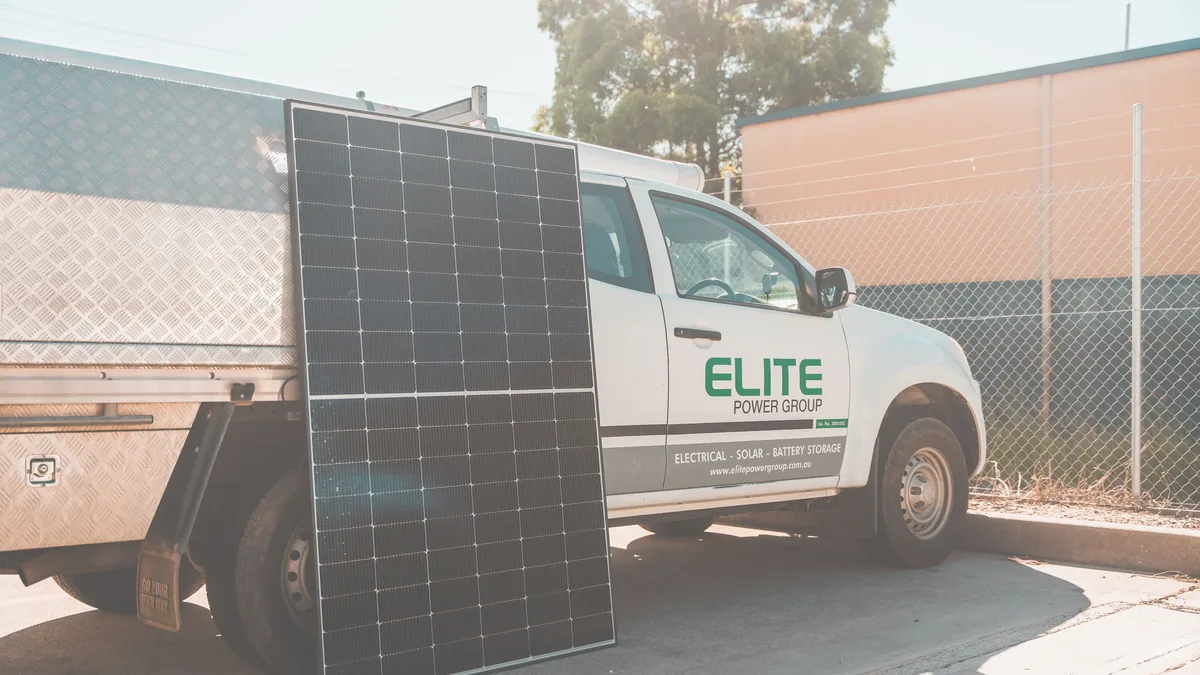
CertainTeed Launches Landmark PWR Solar Shingle System
CertainTeed has launched the Landmark PWR, an 85 W building-integrated photovoltaic shingle system designed to replace rack-mounted solar arrays with...
India's Solar Manufacturing Surge Faces Cell Supply
India added 50.6GW of solar module and 9.7GW of cell capacity in H1 2026, but a critical shortage of domestic cells is slowing production and project
TOPCon Module Pricing Holds Amid U.S. Trade Policy
Solar module prices in China and the U.S. Showed divergent trends ahead of Section 232 enforcement, with U.S. Spot prices stable and Chinese domestic...
Section 232 tariff drives solar module prices up over 40%
A new 15% tariff on polysilicon imports, effective December 4, has already pushed median U.S. solar module prices from $0.27/W to $0.38/W.
Websol Secures West Bengal Land for 4GW Solar Plant
Websol Energy System has obtained 21.9 hectares in West Bengal's Falta Industrial Park to build a 4GW solar cell and module factory, with the first...