Wildfire Impacts on Ready-to-Build Solar Ventures
A forest fire can force a review of technical, environmental, and economic conditions for a solar installation that has reached ready-to-build status
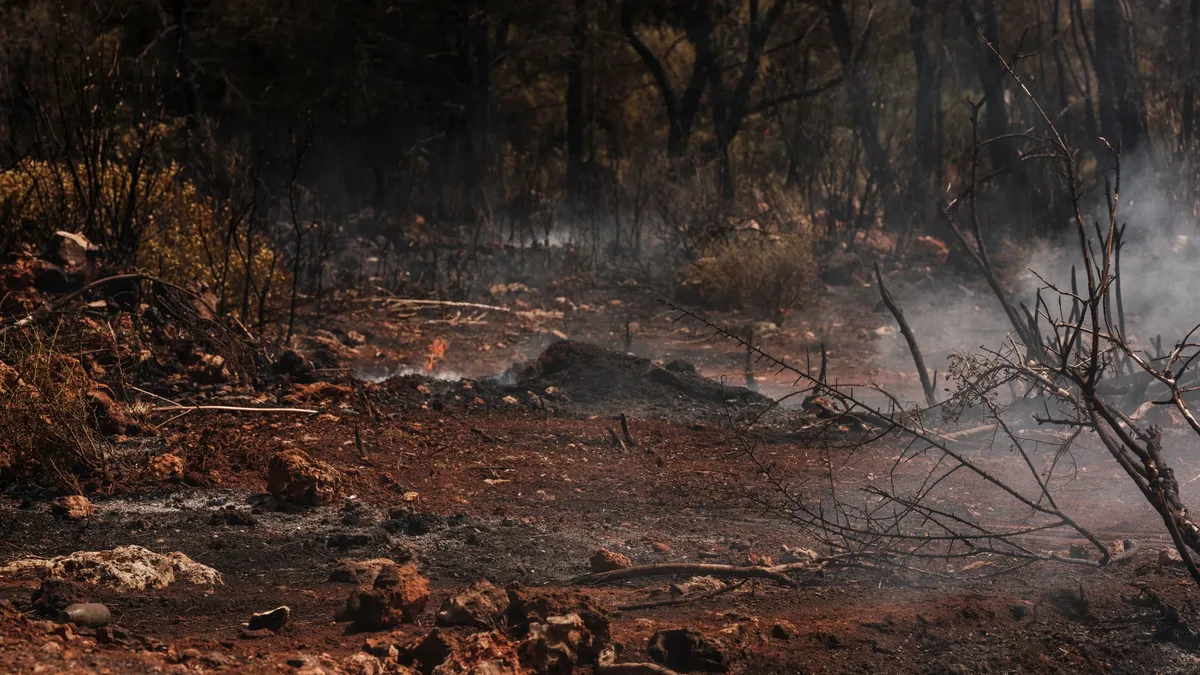
A forest fire can force a review of the technical, environmental, and economic conditions of a solar venture, even after it has reached ready-to-build (RTB) status. In some cases, it could render the undertaking technically unfeasible. While a fire does not automatically cancel permits, changes to site conditions can trigger new administrative requirements and revisions to environmental and fire-protection measures, affecting the installation's viability. Jochen Beckmann, a lawyer at Rödl Barcelona, explained the legal and administrative consequences to pv magazine.
Once a solar development reaches RTB status, it typically holds preliminary administrative authorization, administrative construction authorization, an environmental impact statement, and a municipal building permit. Beckmann noted the situation changes substantially if a forest fire affects part or all of the site shortly before construction begins. Such a scenario could arise from a lightning-induced fire. "Although the event is beyond the developer's control, changes to the site's physical and environmental conditions may require authorities to reassess some of the conditions underpinning the venture's existing authorizations," the lawyer said.
Review of fire protection and safety requirements
Safety is among the first areas that may require reassessment. Authorization of a solar plant is based on compliance with technical and protection requirements applicable at approval time. If a fire substantially alters the surrounding environment, authorities may require a review of the planned safety measures.
The review could affect the development's self-protection plan. A reassessment of site conditions may result in additional fire-protection requirements, such as wider vegetation-free safety buffers. These additional buffer zones could reduce the area available for solar modules, potentially requiring changes to the planned capacity.
Authorities could also require additional fire-protection infrastructure, including firefighting water reserves, hydrants, or other specialized equipment. Beckmann added that these measures could increase costs and affect the original economic assumptions.
Updating the environmental assessment
The environmental impact statement is based on environmental conditions in place when the assessment is conducted. A forest fire can significantly alter those conditions and affect elements considered in the original analysis.
Potential consequences requiring reassessment include increased erosion risk, changes in vegetation, altered soil hydrology, and impacts on established protection and mitigation measures. Spain's Law 21/2013 establishes monitoring and reporting obligations defined in conditions attached to each environmental impact statement. Beckmann said these statements typically require developers to notify the relevant authority of modifications or significant events that could affect the environmental assessment, including natural events like forest fires.
In such cases, environmental authorities may require a technical addendum to the environmental monitoring program. This document would assess changes caused by the fire and, where necessary, establish additional protection, monitoring, or restoration measures. These could include measures to prevent or reduce soil erosion, modifications to drainage and water discharge systems, measures to mitigate flooding and runoff risks during heavy rainfall, and monitoring of the recovery of affected areas. Such changes can have implications beyond environmental compliance. Beckmann stated that new technical requirements could affect the design, construction schedules, and the cost of bringing the plant into operation.
Force majeure and financial guarantees
Another consideration is the legal classification of the fire and its potential implications for financial guarantees lodged for the development. A forest fire caused by lightning would generally meet the criteria for a force majeure event, according to Beckmann.
However, classification as force majeure does not automatically result in the return of financial guarantees. The issue becomes particularly relevant if additional technical, environmental, or safety requirements imposed after the fire make the venture economically unviable or technically impossible to execute. In such cases, the developer would need to demonstrate a clear causal link between the fire and its inability to proceed.
"Comprehensive documentation of the event and its specific impact on the venture's viability is decisive," Beckmann said. The return of deposited guarantees could be considered only if the developer can sufficiently demonstrate that the fire and its consequences prevent the undertaking from proceeding. Documentation should therefore cover the cause and extent of the fire, as well as any resulting technical, environmental, and economic changes.