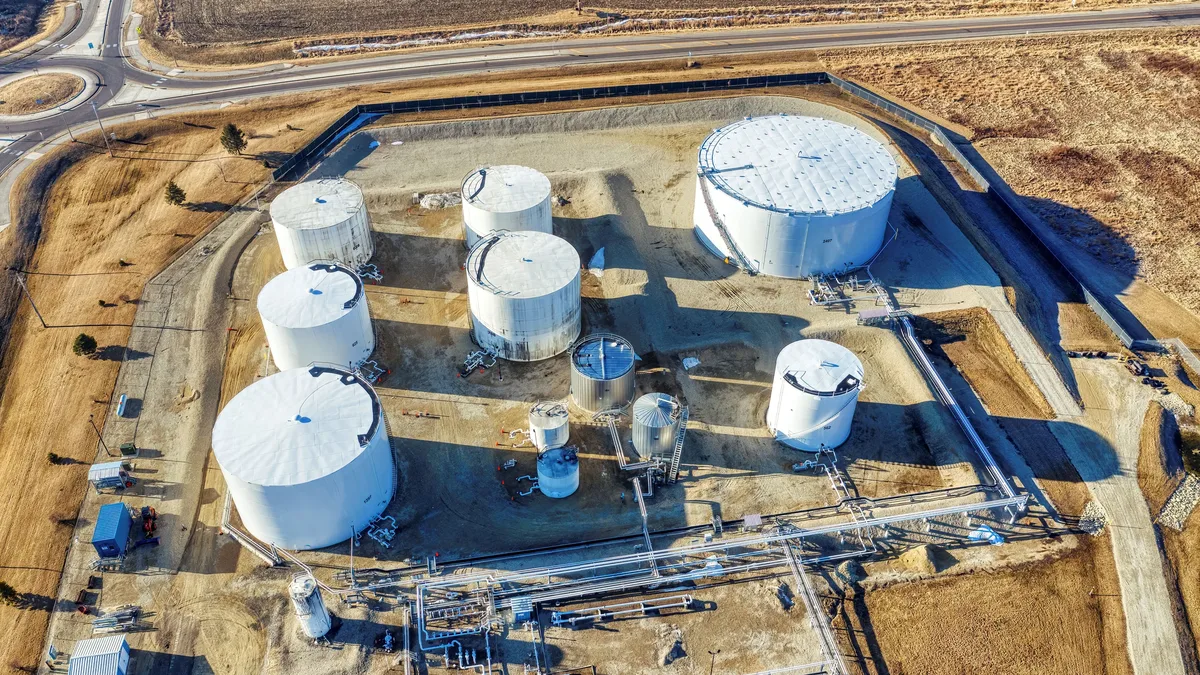
Octopus Australia's 2GWh Blackstone BESS
Octopus Australia has referred its proposed 500MW/2,000MWh Blackstone battery energy storage system in Queensland for assessment under the EPBC Act.
Octopus Australia has referred its proposed Blackstone battery energy storage system (BESS) to the federal government for assessment under the Environment Protection and Biodiversity Conservation (EPBC) Act. The standalone facility is planned for a 500MW/2,000MWh capacity.
The designated proponent is Blackstone BESS OpCo Pty Ltd, a trust entity wholly owned by Octopus Australia. The energy fund manager and developer has a portfolio and pipeline exceeding AU$16 billion across wind, solar and battery storage projects in Australia. This referral follows the company's August submission for the 1.2GW/4.8GWh Hanworth Battery Project in New South Wales, which it describes as Australia's largest planned BESS.
Construction on the Blackstone project is expected to begin in November 2026 and run until early 2029. The facility is then expected to operate for approximately 25 years.
Project location and site details
The project would be built on a 7.25-hectare site in Swanbank, within the Ipswich local government area of Queensland. It is adjacent to the existing Blackstone 275kV substation. The site sits on historically disturbed land, previously used for open-cut and underground coal mining. It is within the Swanbank-New Chum industrial precinct, an area increasingly repurposed for energy infrastructure as its mining legacy winds down.
The facility will connect directly to Queensland’s 275kV transmission network via underground cables linking to the Blackstone substation. Following the referral, the project still needs to finalise operational works approvals with Ipswich City Council and complete financing to reach financial close. It must also execute engineering, procurement and construction (EPC) and long-term service agreement (LTSA) contracts with Tesla, as well as connection and access agreements with the transmission operator, Powerlink Queensland.
Ecological assessment and koala habitat
The referral's ecological assessment found the project would result in the loss of approximately 3.26 hectares of remnant vegetation. This vegetation provides habitat for the endangered koala, including primary, secondary, and supplementary food tree species.
Field surveys did not directly observe koalas on site. The assessment concludes that habitat use is likely intermittent, functioning mainly as foraging and movement habitat within an already fragmented, heavily industrialised landscape. No threatened ecological communities were identified within the project area, and no offsets are currently proposed.
Octopus Australia states that the referral has been lodged on a precautionary basis. This is due to the species’ conservation status and the ongoing decline of koala habitat across south-east Queensland.
Battery storage concentration in Swanbank
Blackstone adds to a concentration of battery storage development within the same Swanbank industrial precinct. ZEBRE, a joint venture between HD Renewable Energy and ZEN Energy, has separately referred its 180MW/360MWh Noblevale Battery for EPBC assessment. It also plans to connect to the Blackstone substation from a different site within the precinct, which Queensland has flagged as a prospective Clean Energy Hub.
CleanCo Queensland’s 250MW/500MWh Swanbank BESS opened in the same area in February 2026. It was built on the site of the former Swanbank B coal station, underlining the regional pattern of converting former coal and mining infrastructure to battery storage use.
The volume of submissions entering the federal assessment process has drawn scrutiny from industry bodies regarding implementation speed. The Clean Energy Investor Group published a report in July calling on the federal government to prioritise faster, more consistent decisions under the reformed EPBC Act. The group represents developers and investors with more than 16GW of installed capacity and a project pipeline exceeding 46GW nationally.
Its report found that National Environmental Standards, an offsets calculator and a formal definition of “net gain” remained under development as of mid-2026. This is despite the Environment Protection Reform Act 2025 having already delegated most assessment powers to a new National Environmental Protection Agency. Full commencement of the reforms is required by December 2026.