India Pilots First Sodium-Ion Battery at Distribution Level
Jaipur Vidyut Vitran Nigam Limited and the Global Energy Alliance are launching a 250 kW sodium-ion battery storage pilot in Jaipur to test its viability for managing local grid peaks and integrating rooftop solar.
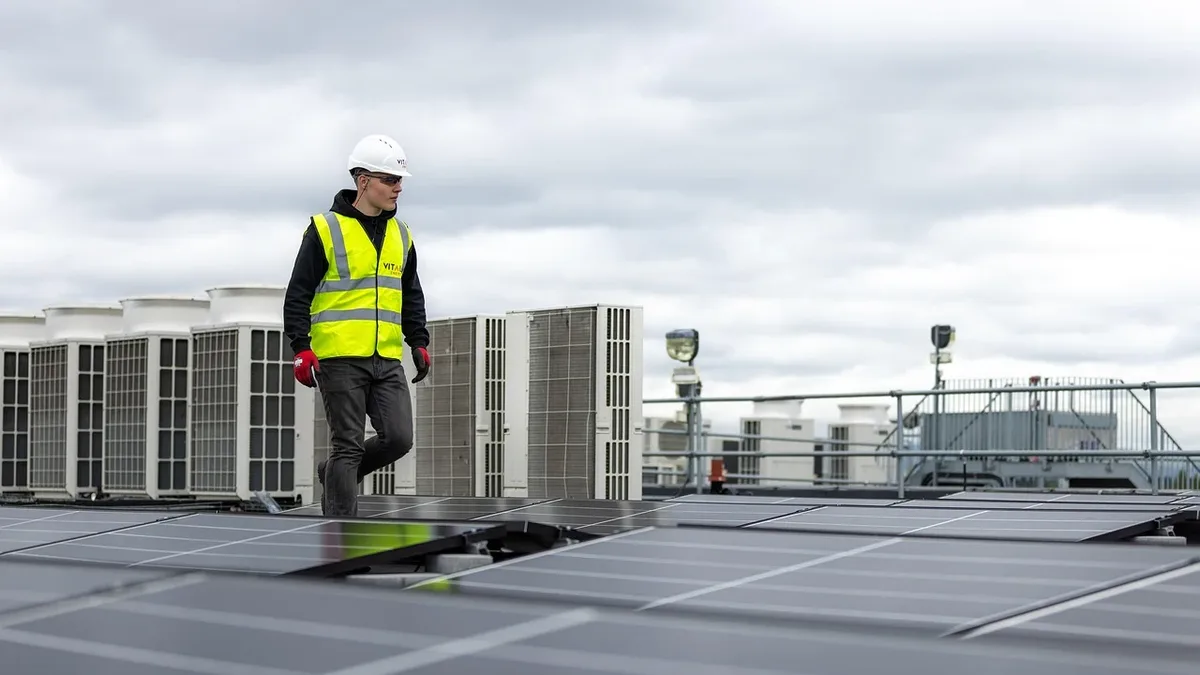
Rajasthan will pilot India’s first 250 kW sodium-ion battery storage system at the transformer level in Jaipur. Jaipur Vidyut Vitran Nigam Limited (JVVNL) and the Global Energy Alliance for People and Planet have signed a Memorandum of Understanding to develop this initiative. Following the agreement, the partners issued a Request for Proposal at the Distribution Utility Meet 2026 for a 250 kWh system to be installed at the K.L. Saini Stadium.
The project will evaluate sodium-ion battery technology under actual distribution-network conditions, including Rajasthan’s high summer temperatures. JVVNL will provide the site, a dedicated team, and operational data. The Global Energy Alliance will offer technical support for system design and performance monitoring, and will train JVVNL engineers. This work builds on an existing partnership between the two organizations, which includes using digital twins to better understand the distribution network.
Pilot objectives and technical assessment scope
The project will evaluate sodium-ion technology's performance in real-world distribution conditions, focusing on peak load management, solar integration, and safety under extreme heat. The objective is to establish evidence from field operations rather than assume one battery chemistry is superior to another. It aims to assess the system's potential to support peak-demand management, improve rooftop solar utilization, and strengthen electricity distribution networks.
By installing storage at the distribution-transformer level, the pilot will test if it can reduce peak loading, make better use of local rooftop solar power, and potentially defer costly network upgrades. The assessment will compare sodium-ion batteries to established technologies like lithium-ion across several key parameters.
The pilot will generate data on multiple performance factors to determine technical and commercial viability for Indian utilities.
Arti Dogra, Energy Secretary for the Government of Rajasthan and Chairperson of Rajasthan DISCOMs, said the pilot would help assess how storage technologies that do not rely on lithium could address distribution-level challenges under local operating and climatic conditions. The findings will be shared with distribution companies across India.
Expert validation and knowledge sharing
Energy officials emphasize the need for diverse storage chemistries while the alliance commits to sharing findings across Indian distribution utilities. Tanya Singhal, Vice President and Country Head for India at the Global Energy Alliance, noted that as renewable energy generation increases, pressure on the electricity network can become particularly visible at local transformers.
She said testing sodium-ion technology on a working transformer would provide utilities with practical evidence to inform their storage decisions. Both organizations will document and share the findings to help other distribution utilities evaluate the technology for their respective networks. JVVNL is also a Champion Utility under the alliance’s India Grids of the Future Accelerator, which supports improvements in network efficiency and renewable integration.
The pilot is expected to provide practical insights that could inform future decisions on distributed energy storage and distribution-grid modernization. Its findings will support more informed planning for future energy storage deployment as electricity demand grows. The pilot will generate practical evidence to inform future decisions on distributed energy storage and distribution-grid modernisation in India.