IEA report urges reliability rethink for BIPV, floating PV
A new IEA PVPS Task 13 report argues that building-integrated, floating, and agrivoltaic systems require new design and testing standards, as they face
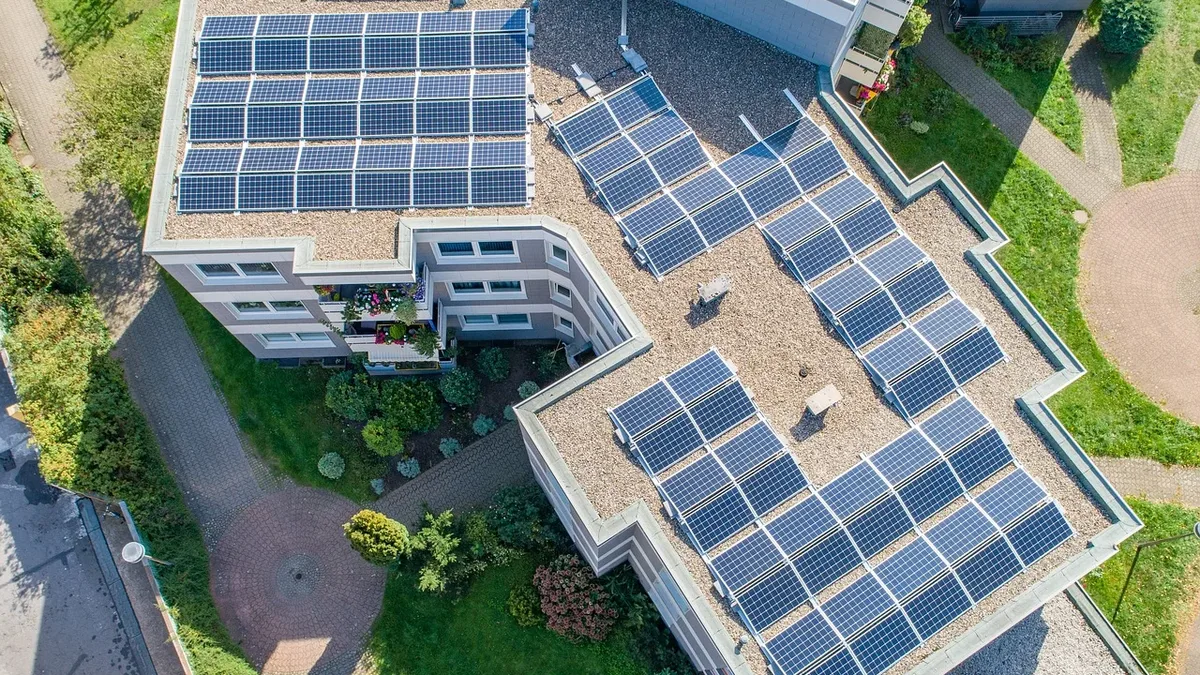
A new report from IEA PVPS Task 13 states that the solar industry must overhaul how it designs and tests photovoltaic systems for specialized applications. The report, titled "Optimisation of Photovoltaic Systems for Different Applications" (IEA-PVPS T13-39:2026), focuses on the unique challenges facing building-integrated PV (BIPV), floating PV (FPV), and agrivoltaics (AV).
These systems are multifunctional infrastructure, not only standard PV installed in unusual locations. Their assessment must therefore move beyond standard metrics like performance ratio and levelized cost of energy. The analysis proposes evaluating them across four categories: energy, economic, environmental, and social performance.
BIPV: Heat and shading risks
For building-integrated systems, operating temperature is highly dependent on configuration. Field data from Switzerland's SUPSI, representing moderate climates, found that only fully insulated, unventilated roof BIPV setups reached temperatures high enough to require the raise-temperature testing in IEC TS 63126:2020. Partially ventilated roofs and façades remained within standard thresholds.
Partial shading is flagged as a structural risk, not merely a cause of yield loss. The report notes that BIPV modules are frequently and unpredictably shaded by chimneys, trees, and neighboring buildings. It lists mitigation strategies, including finer bypass-diode segmentation, back-contact cells with lower breakdown voltages, and module-level power electronics. The report cautions that the term "shade-tolerant" remains an undefined marketing term without a standardized test.
Two case studies illustrate the trade-off between aesthetics and performance. They found that structural, interference-based colouration causes power losses of 5-20%, while absorbing pigments lead to losses of 20-50%.
FPV: Complex cooling and mechanical stress
The report challenges the assumption that water proximity guarantees cooler modules for floating PV. It states the cooling effect depends on system design and local conditions like obstructing buildings or vegetation.
Mechanical stress from waves is another concern. Wave-flume experiments showed modules can withstand substantial pressures from breaking waves without visible damage, though results vary with platform and mounting design. Maintenance poses a separate challenge: simulations suggest modules on a floating membrane may tolerate a person stepping on them, but localized dynamic loads can still cause damage.
Two case studies highlight design and modeling considerations. In one, simulations with PVsyst and SAM showed that the choice of modeling tool and its thermal assumptions significantly affected performance estimates. Another study of an alpine FPV plant at 1,810 meters in the Swiss Alps recorded a 29.1% production gain over a non-alpine equivalent, attributed to high-altitude conditions like snow albedo. However, heavy snow, ice, and seasonal transitions between floating and grounded operation presented major challenges.
AV: Ammonia, soiling, and operational hurdles
Beyond shading, agrivoltaics face unique durability risks. A key issue is ammonia exposure from fertilizers and livestock. Laboratory and field data show ammonia can diffuse through EVA encapsulants and PET backsheets, especially in humidity, corroding frames, degrading adhesives, and in one case causing junction-box arcing. Recommended mitigations include double-glass modules, ammonia-stable materials, and increased distance from emission sources.
Soiling in AV systems also behaves differently. One study in Chile recorded a maximum soiling loss of 30.2% on an uncleaned module. Research in Germany found transmittance losses varied from 0.1% to 47%, depending on configuration. Agricultural machinery can increase contamination, particularly on module rear surfaces, and deposits may adhere more strongly and resist rain cleaning.
Case studies from Sweden and Denmark detail operational problems. At Solvallen in Sweden, several modules in a fixed vertical bifacial system developed glass fractures, potentially linked to non-uniform foundation movement during freeze-thaw cycles. At Flakkebjerg in Denmark, autonomous agricultural robots experienced unstable GPS signals when operating beneath steel tracker structures.
The report's overarching conclusion is that standard IEC qualification protocols, designed for open-rack ground-mounted systems, only partially apply to these integrated applications. Revisions for some configurations are underway, but more adaptation is needed. The report advises developers to account for application-specific requirements from a project's earliest stages.