
Standalone Storage Tenders And Revenue Stacking
| Technology type | Battery energy storage system (BESS) |
|---|---|
| Project purpose | Grid stabilization and energy arbitrage |
| Project scale | Utility-scale (megawatt to multi-megawatt range) |
| Primary revenue mechanism | Frequency regulation and capacity services |
| Secondary revenue mechanism | Energy arbitrage (time-shifting) |
| Typical contract structure | Long-term service agreement or merchant model |
| Original use | Decoupling electricity generation from consumption for grid reliability |
Origin and history
Standalone storage tenders emerged as a distinct procurement mechanism in the 2010s, primarily within the United States and subsequently in other deregulated electricity markets. The concept was developed in response to the increasing recognition of energy storage's unique capabilities beyond simple energy time-shifting. Revenue stacking as a complementary financial strategy evolved concurrently, as developers and asset owners sought to maximize the value of storage assets in wholesale markets. These approaches were formalized through regulatory orders and market design changes by bodies like the Federal Energy Regulatory Commission (FERC) in the US. The integration of tenders and stacking represents a maturation of storage from a niche technology to a mainstream grid asset. This evolution was driven by the need to secure cost-effective grid services and to provide revenue certainty for capital-intensive storage projects.
What it is for
Standalone storage tenders are procurement processes used by utilities or grid operators to competitively solicit bids for new energy storage capacity that is not paired with a generation asset. Their primary purpose is to secure specific grid services, such as capacity, frequency regulation, or voltage support, at the lowest cost. Revenue stacking is a financial strategy employed to combine multiple revenue streams from a single storage asset to improve its economics. This strategy is necessary because the revenue from any single service or market is often insufficient to justify the capital investment. The tandem use of tenders and stacking is designed to de-risk storage projects for developers by providing a guaranteed floor revenue while allowing participation in volatile wholesale markets. Ultimately, this framework aims to accelerate the deployment of storage to enhance grid reliability and facilitate renewable energy integration.
Overview
A standalone storage tender is a competitive solicitation where developers bid to provide capacity or services from a battery or other storage system. Winning bids typically result in a long-term contract, such as a Resource Adequacy agreement or a tolling agreement, guaranteeing a fixed payment for availability or performance. Revenue stacking involves the same asset simultaneously or sequentially earning money from additional markets, like energy arbitrage, frequency regulation, or spinning reserve. The operational challenge lies in optimizing the asset's dispatch to fulfill contract obligations while capturing high-value opportunities in real-time markets. Sophisticated energy management systems and bidding software are essential to navigate complex market rules and avoid penalties. This model represents a shift from viewing storage as a single-use asset to treating it as a multi-service platform essential for modern grid operations.
What to know
The structure of a tender significantly impacts project viability, with contract length, performance requirements, and penalty structures being critical evaluation points. Revenue stacking is constrained by the physical limitations of the storage system, including cycle life, power-to-energy ratios, and round-trip efficiency, which dictate how many services can be provided. Market rules are paramount; some jurisdictions have implemented regulations to explicitly allow storage to provide multiple services and participate in wholesale markets. A common pitfall is the underestimation of operational costs and performance degradation associated with aggressive stacking strategies that increase cycle counts. The financial model is highly sensitive to future market price forecasts for energy and ancillary services, introducing significant merchant risk. Understanding the local interconnection queue process and potential grid upgrade costs is also essential, as these can derail even a successfully tendered project.
Common questions
How does a standalone storage tender differ from a renewable-plus-storage tender? The former procures storage alone, while the latter typically requires the storage to be collocated with and primarily charged from a specific generator. Can revenue stacking violate a long-term contract from a tender? It can, if the contract includes exclusivity clauses or strict dispatch control; contracts must be carefully structured to allow merchant activity. What happens when market prices are high but the asset must be available for its contracted service? The contract will specify penalties for non-performance, forcing the optimizer to weigh immediate market revenue against future contract payments. Is revenue stacking only relevant for battery storage? While most common for batteries due to their fast response, the concept applies to any storage technology that can provide multiple grid services. How do operators manage the complexity of stacking across different markets? They use specialized algorithmic bidding platforms that automate dispatch decisions based on real-time prices and contract constraints. Does revenue stacking increase wear and tear on batteries? Yes, providing more services typically involves more frequent and deeper cycling, which accelerates capacity fade and must be factored into lifecycle costs.
Pros and cons
A significant advantage is the de-risking of project finance through a long-term contract secured via a tender, which provides revenue certainty and improves bankability. Revenue stacking can substantially improve the internal rate of return (IRR) by capturing value from price volatility in energy and ancillary service markets. This model efficiently allocates grid resources by using a single asset for multiple needs, potentially lowering overall system costs. A major con is the extreme operational and market complexity, requiring sophisticated software and expertise, which creates a high barrier to entry for smaller developers. Projects often regret underestimating the aggressive degradation caused by stacked operations, leading to underperformance against financial projections later in life. A common mistake is overestimating future merchant revenue opportunities, leading to aggressive bidding in tenders that assumes unsustainable price spreads or ancillary service premiums.
Who it suits
This model suits well-capitalized, experienced developers and independent power producers (IPPs) with in-house market trading and asset optimization teams. It is ideal for regions with mature, liquid wholesale electricity markets that have clear rules for storage participation in multiple service categories. Utilities and grid operators seeking cost-effective reliability solutions without owning assets find standalone tenders an effective procurement tool. Investors with a higher risk tolerance, attracted by the potential for merchant upside atop contracted revenue, are also a key fit. The approach is less suitable for developers without deep operational expertise or for projects in markets with opaque rules, low liquidity, or significant barriers to merchant participation. It is generally not the first choice for a community-owned or small-scale storage project due to the requisite scale, complexity, and specialized knowledge.
Latest Standalone Storage Tenders And Revenue Stacking news
Latest reporting

Adani Green Energy expands Khavda battery storage to 6.63
Adani Green Energy Ltd has expanded its operational battery storage capacity at Khavda, Gujarat, to 6.63 GWh within 14 months, now representing over...

U.S. Energy Storage Market Hits Record 18.9 GWh in Q2 2026
The U.S. Energy storage market deployed a record 18.9 GWh of capacity in the second quarter of 2026, driven by utility-scale growth and a shift toward

EnergyPathways advances MESH salt cavern storage for UK grid
EnergyPathways is developing the Marram Energy Storage Hub (MESH), a 300 MW/55.2 GWh compressed air energy storage project in salt caverns under the...

India's BESS capacity faces delays from rising battery
A significant portion of India's under-construction battery energy storage capacity is at risk of delays due to rising battery costs and limited...
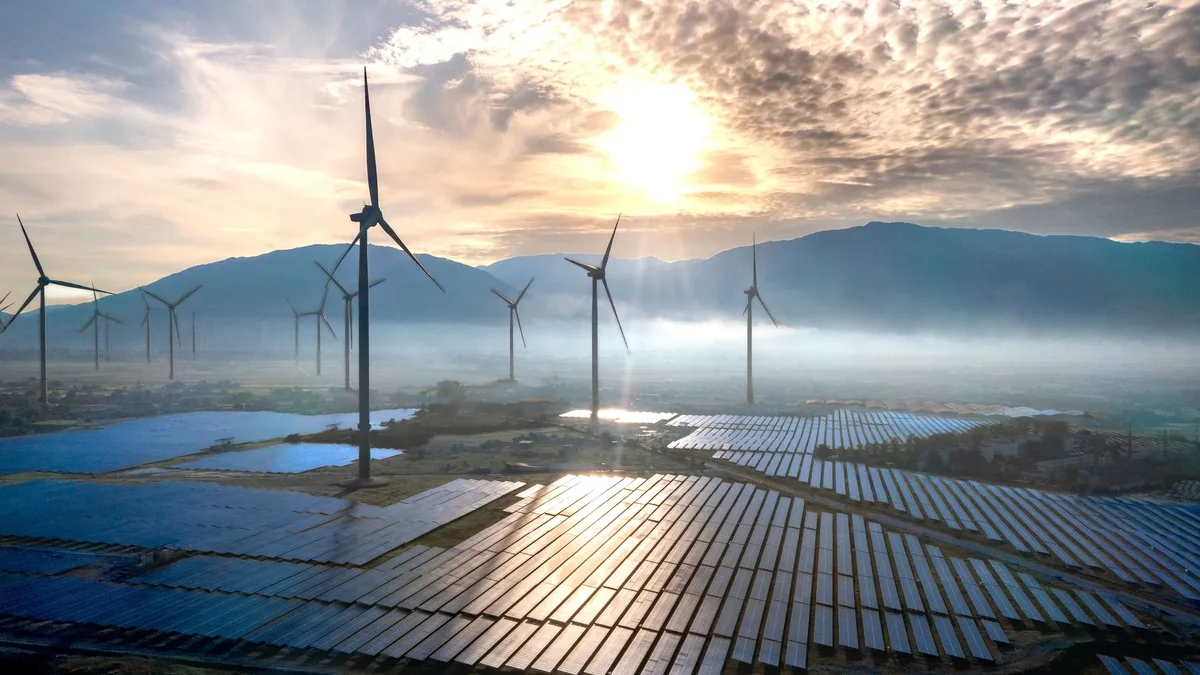
ERCO secures USD 33 million for Colombia
Finnfund and Proparco have committed a combined USD 33 million to Colombian solar energy platform ERCO. The EU-backed investment will fund solar and...
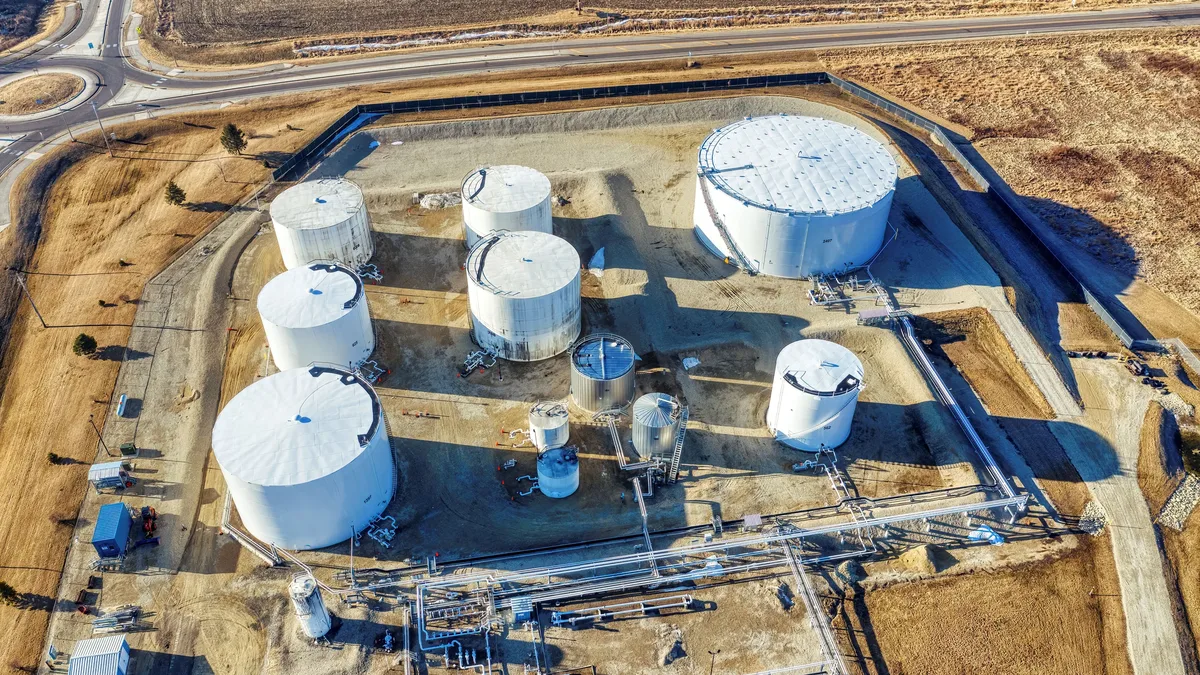
GridStor Secures $220 Million for Arizona Battery Storage
GridStor has closed $220 million in financing for its 100 MW/400 MWh White Tank battery storage project in Arizona, which will serve APS under a...