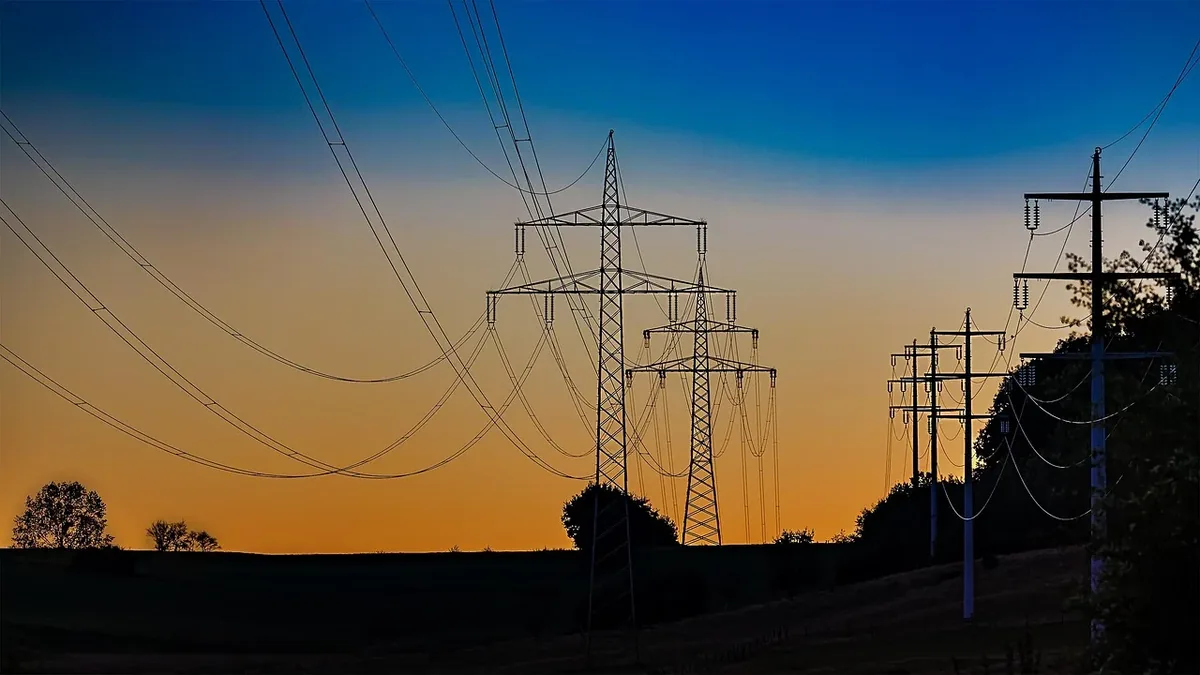
Renewable Energy Zones And Pooled Transmission
| Technology type | Grid integration and transmission planning |
|---|---|
| Original use | To efficiently connect and deliver bulk renewable energy from high-resource areas to distant load centers |
| Key principle | Aggregating multiple renewable generation projects within a designated geographic zone to share a single, high-capacity transmission line |
| Primary benefit | Reduces overall transmission infrastructure costs and environmental impact compared to point-to-point connections |
| Typical scale | Large-scale, involving hundreds of megawatts to gigawatts of generation capacity |
| Common components | High-voltage direct current (HVDC) or high-voltage alternating current (HVAC) transmission corridors, substations, collector systems |
Origin and history
The conceptual framework for Renewable Energy Zones (REZs) combined with pooled transmission planning originated in the United States in the early 21st century. It emerged as a direct policy and engineering response to the challenges of integrating large-scale, geographically concentrated renewable energy into existing power grids. Key early development occurred in the mid-2000s within the jurisdiction of the Federal Energy Regulatory Commission (FERC) and in states like Texas. The approach was formalized to address the inefficient, piecemeal process of connecting individual wind and solar plants to the grid, which often led to costly delays and network congestion. The model was subsequently adopted and adapted by other nations, including Australia and China, in the 2010s as they pursued ambitious renewable energy targets. Its history is intrinsically linked to the transition away from fossil-fuel generation and the need for proactive, large-scale grid infrastructure planning.
What it is for
This integrated framework is for efficiently developing and delivering large quantities of renewable electricity from optimal resource areas to distant population centers. Its primary purpose is to solve the "chicken-and-egg" problem in energy infrastructure, where developers are hesitant to build without guaranteed transmission access, and transmission planners are hesitant to build without guaranteed generation. It is designed to reduce overall system costs by aggregating multiple projects into a single, coordinated transmission expansion, rather than building separate lines for each plant. The model aims to minimize environmental and community impacts by concentrating infrastructure corridors within designated zones. Furthermore, it serves to provide market certainty for investors and streamline complex regulatory approval processes. Ultimately, it is a planning tool for achieving state or national renewable energy and decarbonization goals at the lowest practical cost and risk.
Overview
A Renewable Energy Zone (REZ) is a geographic area identified as having high-quality renewable resources, suitable land availability, and relatively low environmental or social conflict for development. Pooled transmission refers to the coordinated planning and construction of shared high-capacity power lines to connect multiple generation projects within one or more REZs to the main grid. The process typically begins with a government or independent system operator conducting a study to identify potential zones based on resource data and network modeling. Once zones are declared, a competitive process is often used to select generation projects within them, and the cost of the shared transmission infrastructure is socialized among all connected generators or across a broader ratepayer base. This creates a planned pipeline of projects and infrastructure, contrasting sharply with the older queue-based interconnection system. The entire framework requires significant upfront analysis and regulatory coordination but is intended to yield a more reliable and economically efficient long-term outcome for the electricity system.
What to know
It is crucial to understand that REZs are not merely resource-rich areas but are formally designated through a regulatory or legislative process, which grants them priority for transmission planning and funding. The "pooled" or "shared" cost model for transmission is a fundamental departure from the traditional "winner-pays" or "first-come, first-served" interconnection approach, spreading financial risk and benefit. Successful implementation depends heavily on robust long-term forecasting of energy demand, resource potential, and grid stability needs, which are inherently uncertain. Stakeholder engagement, particularly with local communities and landowners in and around the designated zones, is a major factor that can accelerate or derail the development timeline. The model often necessitates changes to existing market rules and transmission planning protocols to accommodate the forward-looking investment and cost recovery mechanisms. While designed to reduce costs, the upfront capital requirements for large-scale transmission are enormous, and cost overruns or delays in generation projects can create financial pressures on the overall scheme.
Common questions
A common question is how locations for Renewable Energy Zones are chosen, which involves complex modeling of wind or solar resource quality, land-use constraints, and proximity to existing grid infrastructure and load centers. Many ask who ultimately pays for the new transmission lines, which is typically a combination of the participating generators through connection fees and the broader consumer base through regulated network charges. People often inquire about the difference between a REZ and a simple cluster of wind farms, the key distinction being the formal, pre-emptive planning and guaranteed shared transmission access inherent to the REZ model. There is frequent confusion about what happens if not enough generation projects are built in a zone, a risk that can leave underutilized transmission assets whose costs must still be recovered. Questions arise regarding the environmental impact, as while the model consolidates corridors, the transmission lines themselves are still major linear infrastructure projects that can affect landscapes and ecosystems. Finally, stakeholders often seek to understand how project developers gain entry to a zone, which is usually through a competitive tender process run by a government agency or system operator.
Pros and cons
A significant pro is the dramatic improvement in economic efficiency, as building one large transmission line for multiple projects is far cheaper and less disruptive than many smaller, uncoordinated lines. The framework provides critical long-term signals to investors, reducing financing costs and accelerating the deployment of renewable energy to meet policy targets. By proactively identifying zones, it can help avoid conflicts over land use and biodiversity, directing development to pre-vetted areas. A major con is the substantial execution risk, where delays in regulatory approvals, legal challenges, or difficulties in securing rights-of-way for transmission can stall the entire portfolio of linked generation projects. The model can also create "winners and losers," as developers outside designated zones may find it prohibitively expensive or impossible to connect to the grid, potentially stifling innovation. A common mistake is underestimating the complexity of stakeholder alignment required among multiple government agencies, private developers, network companies, and communities, which can lead to costly re-planning.
Who it suits
This approach best suits governments or system operators with clear, ambitious long-term mandates for renewable energy penetration and grid decarbonization. It is particularly suited to large nations or regions with excellent renewable resources located far from major cities, such as sunny deserts or windy plains distant from coastal populations. The model suits well-capitalized, utility-scale project developers who can participate in competitive tenders and manage the risks associated with longer, more complex development timelines. It is less suited to areas with a dense, already congested grid where localized generation might be more efficient, or for small-scale, community-based renewable projects that cannot leverage large shared infrastructure. The framework also suits jurisdictions with a strong central planning authority or a highly cooperative regional transmission organization capable of overseeing the decades-long planning and cost-allocation processes.
Latest Renewable Energy Zones And Pooled Transmission news
Latest reporting
Adani Green Energy expands Khavda battery storage to 6.63
Adani Green Energy Ltd has expanded its operational battery storage capacity at Khavda, Gujarat, to 6.63 GWh within 14 months, now representing over...

U.S. Energy Storage Market Hits Record 18.9 GWh in Q2 2026
The U.S. Energy storage market deployed a record 18.9 GWh of capacity in the second quarter of 2026, driven by utility-scale growth and a shift toward

EnergyPathways advances MESH salt cavern storage for UK grid
EnergyPathways is developing the Marram Energy Storage Hub (MESH), a 300 MW/55.2 GWh compressed air energy storage project in salt caverns under the...
India's BESS capacity faces delays from rising battery
A significant portion of India's under-construction battery energy storage capacity is at risk of delays due to rising battery costs and limited...
Websol Secures West Bengal Land for 4GW Solar Plant
Websol Energy System has obtained 21.9 hectares in West Bengal's Falta Industrial Park to build a 4GW solar cell and module factory, with the first...
ERCO secures USD 33 million for Colombia
Finnfund and Proparco have committed a combined USD 33 million to Colombian solar energy platform ERCO. The EU-backed investment will fund solar and...