
Currency Risk In Long Term Power Purchase Agreements
| Country of origin | United States |
|---|---|
| First created | 2010s |
| Original use | Financial risk analysis for renewable energy projects |
| Core methodology | Scenario-based currency volatility modeling |
| Typical contract period analyzed | 15 to 25 years |
| Primary risk factors | Exchange rate fluctuations, inflation differentials |
| Common mitigation instruments | Currency swaps, indexed tariffs, blended pricing |
| Target users | Project developers, corporate energy buyers, financial institutions |
Origin and history
Currency risk in long-term power purchase agreements is not a technology or project, but a financial and contractual concept that emerged from the global expansion of independent power projects in the late 20th century. Its formal recognition and structuring became critical with the rise of project finance in the power sectors of developing nations during the 1990s. This period saw a significant increase in foreign direct investment for energy infrastructure, where investors from one currency zone built projects in another. The need to manage exchange rate volatility between the currency of revenue (often local) and the currency of debt repayment (often US dollars or Euros) became a central tenet of contract negotiation. The concept was further refined through experiences in regions like Southeast Asia and Latin America, where currency crises underscored the associated financial vulnerabilities. Its principles are now established in international project finance, evolving through decades of deal-making and lessons from defaults linked to currency mismatches.
What it is for
This contractual and financial mechanism is designed to allocate and manage the risk associated with fluctuations in foreign exchange rates over the multi-decade lifespan of a power purchase agreement. Its primary purpose is to protect the financial viability of a power generation project by ensuring it can service foreign-denominated debt and meet operating costs despite local currency depreciation. It provides a framework for determining which party, the power producer (project company) or the power off-taker (often a state utility), bears the cost or benefit of currency movements. The structure aims to make projects bankable for international lenders and investors by providing predictable cash flow coverage for hard currency obligations. It also serves to protect public sector off-takers from bearing unsustainable costs if their local currency weakens dramatically. Ultimately, it is a risk allocation tool essential for facilitating cross-border investment in capital-intensive, long-term energy infrastructure.
Overview
In a typical structure, a project company incurs costs in multiple currencies: capital costs and debt service are often in a hard currency like US dollars, while operational costs and revenues are in the local currency of the host country. The long-term power purchase agreement (PPA) must explicitly address how the conversion between these currencies is handled for tariff payments. Common mechanisms include indexing a portion of the tariff to a foreign exchange rate or defining a base exchange rate at financial close with predefined adjustment formulas. Some contracts incorporate full pass-through of currency risk to the off-taker, while others may share the risk through bands or caps on adjustments. The complexity increases with projects that have fuel costs indexed to global markets in another currency. Legal frameworks and central bank regulations in the host country heavily influence what structures are permissible and enforceable. This financial engineering is as critical to the project's success as the physical engineering of the power plant itself.
What to know
The specific allocation of currency risk is a key determinant of a project's credit rating and its cost of capital, with lenders requiring robust mitigants. A mismatch where revenue is in a weakening local currency but debt is in a strengthening foreign currency can swiftly lead to default, even if the plant operates perfectly. Contracts often distinguish between convertible currency shortages (transfer risk) and exchange rate movements (devaluation risk), addressing them separately. The choice of exchange rate index (e.g., official vs. market) and the frequency of tariff adjustments are heavily negotiated points with significant financial impact. In many jurisdictions, the sovereign's creditworthiness is implicitly linked to this risk, as the state may guarantee the off-taker's obligations. Understanding the host country's macroeconomic stability, inflation history, and exchange control regime is prerequisite to evaluating this contractual provision. Legal counsel from experts in international project finance is essential, as standard corporate hedging instruments are often unavailable for 20-25 year terms.
Common questions
Who typically bears the currency risk in a PPA? There is no universal answer, as allocation depends on negotiation leverage, local regulations, and the credit profile of the off-taker, though lenders strongly prefer it be borne by the off-taker or the host government. Can currency risk be fully hedged in the financial markets? For the full tenure of a long-term PPA, deep and liquid hedging markets rarely exist, making contractual allocation the primary tool. What happens if the local currency devalues significantly? If the risk is with the project company, its debt service coverage ratios will deteriorate, potentially triggering loan covenants and requiring equity injections. How does inflation relate to currency risk? They are distinct but linked; high inflation often pressures exchange rates, and PPAs may have separate escalation indices for local and foreign cost components. Are renewable energy projects exposed to the same currency risk? Yes, as while they have no fuel cost, their capital costs are almost entirely foreign-denominated, creating the same fundamental mismatch. What role do multilateral agencies play? Institutions like the World Bank can provide partial risk guarantees to cover the public off-taker's currency payment obligations, enhancing bankability.
Pros and cons
A major pro of a well-structured currency risk allocation is that it unlocks finance for essential infrastructure that would otherwise be unbuildable due to investor reluctance. It provides long-term certainty for both investors and the host country regarding the real cost of power, facilitating energy planning. When risk is appropriately borne by the party best able to manage it (often the sovereign), it leads to more efficient risk pricing and lower overall project tariffs. A significant con is that structures placing risk on public off-takers can create massive contingent liabilities for governments, which may become unsustainable after a sharp devaluation, leading to renegotiation or default. Projects where developers are forced to retain excessive local currency risk often see higher required returns, making electricity more expensive, or may fail to reach financial close altogether. A common mistake is underestimating tail risk, using historical volatility that fails to capture potential currency collapse scenarios, leaving all parties exposed. Developers and lenders sometimes regret complex, formulaic sharing mechanisms that become contentious and unworkable during actual crises, when clarity is most needed.
Who it suits
This contractual focus suits projects in emerging markets and developing economies where capital markets are shallow and local currency debt is insufficient for large-scale power projects. It is essential for any project financed with significant foreign-denominated debt, regardless of technology, be it thermal, hydro, or renewable. The structure is particularly critical for projects with private international sponsors and lenders, as their risk tolerance for currency volatility is low. It suits jurisdictions where the government or utility has a relatively strong credit rating and the capacity, or sovereign guarantee, to assume the long-term liability. Conversely, it is less relevant for projects financed entirely with local currency equity and debt, or in nations with deep, stable capital markets and freely convertible currencies. The complexity demands parties with sophisticated legal and financial advisors experienced in cross-border project finance, as the consequences of a poorly drafted clause are severe and long-lasting.
Latest Currency Risk In Long Term Power Purchase Agreements news
Latest reporting

India's BESS capacity faces delays from rising battery
A significant portion of India's under-construction battery energy storage capacity is at risk of delays due to rising battery costs and limited...
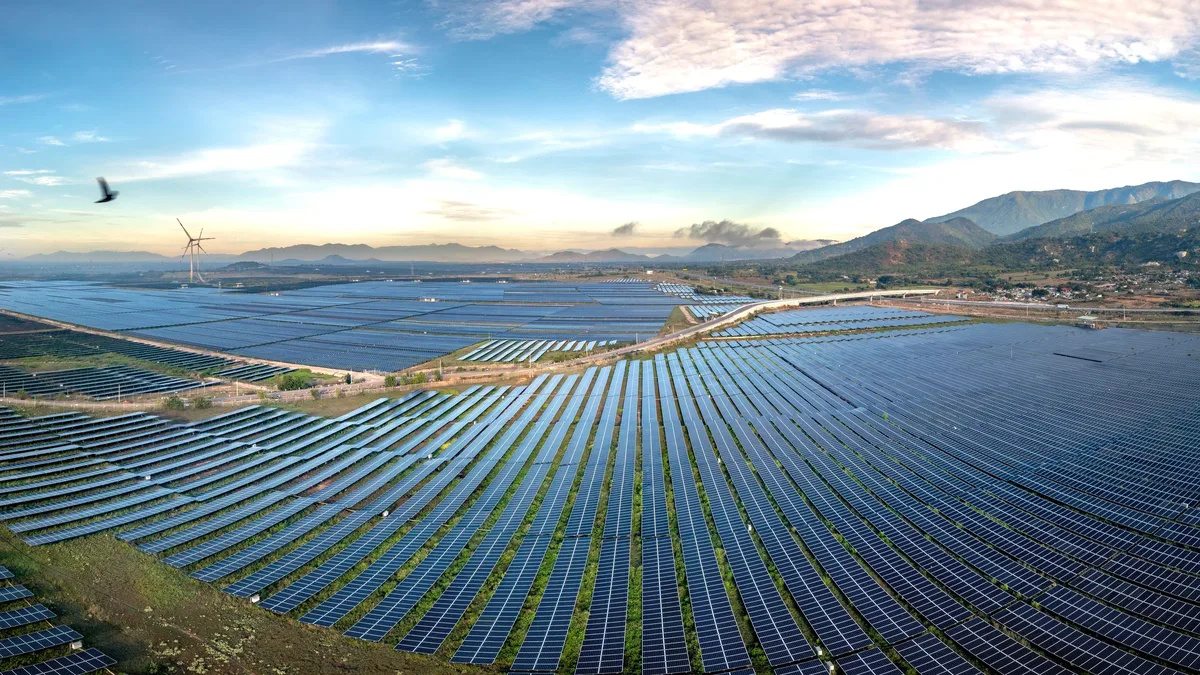
Amazon and Nadara launch 277 MW agrivoltaic farm in Sicily
Nadara has completed Italy's largest agrivoltaic facility, a 227 MW solar project in Sicily. The Big Fish project, supported by a 156 MW power...

Zelestra signs 147MW solar-storage PPA with Salzgitter steel
Spanish IPP Zelestra has signed Germany's largest hybrid power purchase agreement to date with steelmaker Salzgitter Flachstahl.

OptiGrid CEO on battery storage optimisation
OptiGrid CEO Sahand Karimi argues battery warranties and service agreements must be integrated into optimisation software to avoid distorted trading.

Enel wins Chile's latest power auction by narrow margin
Enel Generación Chile secured 100% of the energy in Chile's latest regulated power auction, but an analysis by Aurora Energy Research reveals the...

PJM Proposes 6GW Auction to Cover Data Centre Power
Grid operator PJM has submitted a two-part plan to FERC, proposing a one-time 6GW capacity auction and shifting responsibility for new supply to large