Cross Border Interconnectors In Asia
| Technology type | High-voltage direct current (HVDC) electricity transmission |
|---|---|
| Primary purpose | Synchronize and exchange electrical power between national grids |
| Typical voltage level | 500 kV to 800 kV |
| Typical capacity range | Hundreds of megawatts to several gigawatts |
| Key enabling components | Converter stations, submarine or underground cables, overhead lines |
| Original use | Connect asynchronous power grids and enable bulk power trade |
Origin and history
The concept of cross-border electricity interconnectors in Asia has its origins in the late 20th century, emerging from regional discussions on energy security and economic cooperation. Early theoretical frameworks and feasibility studies were developed in the 1990s, often supported by multilateral institutions like the Asian Development Bank. The foundational idea was adapted from established interconnector projects in Europe and North America, but tailored to Asia's unique geopolitical and geographical landscape. The first operational, purpose-built cross-border interconnectors in Southeast Asia began linking Thailand with neighboring Laos and Malaysia in the early 2000s. In Northeast Asia, discussions and technical studies for connections between Russia and China, and on the Korean peninsula, also date back several decades. The historical development has been incremental, driven by bilateral agreements rather than a unified continental grid, with progress heavily dependent on political relations between nations.
What it is for
Cross-border interconnectors in Asia are primarily for enabling international electricity trade, allowing power surplus in one country to be sold to a neighboring country with a deficit. They are designed to enhance regional energy security by providing diversification of supply sources and acting as a backup during domestic generation shortfalls or emergencies. A key purpose is to facilitate the integration of large-scale, remote renewable energy resources, like hydropower from Laos or wind power from Mongolia, to load centers in other countries. They serve as critical infrastructure for creating regional power markets, which can lead to more efficient and cost-effective electricity systems across borders. These projects are also often pursued for strategic and diplomatic reasons, fostering economic interdependence and cooperation between nations. Furthermore, they can help defer or reduce the need for building new domestic power generation capacity by accessing existing resources elsewhere.
Overview
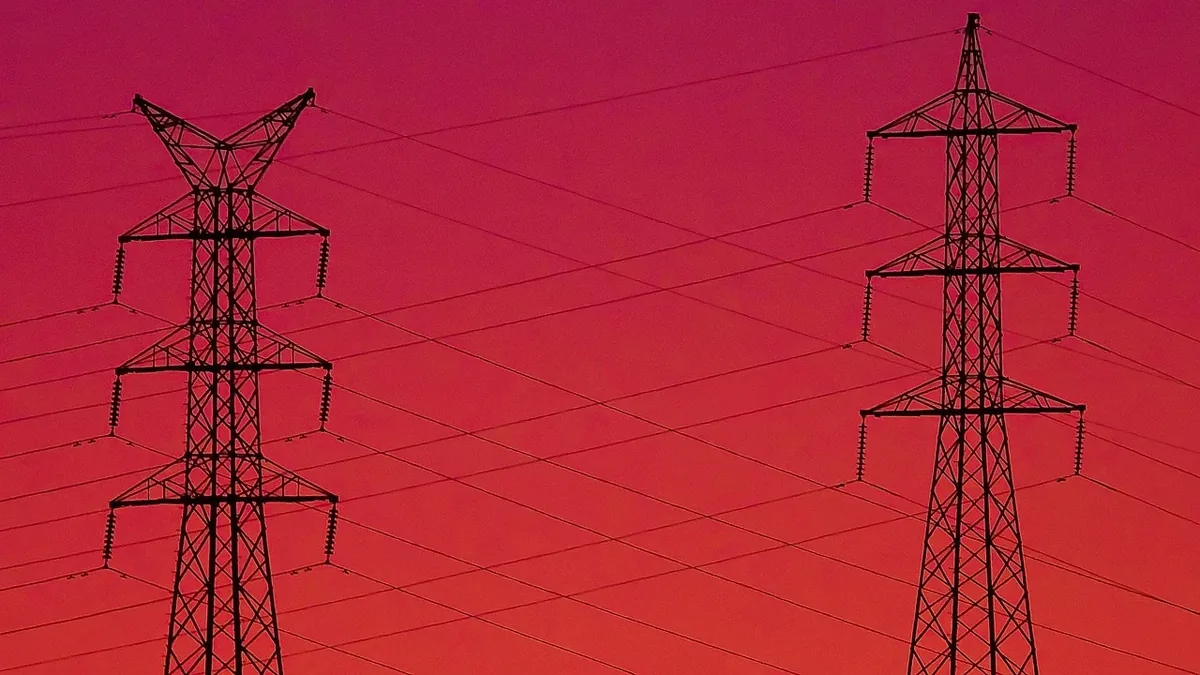
A cross-border interconnector is a high-voltage transmission line, often using alternating current (AC) or high-voltage direct current (HVDC) technology, that physically connects the national power grids of two or more sovereign countries. In Asia, these are not a single technology but a class of infrastructure projects that include overhead lines, submarine cables, and associated converter stations and substations. The projects vary greatly in scale, from relatively short 230-kilovolt connections between Thailand and Laos to massive proposed multi-gigawatt links spanning thousands of kilometers. Operationally, they require complex bilateral or multilateral agreements governing tariffs, capacity allocation, grid code harmonization, and dispute resolution. The technical core involves sophisticated control and protection systems to ensure stability is maintained in both interconnected grids despite differing frequencies or operational standards. Notable examples in development or operation include the Laos-Thailand-Malaysia-Singapore Power Integration Project, links between Nepal and India, and the ongoing interconnection between China and its numerous neighbors.
What to know
The development timeline for a major Asian cross-border interconnector is typically measured in decades, not years, due to lengthy negotiations, environmental impact assessments, and financing arrangements. Financing is a major hurdle, often requiring a consortium of development banks, export credit agencies, and private investors, with risk allocation being a key point of contention. Geopolitics is an inescapable factor, as these projects can be delayed or shelved entirely due to diplomatic tensions or sovereignty concerns, irrespective of their economic merit. Technical compatibility is a significant challenge, requiring alignment of grid codes, voltage levels, frequency control, and cybersecurity protocols between the connected national systems. The commercial model is usually based on long-term power purchase agreements (PPAs) between state-owned utilities or designated entities, rather than short-term spot market trading common in Europe. Local opposition can arise over land acquisition for transmission corridors, especially when lines cross densely populated or environmentally sensitive areas, leading to further delays.
Common questions
How is the price of electricity determined for cross-border trade? Prices are typically set through confidential bilateral contracts or government-to-government agreements, not a transparent market auction. What happens if one country's grid fails, does it bring down the neighbor's grid? Modern interconnectors include specialized protection relays that can automatically isolate a fault to prevent cascading blackouts. Are these lines only for selling power one way? While many start with a primary direction of flow, well-designed interconnectors are capable of bidirectional power transfer depending on daily and seasonal supply and demand patterns. Why use expensive HVDC technology instead of standard AC lines? HVDC is often chosen for very long distances or submarine connections due to lower electrical losses, and because it can connect asynchronous grids with different frequencies, like Japan's to a continental grid. Who owns and operates the physical infrastructure? Ownership models vary, including joint ventures between national utilities, independent transmission companies, or single ownership with regulated third-party access. Can these lines help integrate solar and wind power? Yes, they are seen as crucial for balancing variable renewable generation across a wider geographical area, smoothing out local weather-related intermittency.
Pros and cons
A significant pro is the potential for substantial economic savings from accessing cheaper generation resources and optimizing regional power plant utilization, lowering overall electricity costs. They enhance energy security by providing access to backup power and diversifying the generation mix, making individual national grids more resilient. Environmentally, they can accelerate the decarbonization of the region by enabling the development of large-scale remote renewable energy projects that would otherwise be stranded. A major con is the extremely high capital cost and financial risk, which requires government backing and can burden utilities with debt if projected electricity demand or tariff revenues fail to materialize. Geopolitical risk is a profound drawback, as interconnectors create energy dependence; a diplomatic dispute can lead to supply cutoffs or the project becoming a tool of political leverage, leaving one party vulnerable. Common mistakes include underestimating the complexity of grid synchronization and the institutional capacity required for joint operation, leading to technical failures or chronic underutilization of the built capacity.
Who it suits
This infrastructure suits countries with a significant imbalance between domestic energy resource potential and local electricity demand, such as hydropower-rich nations like Laos or Bhutan seeking export markets. It suits large, power-hungry economies with diverse neighboring resources, like Thailand or China, which can use imports to meet demand peaks and supplement their own generation portfolio. The model suits regions with relatively stable political relationships and a shared long-term vision for economic integration, such as within the Association of Southeast Asian Nations (ASEAN) bloc. It is suited for projects backed by strong multilateral financial institutions and development banks that can mitigate commercial and political risks for private investors. This approach does not suit nations in active territorial disputes or with deep-seated strategic mistrust, where energy interdependence is viewed as a security threat rather than a benefit. It is also poorly suited for countries with very weak, unstable, or non-standard domestic grid infrastructure, as interconnection demands a high baseline of technical reliability and operational discipline.