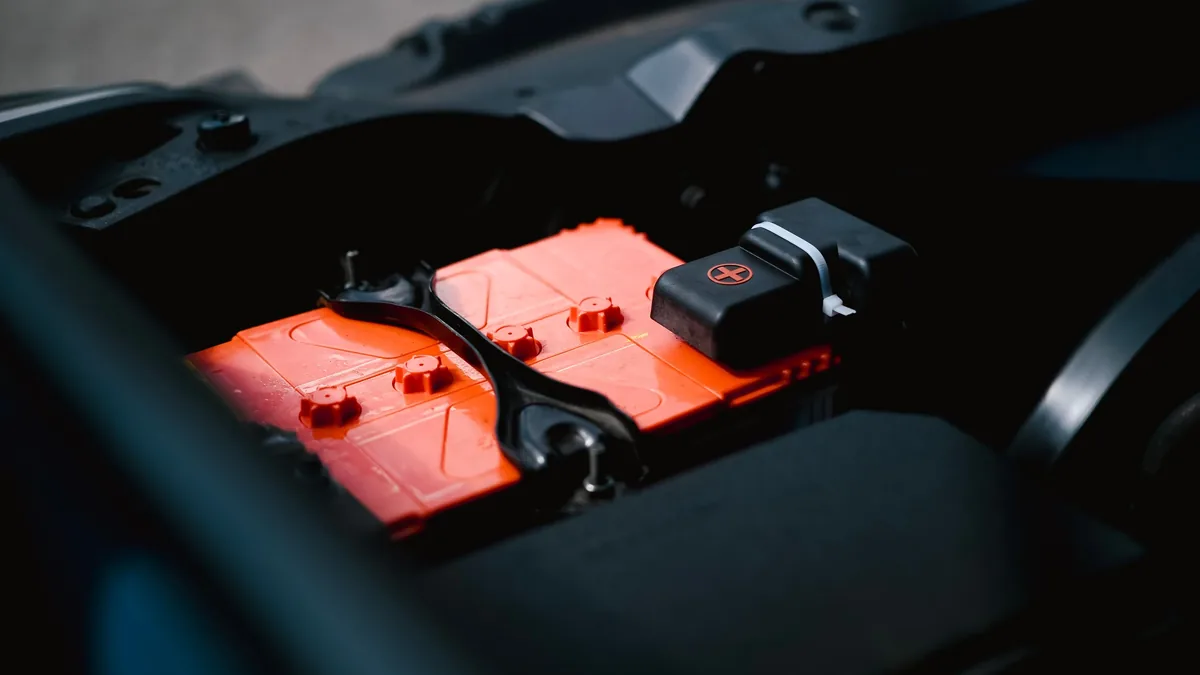
Battery Degradation, Warranties And Augmentation
| Technology type | Battery energy storage system (BESS) |
|---|---|
| Original use | Grid-scale energy storage and load management |
| Warranty period | Typically 10 to -15 years |
| Warranty coverage | Performance retention (e.g., 70% capacity after 10 years) |
| Degradation rate | Varies by chemistry and operating conditions |
| Augmentation method | Partial replacement or addition of battery modules |
| Common chemistries | Lithium-ion (e.g., LFP, NMC) |
Origin and history
The commercial and technical concepts surrounding battery degradation, warranties, and augmentation are not a single technology with a discrete origin. They are a suite of interrelated practices and contractual frameworks that evolved alongside grid-scale battery energy storage systems (BESS). Their development is primarily associated with the rise of lithium-ion battery technology for stationary storage, which gained significant commercial traction in the late 2000s and early 2010s. The geographic center for much of this foundational technical and commercial development spans East Asia, where major cell manufacturing is concentrated, and North America, where early large-scale project deployment and financing models were pioneered. The formalization of performance warranties and augmentation strategies became critical as financial institutions required long-term performance guarantees to fund multi-million-dollar projects. These concepts are now standard across the global utility-scale storage industry, evolving continuously with battery chemistry and project experience.
What it is for
This framework exists to manage the financial and operational risks associated with the inevitable decline in performance of electrochemical battery systems over time. Its primary purpose is to ensure a grid-scale battery project meets its promised financial returns and grid service obligations throughout its contracted lifespan, which often exceeds 15 years. Detailed degradation models are used to predict the loss of energy capacity and power capability as batteries undergo charge-discharge cycles and calendar aging. Warranties are contractual instruments that translate these models into enforceable guarantees from the equipment supplier or integrator to the project owner. Augmentation is the physical strategy of adding new battery modules or cells during the project's life to offset degradation and maintain the system's original performance specifications, thereby protecting revenue streams.
Overview
Battery degradation refers to the gradual reduction in a battery's ability to store and deliver energy, measured primarily through capacity fade and increased internal resistance. Warranties for BESS projects are complex agreements that typically guarantee a minimum remaining energy capacity or throughput after a specified number of years or cycles, often with associated performance availability clauses. Augmentation involves the planned replacement or addition of battery modules within the storage system's racks or containers to restore lost capacity and power. These three elements are deeply interconnected in project planning, with degradation models informing warranty terms, and warranty structures dictating the timing and scale of augmentation investments. The entire framework requires sophisticated monitoring and battery management systems to track state-of-health and validate warranty claims.
What to know
Degradation is not linear; it is influenced by usage patterns, depth of discharge, temperature, and charging rates, making accurate modeling critical for project economics. Warranties often have strict operational boundaries; exceeding temperature limits or cycling protocols can void the guarantee, placing operational risk on the asset owner. Augmentation is a major future capital expense that must be planned and financed upfront, as it requires system downtime, potential technology mismatches, and significant labor costs. Project contracts must clearly define who bears the cost of augmentation, whether it is covered by the warranty, is the owner's responsibility, or is part of a service agreement. The availability of compatible replacement modules a decade into a project's life is a real concern due to rapid technological evolution. Understanding the difference between energy capacity warranties and power warranties is essential, as they can degrade at different rates.
Common questions
What is a typical warranty period and coverage for a utility-scale BESS? How is battery degradation measured and verified to ensure warranty compliance? What happens if a battery system degrades faster than the warranty model predicted? Who is responsible for the performance shortfall? Does augmentation require replacing entire containers, or can it be done at the module or cell level? How does augmentation affect the system's balance-of-plant components like inverters and transformers? Can newer, higher-density battery modules be integrated into an older system, and what are the compatibility challenges? What are the logistical and safety considerations for handling and installing replacement modules in an operational facility? How do warranties and augmentation strategies differ between lithium-ion phosphate (LFP) and nickel manganese cobalt (NMC) chemistries?
Pros and cons
A key advantage is that this framework enables the bankability of long-duration storage projects by providing financiers with predictable performance and recourse. It allows for precise long-term operational planning and revenue forecasting, which is essential for contracted services like capacity or grid regulation. However, a significant con is the complexity and potential for disputes; verifying degradation and proving warranty breach often requires third-party testing and can lead to lengthy legal conflicts. Project owners sometimes regret not understanding the full operational constraints of the warranty, leading to unintentional violations during grid emergencies or market price spikes. A common mistake is focusing solely on the headline warranty duration and remaining capacity percentage without analyzing the detailed exclusions, measurement methodologies, and remedy clauses. Suppliers may face severe financial penalties if their degradation models are overly optimistic, creating tension between competitive bidding and realistic promises.
Who it suits
This operational and commercial framework is essential for independent power producers, utilities, and institutional investors who own and operate grid-scale battery storage assets for revenue generation. It suits large-scale projects financed through non-recourse debt, where lenders heavily rely on warranty-backed performance models for credit approval. Engineering, procurement, and construction (EPC) firms and system integrators must deeply understand these concepts to design systems that are both augmentable and capable of meeting warranty milestones. The framework is less critical for small-scale, short-duration, or research-oriented projects where the financial risk of degradation is absorbed by the host. It is particularly suited to markets with long-term service agreements or capacity contracts, where predictable performance over a 15-20 year term is the primary source of asset value.
Latest Battery Degradation, Warranties And Augmentation news
Latest reporting
Adani Green Energy expands Khavda battery storage to 6.63
Adani Green Energy Ltd has expanded its operational battery storage capacity at Khavda, Gujarat, to 6.63 GWh within 14 months, now representing over...
India's BESS capacity faces delays from rising battery
A significant portion of India's under-construction battery energy storage capacity is at risk of delays due to rising battery costs and limited...
ERCO secures USD 33 million for Colombia
Finnfund and Proparco have committed a combined USD 33 million to Colombian solar energy platform ERCO. The EU-backed investment will fund solar and...
GridStor Secures $220 Million for Arizona Battery Storage
GridStor has closed $220 million in financing for its 100 MW/400 MWh White Tank battery storage project in Arizona, which will serve APS under a...
Form Energy Secures $270 Million for Iron-Air Battery
Form Energy has closed a $270 million credit facility to scale up manufacturing of its iron-air battery systems for multi-day energy storage.
Vena Energy and EnergyAustralia add 554MW of battery storage
Two major battery energy storage systems in South Australia and Victoria, totaling 554MW, have entered the Australian Energy Market Operator's Market