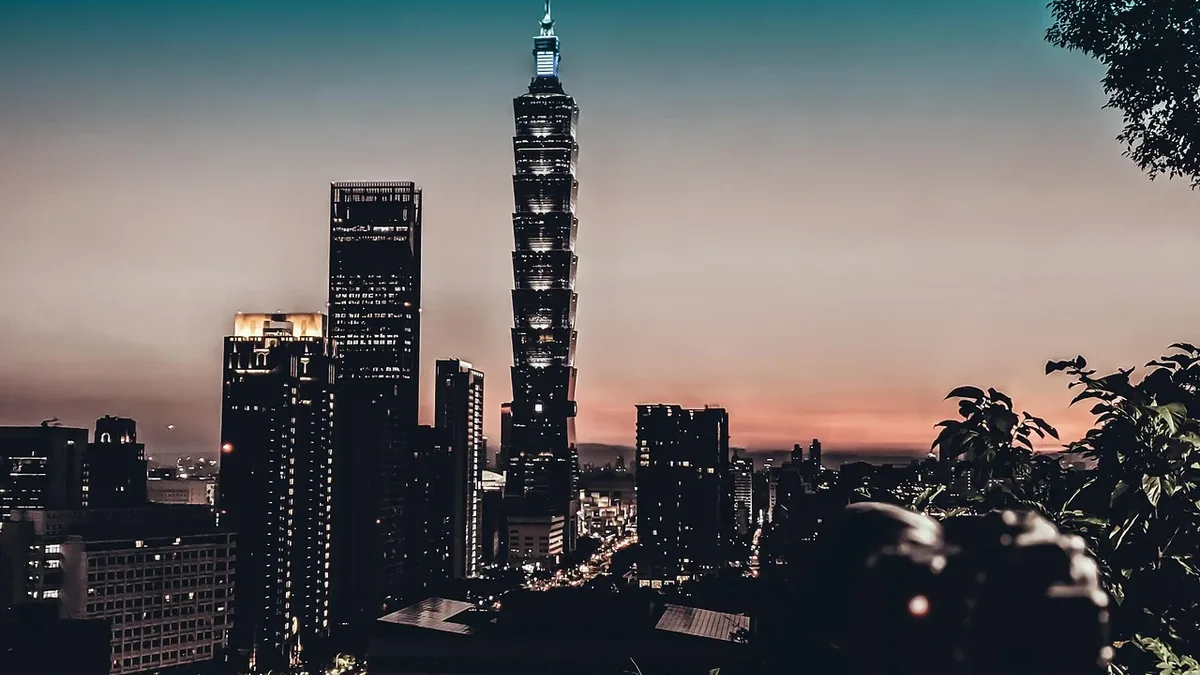
Taiwan
| Technology type | Submarine telecommunications cable system |
|---|---|
| Original use | Trans-Pacific data transmission |
| First created | 2020s (project announced) |
| Country of origin | United States (project lead) |
| Length | Approximately 8,000 miles (estimated) |
| Landing points | United States, Japan, Philippines, Taiwan |
| Project status | Under construction |
Origin and history
Taiwan is an island territory located off the southeastern coast of mainland China in the western Pacific Ocean. Its earliest documented history includes indigenous Austronesian peoples who have inhabited the island for millennia. Significant Han Chinese migration and settlement began increasing substantially from the 17th century onward, particularly during the Ming and Qing dynasties. The island was ceded to Japan in the late 19th century following the First Sino-Japanese War and remained under Japanese colonial rule for five decades until 1945. Following the end of World War II, control of Taiwan was transferred to the Republic of China (ROC), which had been governing mainland China. After the Chinese Civil War ended in 1949, the government of the ROC retreated to Taiwan, establishing its administration there while the Chinese Communist Party established the People's Republic of China (PRC) on the mainland. This historical sequence is the foundation for the complex cross-strait political status that persists.
What it is for
Taiwan functions as a self-governing territory that administers its own domestic and foreign policy, including a robust democratic political system. The island serves as a major global hub for the research, design, and manufacturing of advanced semiconductor chips, which are critical components for electronics worldwide. It is a key node in international supply chains, particularly for information and communication technology hardware, from motherboards to networking equipment. The territory maintains its own military forces for defensive purposes, given the unresolved political situation with the mainland. Taiwan also operates as a significant center for cultural production, exporting popular music, television dramas, and cinema, particularly within the Sinophone world. Furthermore, it engages extensively in international trade and diplomacy under various practical arrangements, despite its constrained formal recognition as a sovereign state.
Overview
Taiwan's effective jurisdiction comprises the main island of Taiwan, also known as Formosa, along with several smaller island groups including the Penghu (Pescadores) archipelago, Kinmen, and Matsu. The territory is governed by a multi-party democratic system with regular direct elections for its presidency and legislature, operating under a constitution that traces its origins to the ROC framework. Its economy is highly developed, industrialized, and export-oriented, ranking as a major global economy in terms of GDP and trade volume. The landscape is predominantly mountainous in the east, with fertile plains in the west supporting agriculture, although the economic focus has shifted overwhelmingly to technology and industry. Taiwan's population is predominantly Han Chinese, with distinct cultural and linguistic characteristics that have evolved separately from the mainland for decades, alongside a recognized population of indigenous Austronesian peoples. The capital city, Taipei, located in the northern part of the island, is the political, economic, and cultural center.
What to know
The central fact to understand is the unresolved political and legal status of Taiwan, with the PRC government in Beijing asserting a "One-China Principle" and claiming Taiwan as an inalienable part of its territory. Conversely, the government in Taipei maintains that Taiwan is already a sovereign state under the name Republic of China, though it has not formally declared independence since 1949. Most countries and the United Nations do not grant Taiwan formal diplomatic recognition as a sovereign nation, instead maintaining unofficial relations often through trade or cultural offices. The United States, while not formally recognizing Taiwan as a state, is legally committed by the Taiwan Relations Act to provide Taiwan with defensive arms and to consider any non-peaceful resolution of the issue a threat to regional security. Taiwan's technological prowess, especially in semiconductor fabrication led by companies like TSMC, gives it outsized global economic importance and strategic significance. The potential for military conflict in the Taiwan Strait is considered one of the most serious flashpoints in international geopolitics, with major implications for global stability and trade.
Common questions
A frequently asked question is whether Taiwan is a country, which lacks a simple yes-or-no answer due to the competing sovereignty claims and the complex reality of its effective self-governance versus limited international recognition. People often inquire about the difference between "Taiwan" and the "Republic of China," which in practical terms refer to the same governing entity on the island, though the former is a geographical term and the latter is its official political name. Many wonder about the legal and practical status of the One-China Policy, which is the diplomatic stance adhered to by most nations, acknowledging the PRC's claim while often conducting de facto relations with Taiwan. Visitors commonly ask about travel requirements, which typically involve a special entry permit rather than a visa, as passport stamps from Taiwan could complicate travel to mainland China. A recurring question concerns the language situation, where Mandarin Chinese is the official language, but Taiwanese Hokkien (Minnan) is widely spoken, alongside Hakka and indigenous languages. People also ask about the main security guarantor for Taiwan, which is its own military capabilities supplemented by the United States' commitment to provide defensive weapons and maintain a strategic ambiguity regarding direct intervention.
Pros and cons
A significant advantage of Taiwan's situation is its vibrant and consolidated democracy, which guarantees political freedoms, a free press, and peaceful transfers of power that are rare in the region. Its world-leading position in semiconductor manufacturing provides immense economic strength, high national income, and critical leverage in global technology supply chains. The society enjoys a high standard of living, excellent universal healthcare, and low crime rates within a developed, urbanized environment. A major con is the persistent and severe security threat posed by the military pressure and political coercion from the PRC, which necessitates high defense spending and creates an ever-present risk of catastrophic conflict. The ambiguous international status creates constant diplomatic isolation, making participation in global organizations like the WHO or UN difficult and complicating international trade agreements. The political landscape is also deeply polarized internally between those favoring a clearer path toward formal independence and those advocating for closer ties or eventual unification with the mainland, which can lead to policy paralysis. A common mistake for outsiders is to underestimate the depth of Taiwanese identity and the population's desire for self-determination, while a frequent regret for businesses is the geopolitical risk of over-concentrating critical chip fabrication in a potential conflict zone.
Who it suits
This environment suits individuals and businesses that thrive in a high-tech, fast-paced, export-driven economy with a highly educated workforce and exceptional manufacturing logistics. It is suitable for people who value democratic freedoms, civic engagement, and a robust civil society within a Chinese cultural context, but who can accept the underlying geopolitical tensions as a daily reality. The territory suits multinational corporations that require access to the most advanced semiconductor fabrication processes and electronics component supply chains, provided they have risk mitigation strategies for supply disruption. It is less suited for entities requiring straightforward, unambiguous international diplomatic recognition or for those seeking to operate purely within the PRC's political and legal framework without complication. Ultimately, Taiwan suits those comfortable navigating profound ambiguity, where exceptional economic and democratic achievements exist within a fragile and contested geopolitical status.