Power Conversion Systems And Grid Forming Inverters
| Generation technology | Power conversion system |
|---|---|
| Specific project | Grid-forming inverter |
| Original use | To integrate inverter-based resources (like solar PV and battery storage) into electrical grids while providing stability services traditionally supplied by synchronous generators. |
| First created | Early 21st century (concept development and early prototypes). |
| Country of origin | Research and development occurred concurrently in multiple countries with advanced power grids. |
| Key capability | Can autonomously establish and maintain grid voltage and frequency without relying on a synchronous machine for reference. |
| Primary function | To provide synthetic inertia and fast frequency response. |
| Typical applications | Solar farms, battery energy storage systems, wind farms, microgrids. |
| Core components | Semiconductor power switches (e.g., IGBTs, SiC MOSFETs), control software, filters, sensors. |
Origin and history
The foundational technology for power conversion systems, including inverters, originated from the development of semiconductor devices and power electronics in the mid-20th century, primarily in the United States, Japan, and Europe. Grid-forming inverter capabilities evolved much later, emerging as a distinct and critical area of research and development in the early 21st century. This evolution was driven by the increasing integration of renewable energy sources like solar and wind, which are inherently inverter-based resources. The shift from grid-following to grid-forming inverter control paradigms became necessary to maintain grid stability as traditional rotating generators were displaced. Major contributions to this field have come from national laboratories, universities, and power electronics manufacturers globally. The concept moved from academic papers to commercial products and large-scale demonstrations within the 2010s and 2020s.
What it is for
Power conversion systems are used to transform electrical power from one form to another, such as converting direct current (DC) to alternating current (AC). Grid-forming inverters are a specific, advanced type of power conversion system designed to establish and control the voltage and frequency of an electrical grid independently. Their primary function is to provide stability and resilience in power networks with high penetrations of renewable energy and energy storage. They enable solar farms, wind plants, and battery storage systems to operate like traditional power plants by setting the grid's foundational electrical parameters. This technology is essential for creating microgrids that can operate independently from the main utility grid, or "islanded." Furthermore, grid-forming inverters are crucial for integrating inverter-based resources into weak or remote grids that lack strong conventional generation.
Overview
A power conversion system encompasses all the hardware and software required for electrical energy conversion, including inverters, rectifiers, transformers, and controllers. An inverter is a key component that converts DC power, as produced by solar panels or batteries, into AC power compatible with the grid. Grid-forming inverters differ from conventional grid-following inverters by actively generating a stable voltage waveform and determining the grid's frequency rather than synchronizing to an existing one. They achieve this through sophisticated control algorithms that mimic the inertial response and damping characteristics of synchronous generators. These systems often incorporate advanced features like black-start capability, which allows them to restart a grid after a complete blackout without an external power source. The implementation involves high-power semiconductor switches, sensors, and real-time digital signal processors to execute complex control strategies.
What to know
Grid-forming inverters do not simply connect to the grid; they create a stable voltage reference that other resources can synchronize to, acting as the "master clock" for the local electrical network. Their control architecture is fundamentally different from grid-following inverters, requiring new standards and grid codes for interoperability and safety. A critical aspect is their ability to provide synthetic inertia, delivering rapid power injections to arrest changes in grid frequency, a service traditionally provided by the spinning mass of large turbines. Deploying them at scale requires careful system studies to understand interactions with existing protection schemes and other inverter-based resources. The technology is not a one-size-fits-all solution; its implementation must be tailored to the specific grid topology, generation mix, and stability challenges. While often associated with batteries, grid-forming capability can be integrated into solar inverters and wind turbine converters as well.
Common questions
What is the difference between grid-forming and grid-following inverters? Grid-following inverters require a stable grid signal to lock onto and inject power, whereas grid-forming inverters create that stable signal themselves. Can existing solar or battery storage projects be upgraded to have grid-forming capability? Often not, as it typically requires a hardware change to inverters with the appropriate power electronics and control firmware, though some may be upgradeable via software. Do grid-forming inverters make the grid less stable? Properly designed and integrated, they enhance stability, but improper tuning or lack of coordination can lead to unforeseen oscillatory behavior. Are there any large-scale projects using this technology? Yes, several major demonstration projects and utility-scale installations, particularly in Australia, Hawaii, and California, have successfully deployed grid-forming inverters. Is this technology standardized? International standards bodies like IEEE and IEC are actively developing and updating standards, but universal interoperability standards are still evolving. Do grid-forming inverters work during a blackout? Yes, a key advantage is their black-start capability, allowing them to rebuild grid voltage and frequency from a state of complete outage.
Pros and cons
A significant advantage is the provision of essential stability services like voltage support, frequency regulation, and synthetic inertia without the need for fossil-fueled spinning reserves. They enable higher penetration of renewable energy by mitigating the grid instability caused by the loss of conventional generation's rotating mass. Their black-start capability enhances grid resilience and speeds recovery after major outages. However, a common challenge is the increased complexity of system design, protection coordination, and commissioning compared to traditional inverter systems. System operators and engineers sometimes regret rushed deployments without adequate modeling and simulation, which can lead to unexpected sub-synchronous oscillations or protection misoperations. The technology currently carries a cost premium over standard grid-following inverters, though this is expected to decrease with wider adoption. A frequent mistake is assuming grid-forming functionality is a simple software toggle, underestimating the need for compatible hardware and thorough grid integration studies.
Who it suits
This technology suits grid operators and utilities managing networks with very high shares of inverter-based renewable generation, particularly in islanded, weak, or remote grids. It is critical for developers of standalone microgrids, such as those for industrial campuses, remote communities, or critical infrastructure, that require robust, self-sustaining power. Large-scale solar, wind, and battery energy storage system (BESS) projects seeking to provide essential grid services and increase their value beyond simple energy production are primary candidates. Research institutions and demonstration projects aiming to advance power system technology and validate new grid codes also benefit from its deployment. It is less suited for small-scale, residential rooftop solar systems where grid support requirements are minimal and connection to a robust utility grid is stable. Manufacturers and integrators with deep expertise in power electronics and grid dynamics are best positioned to implement these systems successfully.
Latest Power Conversion Systems And Grid Forming Inverters news
Latest reporting
EnergyPathways advances MESH salt cavern storage for UK grid
EnergyPathways is developing the Marram Energy Storage Hub (MESH), a 300 MW/55.2 GWh compressed air energy storage project in salt caverns under the...

BIPV Façade Study Reveals Grid and Economic Benefits
A global IEA study of 357 BIPV configurations finds vertical façades smooth solar generation curves and improve economic viability by displacing
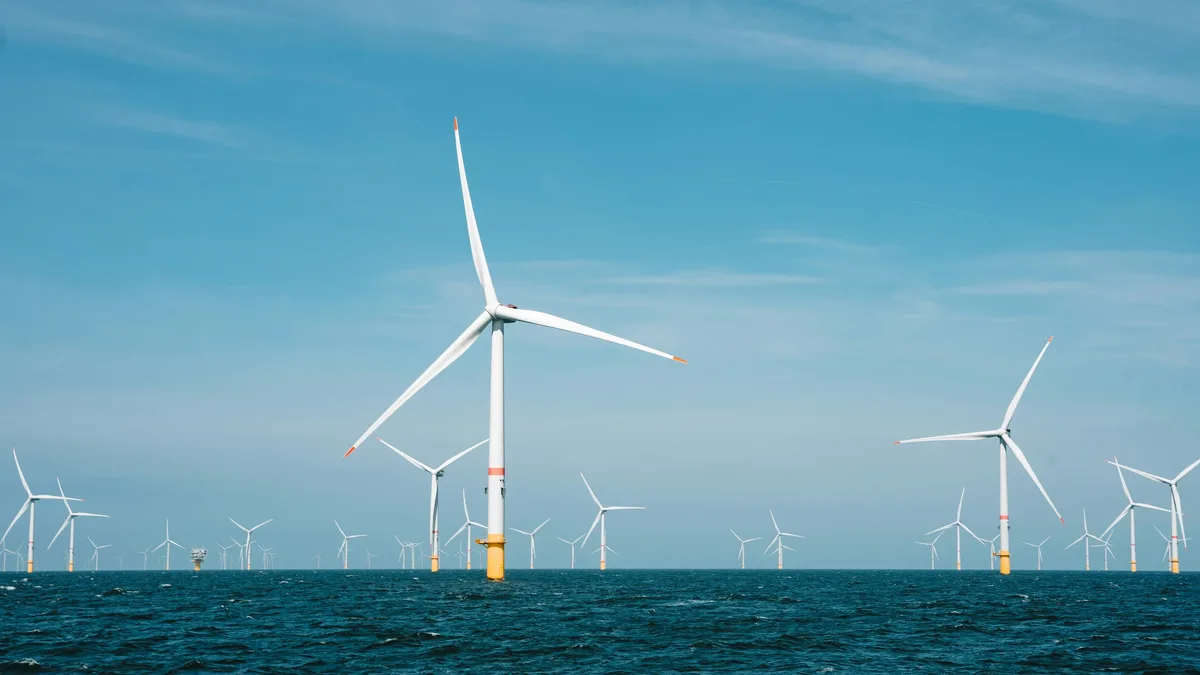
Tekmar secures €6 million offshore wind
Tekmar Group has won a €6 million contract extension to supply cable protection systems for a European offshore wind project, with manufacturing set...
Brazil PV system prices rise 7% in H1 2026
Average photovoltaic system prices in Brazil increased 7% in the first half of 2026 for projects up to 300 kW, with 30 kW and 50 kW systems hitting a...
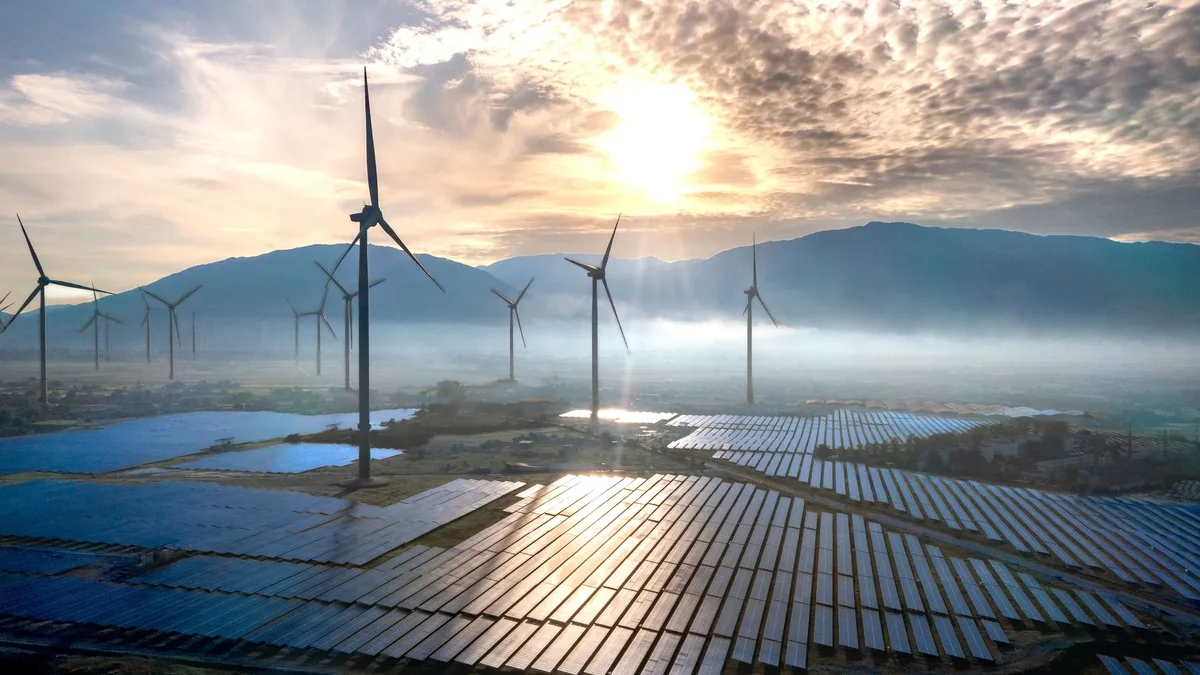
ERCO secures USD 33 million for Colombia
Finnfund and Proparco have committed a combined USD 33 million to Colombian solar energy platform ERCO. The EU-backed investment will fund solar and...
Amazon and Nadara launch 277 MW agrivoltaic farm in Sicily
Nadara has completed Italy's largest agrivoltaic facility, a 227 MW solar project in Sicily. The Big Fish project, supported by a 156 MW power...