Hybrid Solar, Wind And Storage Plants
| Technology type | Hybrid renewable energy plant |
|---|---|
| Primary energy sources | Photovoltaic solar and onshore wind |
| Storage integration | Electrochemical battery storage (e.g., lithium-ion) |
| Typical project scale | Utility-scale (tens to hundreds of megawatts) |
| Primary function | Grid electricity generation and supply |
| Grid role | Firm, dispatchable power generation |
| Typical location | Regions with complementary solar and wind resources |
Origin and history
The conceptual integration of solar photovoltaic, wind turbine, and battery storage technologies into a single, coordinated power plant originated in the first decade of the 21st century, primarily in Europe and the United States. Early development was driven by research into optimizing the use of shared grid connection points and land resources for variable renewable energy sources. The first documented utility-scale projects combining solar and wind generation at a single site began appearing in the late 2000s, with experimental setups in Germany and Spain. The deliberate addition of dedicated, co-located battery energy storage systems to these hybrid plants became a distinct technological approach in the early to mid-2010s. This evolution was a direct response to the growing grid integration challenges posed by the increasing penetration of intermittent renewables. The technology represents a maturation of renewable energy project design, moving from standalone generation to integrated systems that provide more stable and dispatchable power.
What it is for
Hybrid solar, wind, and storage plants are designed to deliver a more reliable and consistent electricity output than standalone solar or wind farms. Their primary purpose is to mitigate the inherent intermittency and variability of individual renewable sources by leveraging their complementary generation profiles. By combining technologies, the plant can generate electricity from wind at night and during cloudy periods, and from solar during daylight hours, thereby flattening the overall production curve. The integrated battery storage system serves to capture excess energy during periods of high generation for later use during periods of low generation or high grid demand. This configuration allows the plant to function more like a traditional power station, capable of providing firm capacity and grid services such as frequency regulation. Ultimately, the design aims to maximize the utilization of a single grid interconnection point, reduce curtailment of renewable energy, and improve the economic value of the generated electricity.
Overview
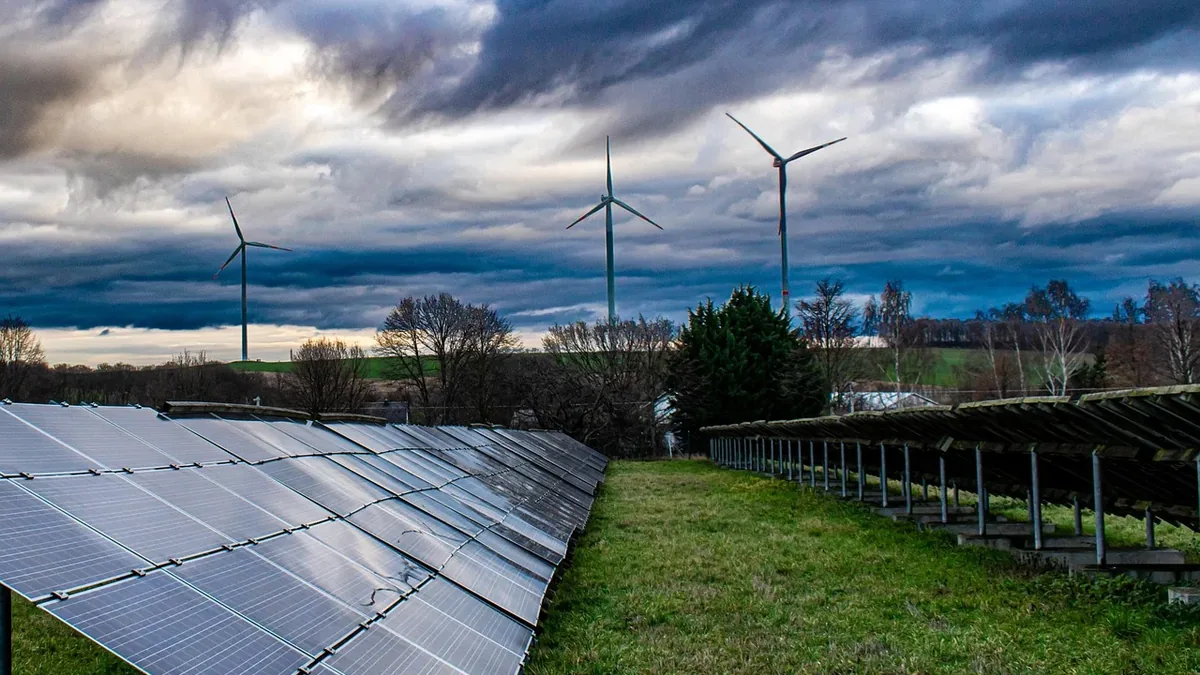
A hybrid solar, wind, and storage plant is a single power generation facility that co-locates solar photovoltaic arrays, wind turbines, and a battery energy storage system (BESS) behind a common grid interconnection. These components are not merely placed on the same site but are integrated through a unified control system that optimizes their operation in real-time. The plant's control system manages the charging and discharging of the batteries based on the combined solar and wind output, as well as grid conditions and market signals. The physical layout requires careful planning to minimize aerodynamic interference between wind turbines and shading losses on solar panels. The electrical infrastructure, including inverters and transformers, is often shared or coordinated to reduce capital costs. This integrated approach transforms a collection of variable generators into a more predictable and manageable asset for grid operators.
What to know
The complementary nature of solar and wind resources is foundational, as solar generation typically peaks during midday hours while wind resources can be stronger at night and during seasonal weather patterns, depending on the region. The battery storage component is typically lithium-ion based and is sized not for long-duration seasonal storage but for intra-day and intra-hour shifting, often with a capacity of 2 to 6 hours of discharge at its rated power. A key technical challenge is the design of the plant's supervisory control and data acquisition (SCADA) system, which must seamlessly coordinate three distinct technologies with different response times and operational characteristics. These plants often participate in energy markets, where their ability to shape output allows them to sell power during higher-priced periods and provide ancillary services for additional revenue streams. The development process is complex, requiring expertise in three different technology domains, along with sophisticated financial modeling to optimize the sizing ratio of solar, wind, and storage components. Land use considerations are critical, as the plant must accommodate the spacing needs of wind turbines while also providing sufficient unshaded area for solar panels.
Common questions
What is the main advantage over separate solar, wind, and storage facilities? The primary advantage is economic, stemming from shared costs for land, grid connection, permitting, and some balance-of-plant infrastructure, alongside the enhanced revenue from a more dispatchable combined output. How does the plant decide when to charge or discharge the batteries? The decision is made by an automated energy management system that uses algorithms based on weather forecasts, real-time generation, electricity price signals, and contracted grid service obligations. Can these plants provide power when there is no sun and no wind? The battery storage can provide power for a limited duration as defined by its energy capacity, but it is not designed to replace long-duration backup generation during extended periods of resource drought. Are the components always built simultaneously? Not necessarily; some projects are designed from the outset as full hybrids, while others may add storage or a second generation technology to an existing site in a retrofit or expansion phase. Does combining them reduce the total potential energy generation from the site? There can be a slight reduction due to necessary spacing to avoid turbine shading on panels, but this is typically offset by the greatly increased value and usability of the energy produced. What happens to the plant during severe weather like a storm? The wind turbines may shut down for safety, and solar generation may be minimal, leaving the battery to provide output until it is depleted or the storm passes.
Pros and cons
A significant pro is the improved capacity factor and utilization of the grid interconnection, which is often a costly and time-limited resource, allowing for a higher total energy output per unit of interconnection capacity. The complementary generation profiles reduce the volatility of output, leading to more predictable revenue streams and reduced risks of energy curtailment during times of grid congestion. A major con is the substantial increase in project complexity, requiring developers to secure expertise and equipment from multiple supply chains, which can complicate financing and construction management. The high capital expenditure for three separate technologies, especially battery storage, demands sophisticated financial models and often relies on specific market structures or incentives to be economically viable. A common mistake is improperly sizing the components relative to each other or to the local resource profile, which can lead to underutilized assets or a system that fails to achieve its promised firm capacity. Operators sometimes regret choosing a hybrid configuration if the local grid rules or market mechanisms do not properly value or allow for the stacked services (energy, capacity, ancillary services) that the plant can provide, locking it into a single, lower-value revenue stream.
Who it suits
This technology suits utility-scale developers and independent power producers with deep expertise in renewable project finance and operations, who are operating in markets with high renewable penetration and associated grid stability concerns. It is particularly suited for regions with strong complementary solar and wind resources, such as certain plains, coastal areas, or high-altitude locations where wind patterns offset solar diurnal cycles. Grid operators and regulators seeking to integrate large amounts of variable renewable energy while maintaining reliability will find these plants a valuable tool for providing dispatchable clean power. The model is less suited for small-scale developers or those in regions with weak or inconsistent renewable resources for either technology, as the benefits of hybridization cannot overcome a poor fundamental resource. It also suits landowners with large, contiguous parcels of land who wish to maximize the energy yield and economic return from a single site. Finally, it aligns with the objectives of corporations or governments with stringent, time-matched clean energy procurement goals, as the storage component can help align generation with consumption profiles.
Latest Hybrid Solar, Wind And Storage Plants news
Latest reporting
Adani Green Energy expands Khavda battery storage to 6.63
Adani Green Energy Ltd has expanded its operational battery storage capacity at Khavda, Gujarat, to 6.63 GWh within 14 months, now representing over...

U.S. Energy Storage Market Hits Record 18.9 GWh in Q2 2026
The U.S. Energy storage market deployed a record 18.9 GWh of capacity in the second quarter of 2026, driven by utility-scale growth and a shift toward
EnergyPathways advances MESH salt cavern storage for UK grid
EnergyPathways is developing the Marram Energy Storage Hub (MESH), a 300 MW/55.2 GWh compressed air energy storage project in salt caverns under the...

BIPV Façade Study Reveals Grid and Economic Benefits
A global IEA study of 357 BIPV configurations finds vertical façades smooth solar generation curves and improve economic viability by displacing
World's first large-scale offshore wind flexible HVDC
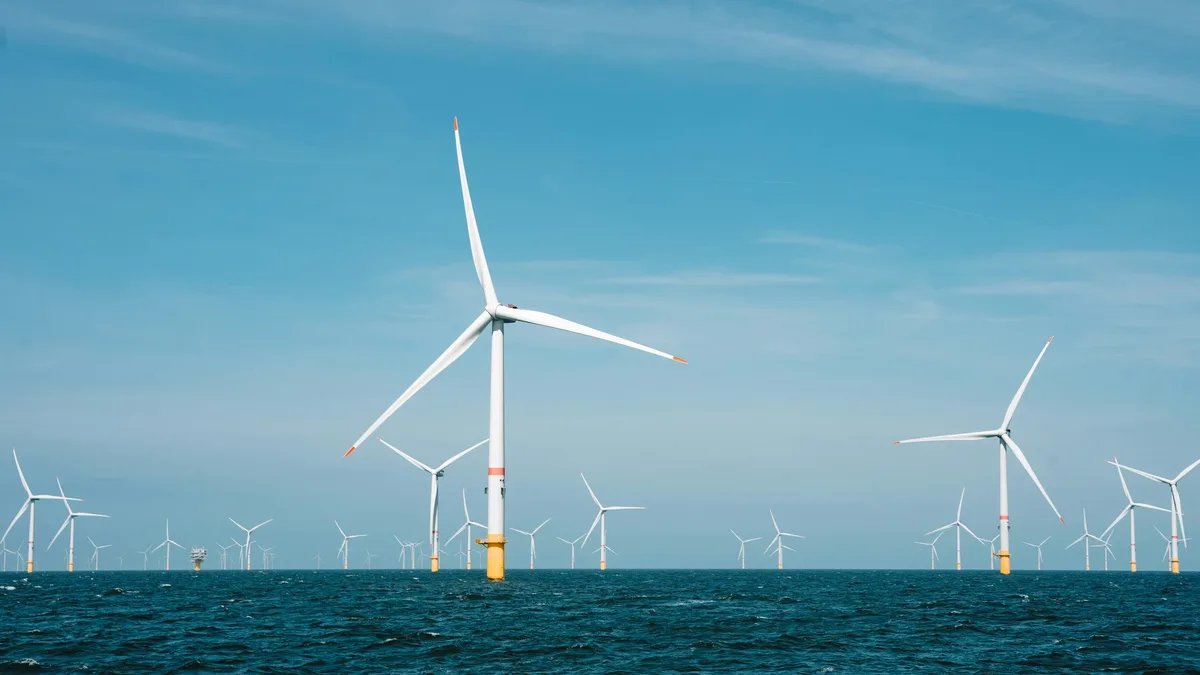
China Three Gorges Corporation has connected the first turbines of its 2 GW Qingzhou V & VII offshore wind project.
CertainTeed Launches Landmark PWR Solar Shingle System
CertainTeed has launched the Landmark PWR, an 85 W building-integrated photovoltaic shingle system designed to replace rack-mounted solar arrays with...