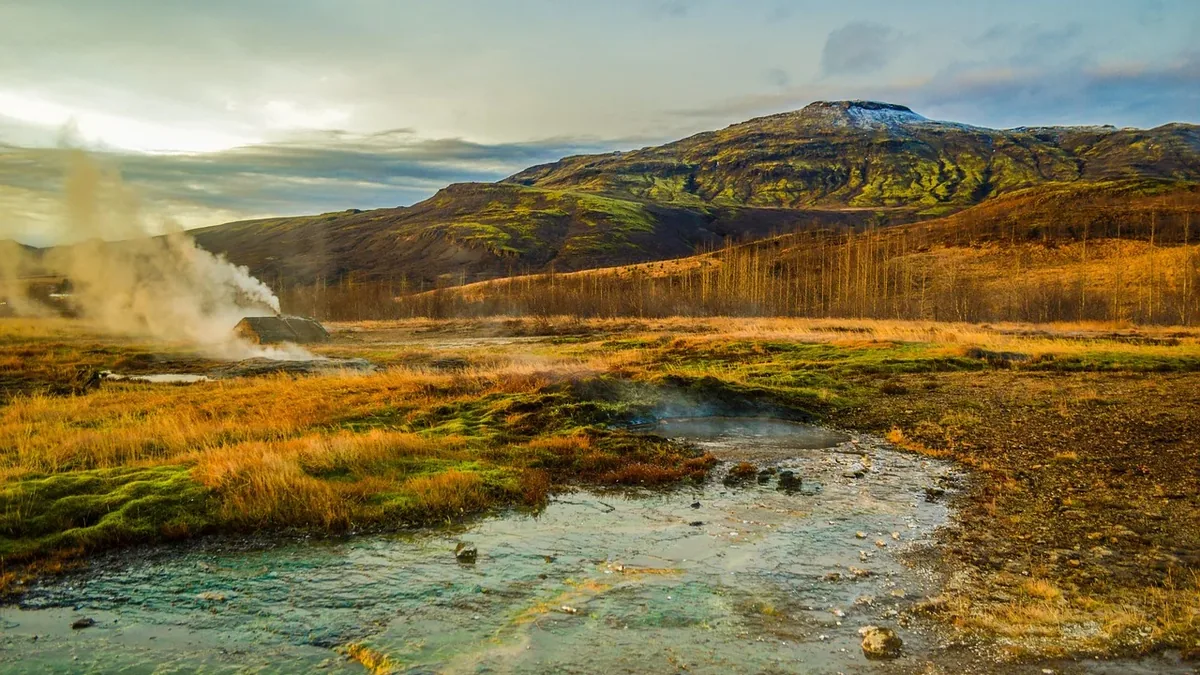
Geothermal
Origin and history
Geothermal energy utilization for heating and bathing has ancient origins, with evidence of hot spring use dating back thousands of years in regions like China, Japan, and the Roman Empire. The first recorded use of geothermal energy for generating electricity occurred in the early 20th century in Larderello, Italy. In 1904, Prince Piero Ginori Conti successfully used natural steam to power a small generator, lighting five bulbs. The technology saw further significant development in the mid-20th century, particularly with the commissioning of the first commercial dry steam plant at The Geysers in California, United States, in 1960. Since these pioneering efforts, geothermal power generation has expanded globally, with major developments in countries like Iceland, New Zealand, the Philippines, and Kenya.
What it is for
Geothermal technology is primarily used for the generation of baseload electricity, providing a continuous and reliable power supply independent of weather or diurnal cycles. It is also extensively deployed for direct-use applications, which involve using the Earth's heat directly without a power generator for purposes such as district heating for buildings, greenhouse heating, and industrial process heat. In many regions, geothermal resources are utilized for aquaculture, warming water for fish farming and other aquatic species. Another key application is geothermal heat pumps, which leverage the stable temperatures of the shallow ground for highly efficient space heating and cooling of individual buildings. Furthermore, geothermal energy supports recreational and therapeutic uses through balneology, the practice of bathing in hot springs for health benefits. The technology's ability to provide both high-temperature power generation and lower-temperature direct heat makes it a versatile energy source.
Overview
Geothermal energy harnesses the heat originating from the original formation of the planet and the radioactive decay of materials within the Earth's crust. This heat is accessed by drilling wells into geothermal reservoirs, which can be naturally occurring pockets of steam or hot water, or engineered systems where water is injected into hot dry rock. For electricity generation, the captured steam or hot water drives turbines connected to generators, with common plant types including dry steam, flash steam, and binary cycle designs. The specific project being built might involve drilling multiple production and injection wells to a depth of several kilometers to access a reservoir with temperatures exceeding 150°C. Surface facilities would include a power plant housing the turbine-generator set, a system to separate steam from water if necessary, and cooling towers or condensers. A critical component is the reinjection system, which pumps the spent geothermal fluid back into the reservoir to maintain pressure and sustainably manage the resource.
What to know
Geothermal power plants have a high capacity factor, typically exceeding 90%, meaning they can produce power at or near their maximum capacity almost continuously. The development of a geothermal project carries significant upfront geological and financial risk, as successful production depends on locating and confirming a viable reservoir through exploratory drilling. Reservoir management is crucial, as improper extraction can lead to depletion or cooling of the resource over time, making reinjection of fluids a standard practice. While geothermal operations emit far lower levels of greenhouse gases than fossil fuel plants, they can release non-condensable gases like hydrogen sulfide and require management of dissolved minerals in the geothermal brine. The technology is geographically constrained to regions with accessible high-temperature resources at drillable depths, often associated with tectonic plate boundaries or volcanic hotspots. The levelized cost of electricity from geothermal can be competitive with other renewables, but it is highly dependent on the resource quality and the depth required to reach it.
Common questions
A common question is whether geothermal energy is considered a renewable resource, and the answer is that it is renewable on human timescales only with careful management, as a reservoir can be exhausted if heat extraction exceeds its natural recharge rate. People often ask about the environmental impact, which includes potential land subsidence, induced seismicity from fluid injection, and the chemical management of geothermal fluids, though overall impacts are significantly lower than fossil fuels. Many inquire about the depth required for drilling, which can range from as shallow as one kilometer for high-grade resources to over three kilometers for enhanced geothermal systems in less ideal locations. A frequent question concerns the difference between a geothermal power plant and a residential geothermal heat pump, the latter of which uses the stable shallow-ground temperature for heating and cooling but does not generate electricity. People also ask about the lifespan of a geothermal plant, which can be several decades, though individual wells may need workovers or redrilling over time. Finally, there is often curiosity about why Iceland and New Zealand are leaders in this field, which is due to their location on active tectonic rifts providing abundant, high-quality, and shallow geothermal resources.
Pros and cons
A significant advantage of geothermal power is its ability to provide reliable, baseload electricity that stabilizes a grid supplemented by intermittent sources like solar and wind. The technology also offers high efficiency in converting thermal energy to electricity compared to some other thermal plants, and its direct-use applications are extremely efficient for heating. A major con is the high initial capital cost and financial risk associated with exploratory drilling, which may prove a resource non-commercial after substantial investment. Projects can face local opposition due to potential for induced seismicity, noise during drilling, and the visual impact of steam plumes from cooling towers. A common regret for some project developers is underestimating the challenges of scaling up from a successful pilot well to a full commercial field, encountering reservoir connectivity or chemistry issues. The most frequent operational mistake is inadequate reinjection strategy, leading to a rapid decline in reservoir pressure and productivity, which can shorten a project's economic life.
Who it suits
Geothermal energy suits regions with proven, high-temperature hydrothermal resources near the surface, typically along tectonic plate boundaries or volcanic hotspots, such as the Pacific Ring of Fire. It is well-suited for nations or utilities seeking to diversify their energy mix with a low-carbon, domestic baseload power source that enhances energy security. The technology suits projects where there is a concurrent demand for both electricity and direct heat, such as in industrial complexes or district heating networks, maximizing the resource's value. It is less suited for regions with low geothermal gradients, as the cost of drilling to sufficient depths becomes prohibitive, or for developers without the significant capital and risk tolerance required for the exploration phase. Geothermal heat pumps, a distinct technology, suit individual homeowners or building owners in almost any climate looking for a highly efficient, long-term solution for space heating and cooling, provided they have the land for the ground loop installation.