Chinese firms invest billions in Indonesia
Chinese companies are investing billions of dollars in Indonesian petrochemical production, including a $6 billion integrated complex.
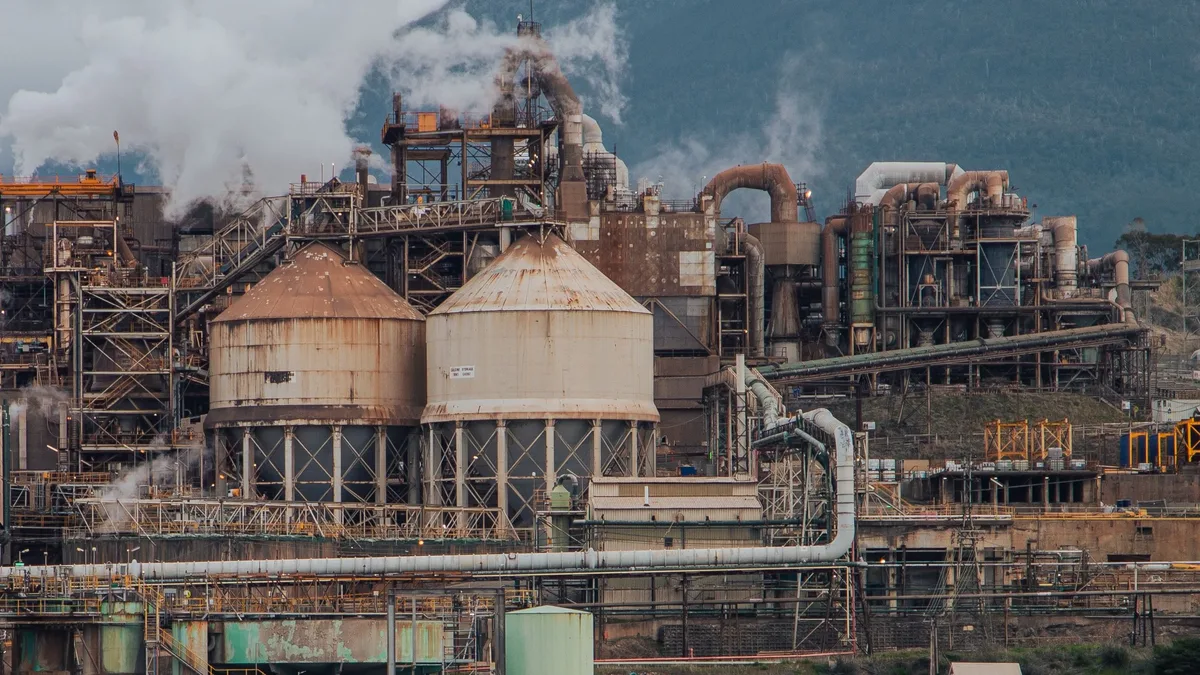
Chinese companies are investing billions of dollars in Indonesian petrochemical production as China tightens environmental standards for carbon-intensive industries domestically. The investments include a planned US$6 billion integrated complex in North Kalimantan by a consortium called PT Taikun Petro Chemical, which will add millions of tonnes of new capacity for basic chemicals like ethylene and propylene.
Chinese investment in Indonesia reached US$2.2 billion in the first quarter of 2026 and totalled US$34.4 billion between 2021 and 2025, according to data from Indonesia's Ministry of Investment and Downstream Industry. Petrochemicals have become a growing part of the economic relationship alongside nickel processing and electric vehicle investments under China's Belt and Road Initiative (BRI).
Economic drivers and risks
Economic considerations are the primary driver for this industrial shift, said Mohammad Faisal, executive director of the Centre of Reform on Economics. He stated that targeting Indonesia's domestic market makes sense because local demand for petrochemical products continues to grow and outpaces domestic production capacity. If intended for export, China may see Indonesia as a competitive production base with lower manufacturing costs.
Suzie Sudarman, an international relations lecturer at the University of Indonesia, noted that as restrictions increase in some Western markets, Southeast Asia becomes a more attractive destination for both exports and investment. Muhammad Andri Perdana, research director at the Bright Institute, cited Indonesia's long-standing relationship with China, geographical proximity, and relatively lower labour costs as factors making the country hospitable for such investment.
However, Bhima Yudhistira, executive director of the Centre of Economic and Law Studies, warned the benefits may be temporary if global demand shifts toward lower-carbon alternatives. He said Indonesia's economy risks remaining trapped in an extractive structure reliant on large imports of fossil feedstocks, which could worsen the oil and gas trade deficit and weaken the rupiah.
Environmental and regulatory challenges
The petrochemicals sector is a growing source of global emissions because it relies heavily on fossil fuels both as feedstock and as an energy source. Large-scale projects could make Indonesia's climate goals harder to achieve. In Indonesia, much of the required heat and electricity for production still comes from coal-fired power plants, particularly in industrial estates powered by captive coal plants.
Analysts told the source that environmental outcomes depend largely on Indonesian regulation rather than on the investing companies. Faisal explained that if domestic regulations do not require higher environmental standards, companies will simply follow the rules in place. Perdana noted that projects under the BRI do not necessarily have higher environmental standards than other investments, with standards often being very case by case.
Putra Adhiguna, managing director of the Energy Shift Institute, said Chinese investments often lack transparency regarding emissions or environmental data. He cited the development of industrial estates where access to data is extremely limited, noting that in some cases even provincial governors have been unable to enter these zones freely or obtain comprehensive information.
Yudhistira observed that within China, the country has begun refurbishing petrochemical facilities with lower-carbon technologies, including reducing coal use and improving energy efficiency. For overseas investments, however, the environmental impact depends heavily on conditions in the host country. In countries with stronger governance, guidelines governing a 'Green BRI' have more impact.
Bargaining power and safeguards
Analysts say the long-term impact may depend less on the investment itself than on Indonesia's ability to negotiate stronger safeguards, technology transfer, and environmental standards. Adhiguna said BRI projects often lack clear universal environmental standards and depend heavily on host-country regulation. Sudarman stated that Indonesia's ability to secure stronger safeguards ultimately depends on the strength of its domestic institutions.
Perdana highlighted a persistent vulnerability. He said that when expanding heavy or petrochemical industries overseas, environmental protection often depends heavily on civil society oversight and local regulatory enforcement. The tendency, he noted, is that the government still allows many of these vulnerabilities to persist without major improvements.
Source: Eco-Business