Unison Solar Plans 500 MW Tandem Solar
Australian startup Unison Solar Energy, partnering with University of Sydney researchers, plans a 500 MW factory for perovskite-silicon tandem solar
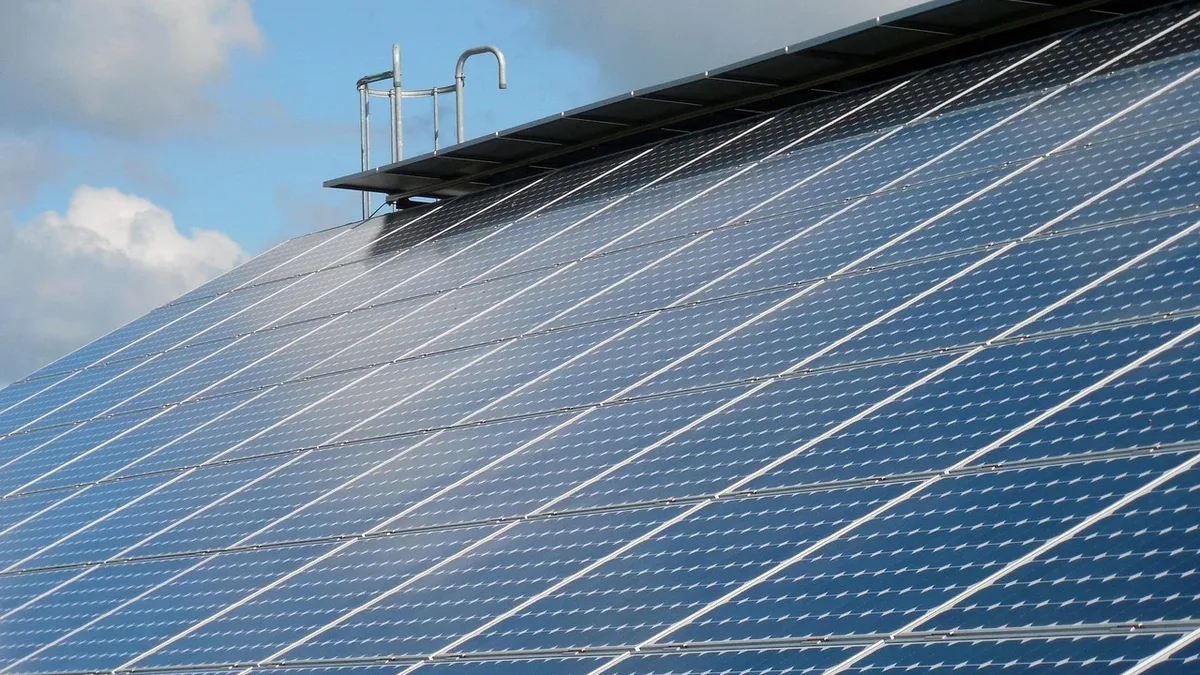
Unison Solar Energy plans a 500 MW factory for perovskite-silicon tandem solar modules, backed by AUD 7.25 million in ARENA funding. The Australian Renewable Energy Agency (ARENA) is providing the funding to University of Sydney researchers for a project to develop durable perovskite-silicon tandem solar cells. The research team is partnering with Brisbane-based manufacturer Unison Solar Energy, which plans a factory with an initial 500 MW capacity to produce the next-generation modules.
According to the source, the AUD 19.5 million project aims to take the technology from the laboratory towards commercial-scale production. Unison Solar's Chief Executive Officer, Allen Guo, stated the company's ambition is to pioneer a new era of Australian solar manufacturing.
The Technology's Potential
Silicon-perovskite tandem cell technology could theoretically deliver solar energy conversion efficiencies of about 40%. This potential marks a significant leap from conventional silicon cells, which have a conversion rate that currently peaks at about 25%. Professor Anita Ho-Baillie, the project's team leader, explained that silicon's theoretical limit is only 30%, leaving little room for improvement on its own.
The research has already demonstrated the technology's greater efficiency. The team achieved Australia's first 30% efficient silicon-perovskite tandems on both small and large areas. They have also reported tandem cells passing industry standard tests for thermal extremes and moisture.
Overcoming Stability Challenges
Scaling the technology and ensuring its stability under real-world conditions remains a key hurdle. Perovskite materials can degrade when exposed to light, heat, moisture, and mechanical stress. Professor Ho-Baillie said the new ARENA funding will help prove the cells' reliability against a series of industry standards.
"Our next round of testing will prove this technology's ability to cope with UV light and mechanical stresses," Ho-Baillie was quoted as saying. The ultimate goal is to improve the cells' ability to maintain their high conversion rate over the full life expectancy of a solar panel.
Commercialisation and Manufacturing
Unison Solar Energy is establishing a solar panel production facility in Brisbane's outer suburbs. The company will work with the researchers during the commercialisation stage, assessing manufacturing costs, supply chains, and pathways to pilot production. Guo, a former chief operating officer at Jinko Solar, said Unison's goal is to establish a manufacturing-ready technology platform.
"Australia has been at the forefront of global solar research for more than 50 years, but local manufacturing remains limited," Guo said. He added that the collaboration with ARENA and the University of Sydney is intended to deliver affordable, high-quality Australian-made solar products. The project is part of a broader push to establish competitive domestic manufacturing, as seen in other industries where detailed stats and standings track performance and progress.
Broader ARENA Funding Round
The tandem cell project is one of 20 research and development initiatives to secure funding as part of a $105.6 million ARENA round. ARENA acting CEO Chris Faris said the portfolio mixes near-term improvements with breakthrough technologies that could lower costs and improve performance. The funding for all projects is to be delivered over five years, commencing in 2027. Successful commercialisation will depend on overcoming technical hurdles, much like managing a team's injuries is crucial for maintaining performance.