Solar capacity tops 3 terawatts, underscoring rapid global growth
Global photovoltaic installations have crossed the 3 TW mark, with China leading the surge and developing nations poised to increase their share of new capacity in the coming decade.
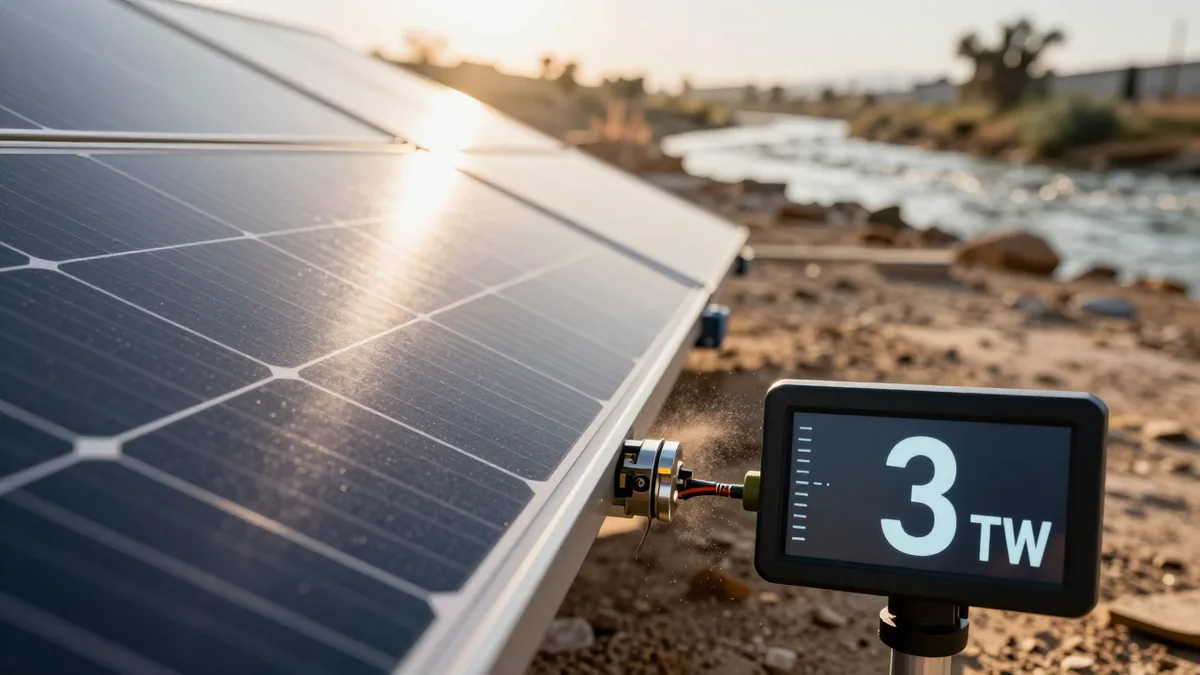
The world has now exceeded 3 TW of installed solar capacity, a milestone that highlights the accelerating pace of photovoltaic deployment. BloombergNEF (BNEF) notes that the first terawatt took a decade to achieve, while the second and third terawatts were added in under three and two years respectively. The exact timing of the 3 TW threshold varies depending on the data set used.
## Speed of expansion
Historical growth and future projections illustrate how quickly solar power is scaling:
| Year | Installed capacity | |---|---| | 2012 | 100 GW | | 2022 (approx.) | 1 TW | | 2025 (approx.) | 2 TW | | 2027 (approx.) | 3 TW | | 2036 (projected) | >9 TW |
BNEF forecasts that global solar capacity will surpass 9 TW by 2036, indicating that the current milestone is only the beginning of a larger expansion trend.
## Shifting geographic leadership
Early growth was driven by developed nations, which benefited from incentive programs that spurred the first terawatt of installations. In the subsequent phases, China emerged as the dominant force, coupling rapid capacity additions with large-scale manufacturing that lowered costs worldwide. Meanwhile, countries such as Pakistan, Nigeria, and the Philippines have recorded notable rooftop solar growth, and smaller markets like Cuba and Lebanon have also seen rapid expansion.
The number of countries with at least 1 GW of installed solar capacity has risen sharply, as shown below:
| Year | Countries with ≥1 GW | |---|---| | 2020 | 42 | | 2025 | 74 |
## Concentration and future diversification
Despite broader adoption, new solar installations remain concentrated in a few markets. The share of poorer nations in new deployments has stayed virtually unchanged since 2020, while China continues to dominate global growth. BNEF expects this pattern to shift, projecting that from 2026 onward the share of developing countries in new installations will increase. By 2036, more than a quarter of global installed solar capacity is expected to be located in developing nations, while the share held by wealthy countries is projected to fall to around 20 %.
## Grid integration and storage challenges
The surge in installed capacity is creating new pressures on power systems. In China, solar rollout has outpaced the expansion of transmission and storage infrastructure, leading to higher curtailment rates where excess generation is wasted during peak output periods. The country is anticipated to slow new installations as it focuses on integrating renewable generation and expanding the grid’s ability to consume it.
Energy storage, particularly lithium-ion batteries, is becoming a critical component of this transition. These systems can capture surplus solar electricity during daylight hours and release it later, including after sunset. BNEF emphasizes that without sufficient storage, fully utilizing additional solar capacity will become increasingly difficult, making storage capacity a decisive factor in the next phase of solar growth.
Overall, the 3 TW milestone signals that solar power has moved beyond niche status to become a central element of global power-capacity expansion. The upcoming challenges will revolve around transmission, storage, and demand-side flexibility, ensuring that the growing installed capacity translates into effectively used generation.