India Energy Stack to Enable Digital Infrastructure
India’s government plans to launch the India Energy Stack in 2025 as a digital public infrastructure to support the integration of distributed renewable
India is advancing its renewable energy transition with a new digital initiative aimed at managing the growing complexity of decentralised power systems. The India Energy Stack (IES), announced by the Indian government in 2025, will serve as a digital public infrastructure to support the country’s clean energy goals. It is designed to enable secure data exchange, digital identities for energy assets, and open interfaces across the electricity value chain.
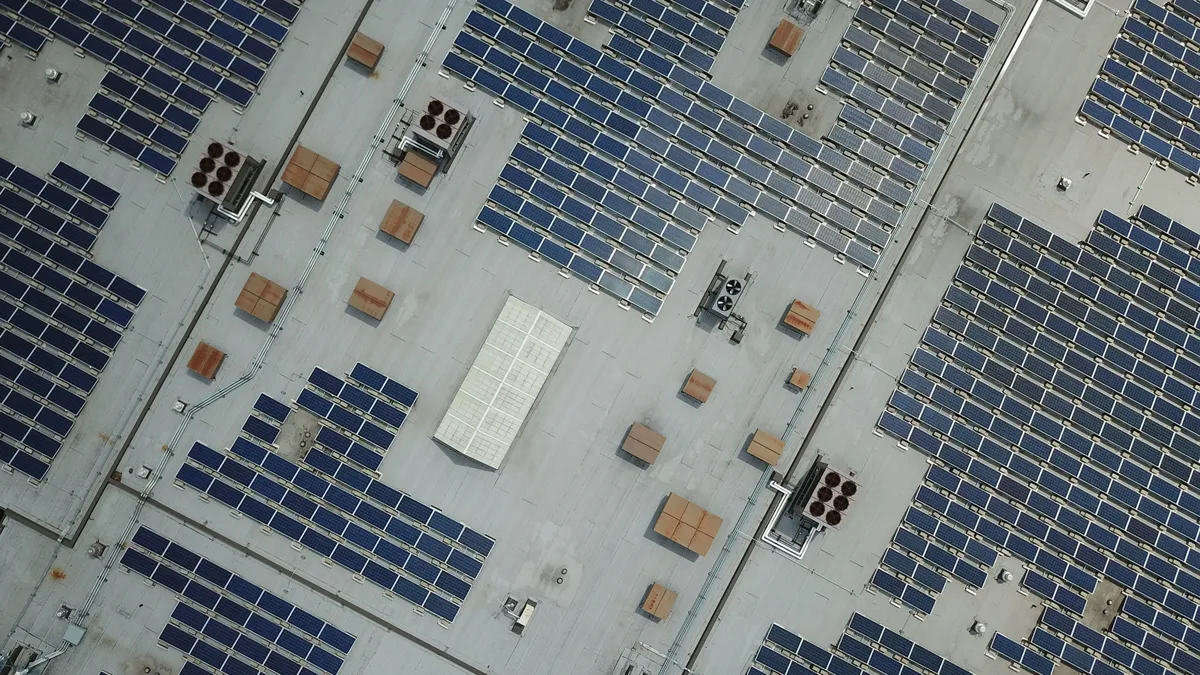
India’s renewable energy capacity has grown rapidly, ranking third globally in installed capacity. The country added approximately 45GW of solar capacity in the last financial year, representing over 40% year-on-year growth. Rooftop solar installed capacity increased from 17GW to 25GW during the same period, a rise of over 47%.
This expansion is driven by policy support, falling technology costs, and increased private sector participation. India has committed to reaching 500GW of non-fossil fuel capacity by 2030 and achieving net-zero emissions by 2070. The growth has been led by large-scale solar additions, but the next phase requires managing distributed renewable energy systems such as rooftop solar, agricultural solar under PM-KUSUM, and building-integrated photovoltaics.
The rise of electric vehicles and battery storage is shifting consumer behaviour, with more users becoming prosumers who can generate, store, and exchange energy with the grid. This has transformed the electricity system from a unidirectional, centralised model to a multi-directional, decentralised, and data-intensive network involving millions of distributed assets.
Current digital systems in India’s power sector remain fragmented, with billing, metering, and grid operation platforms operating in isolation. Legacy systems used by distribution utilities, regulators, and operators lack standardisation, creating barriers to data exchange and asset tracking. There is no unified framework to identify and track distributed renewable energy assets such as rooftop solar systems, EV charging stations, and batteries across platforms.
This lack of standardisation limits real-time visibility for utilities and granular data access for consumers, hindering services like decentralised trading, demand response, and energy optimisation. As distributed renewable energy adoption increases, these challenges are expected to cause operational complexities, including bidirectional power flows, local congestion, and generation variability.
Without a common digital infrastructure, India risks high integration costs, suboptimal dispatch, and constraints on innovation. It could also limit the participation of prosumers and aggregators in energy markets.
The India Energy Stack aims to address these gaps by establishing a federated digital architecture that enables interoperability among utilities, generation companies, regulators, aggregators, suppliers, and consumers. It will define common interaction standards, protocols, and data models to allow existing systems to share information reliably.
A core component of IES is a globally unique identifier system for all physical and virtual grid assets, including electric meters, transformers, distributed renewable energy systems, and EV charging stations. This will support lifecycle tracking and improve interoperability across platforms.
The initiative builds on India’s prior success with digital public infrastructure models like Aadhaar and the Unified Payments Interface (UPI). Aadhaar provides over 1 billion individuals with a 12-digit digital identity, while UPI enables instant bank-to-bank transfers through standardised protocols, processing billions of monthly transactions.
By applying this model to the power sector, the government intends to create a standardised platform where private firms can deliver services through open interfaces, while the state maintains the core infrastructure. The India Energy Stack is expected to help efficient integration of distributed renewable energy into markets and support new market structures.
As stated by Shantanu Roy and Sheikh Madiha Syed, who examined the initiative, the India Energy Stack represents not only a technological upgrade but a systems-level transformation of India’s power sector. It will shows the country’s ability to manage its energy transition with high efficiency through digital coordination.