ARENA Funds AU$105.6m Solar R&D for
Australia's ARENA agency has committed up to AU$105.6 million to 20 solar R&D projects, its largest single PV research investment.
The Australian Renewable Energy Agency (ARENA) has announced up to AU$105.6 million for 20 research and development projects. This is the agency's largest single investment in solar PV research and development to date.
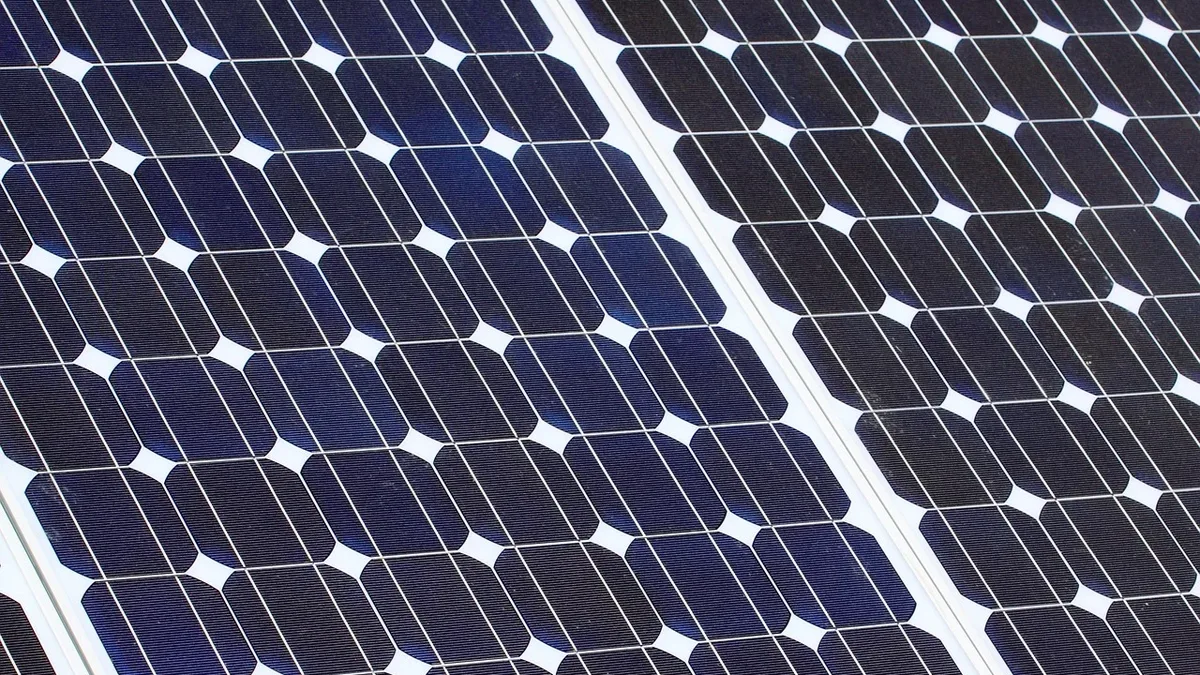
The funding will support projects to improve efficiency, reduce costs, and enhance stability for advanced cells and modules. It also targets innovations to lower the cost of building, operating, and maintaining solar PV power plants, aiming to reduce the levelised cost of electricity (LCOE).
ARENA acting CEO Chris Faris said the projects would help ensure Australia remained at the forefront of solar innovation. "Achieving ultra-low-cost solar requires innovation across the entire value chain," Faris stated. "From the solar cells and modules themselves through to the way solar farms are built, operated and maintained, these projects will help unlock practical solutions."
Funding Streams and Projects
The investment builds on ARENA’s ultra-low-cost solar (UCLS) ambition. This targets an installed solar cost of 30 cents per watt by 2030, as part of a broader "30-30-30" vision of 30% module efficiency and an LCOE below AU$20 per megawatt-hour.
The funding is split across two streams. Stream 1 covers cells and modules, targeting improved efficiency, reduced cost, and better stability. Thirteen projects were awarded to research institutions including the University of New South Wales (UNSW), the Australian National University (ANU), the University of Melbourne and the University of Sydney.
| Institution | Grant Amount (AU$) | Project Focus |
|---|---|---|
| University of Sydney | 7.4 million | Durable silicon tandem cells |
| Australian National University (ANU) | 7.1 million | Parallel-connected perovskite/silicon tandem research |
UNSW leads the bulk of the funded cell and module projects. Its work spans AI-accelerated PV material discovery, chalcogenide-based tandem cells and UV resilience improvements for silicon.
Stream 2 addresses balance-of-system deployment costs, operations and maintenance, and other approaches to reducing LCOE or improving yield. Seven projects were funded across ANU, UNSW, the University of Melbourne and two commercial applicants, Sunspense and Proa Energy Australia.
Addressing Project Delivery Costs
ARENA has identified balance-of-system costs as a growing constraint. An ARENA white paper from July 2026 found Australia’s weighted-average installed cost for utility-scale solar had stalled at AU$1.52 per watt. Balance-of-system costs, covering labour, civil works, grid connection and project delivery, are now the dominant component of total project costs.
The white paper concluded these costs are largely resistant to reduction even as module prices fall. It found laboratory cell efficiencies had reached 27.9%, with commercially available modules hitting 26.2% in 2025, up from 22% in 2022. ARENA says cost reduction now depends more on construction methods and system integration than on module pricing.
ARENA general manager solar Dan Sturrock made a similar point at the Smart Energy Conference 2026 in May. He told delegates Australia needs utility-scale solar generation costs to roughly halve, to around AU$25-30/MWh on an LCOE basis. This is needed to unlock the 10GW of annual capacity additions the agency judges necessary for decarbonisation, rather than the 2-3GW currently reaching financial close each year.
Broader Innovation Portfolio
The new funding round adds to a broader portfolio of ARENA-backed solar innovation initiatives. In June 2026, ARENA committed a further AU$95.4 million to extend the Australian Centre for Advanced Photovoltaics (ACAP) through to 2033. This UNSW-led consortium has been credited with a series of globally recognised advances in cell efficiency, durability and tandem cell technology since 2012.
ARENA’s AU$1 billion Solar Sunshot programme targets domestic manufacturing capacity across the solar supply chain. It has been described as a mechanism that could reshape Australia from a solar consumer into a manufacturing hub, spanning module production, polysilicon feasibility studies and ingot and wafer manufacturing.
Together, these initiatives represent parallel strands of a broader ARENA strategy aimed at closing the gap between Australia’s cell-level research strength and the project-level cost outcomes needed to expand the country’s utility-scale solar pipeline.