Hybrid Solar System Combines Radiative Cooling and Photovoltaics
Researchers at the Karlsruhe Institute of Technology have developed a hybrid solar system that provides electricity, heat, and cooling from a single surface.
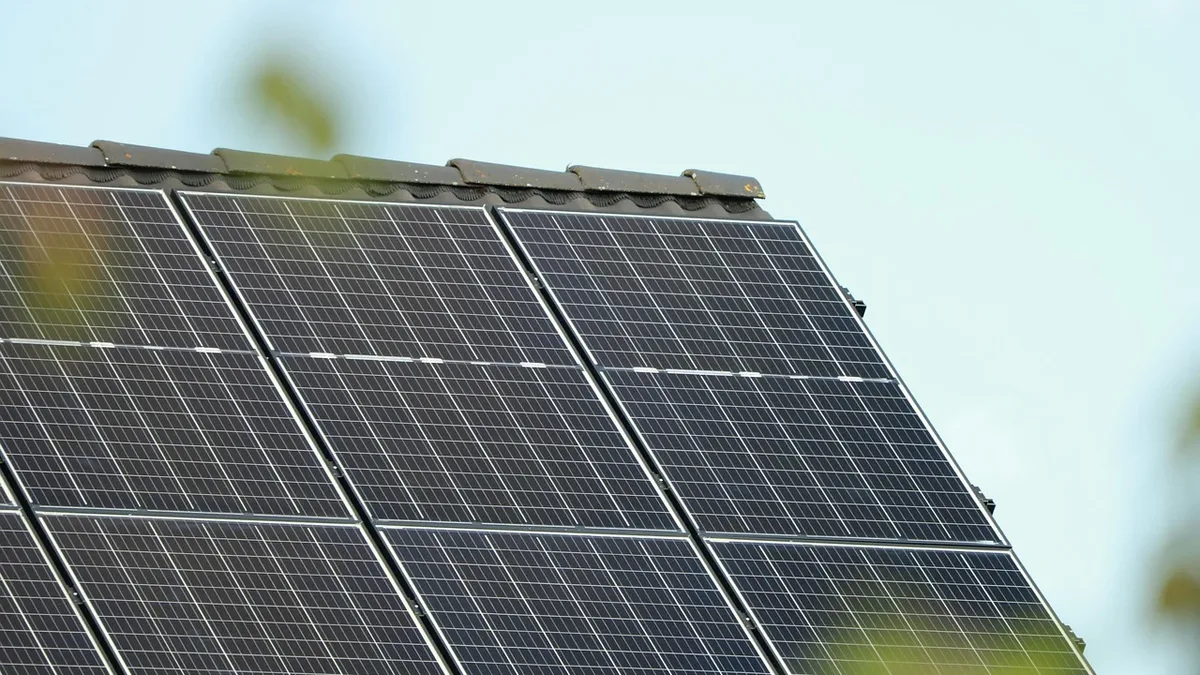
This innovative system is designed to provide electricity, heat, and cooling from a single surface, making it a promising solution for buildings and energy-intensive applications.
How the System Works
The hybrid system consists of a light-transmitting cooling layer that radiates heat into space as infrared radiation. This layer is made of a silicon dioxide plate coated with the silicone polymer polydimethylsiloxane (PDMS). It allows sunlight to pass through for photovoltaic generation while simultaneously emitting heat into space through the "atmospheric window," a wavelength range in which the Earth's atmosphere is particularly transparent to thermal radiation.
Behind the cooling layer, a Fresnel lens concentrates sunlight onto a small photovoltaic-thermal collector, which generates both electricity and heat. The system's design ensures that the solar collector and the radiative cooling component are physically separated, allowing them to operate independently and efficiently.
Testing and Future Plans
The research team tested the system prototype in outdoor conditions and achieved impressive results. The device was able to cool by up to 6.5 C below ambient temperature, generate an electrical power density of 60.6 W/m², and produce temperatures of up to 110.8 C for heat utilization. The team plans to optimize the system's performance by improving sunlight guidance, thermal management, and the solar cells.
According to co-author Gan Huang, the researchers' vision is for roofs and facades to become active energy surfaces that simultaneously provide electricity, heat, and cooling. This concept could also be relevant to energy-intensive applications such as AI data centers, which require substantial amounts of electricity and cooling.
Radiative Cooling in Solar Panel Technology
The development of radiative cooling in solar panel technology is not a new concept. Researchers from various institutions have recently applied radiative cooling to solar panel cooling, including Shanghai Jiao Tong University in China, Purdue University in the United States, the Catalan Institute of Nanoscience and Nanotechnology and the Instituto de Ciencia de Materiales in Spain, and the Jordan University of Science and Technology and the Australian College of Kuwait. The KIT researchers' hybrid solar system builds on previous research conducted at the institute in 2024, when researchers developed a transparent material capable of passively cooling buildings while allowing daylight to pass through.
The development of this hybrid system is a significant step towards creating multifunctional energy systems that can provide multiple benefits for buildings and energy-intensive applications.
Source: pv magazine