Comprehensive Overhaul of PV Life Cycle Assessment Data
A new report from IEA PVPS Task 12 provides updated inventory data for PV solar electricity, covering the full crystalline silicon supply chain and CdTe thin-film modules

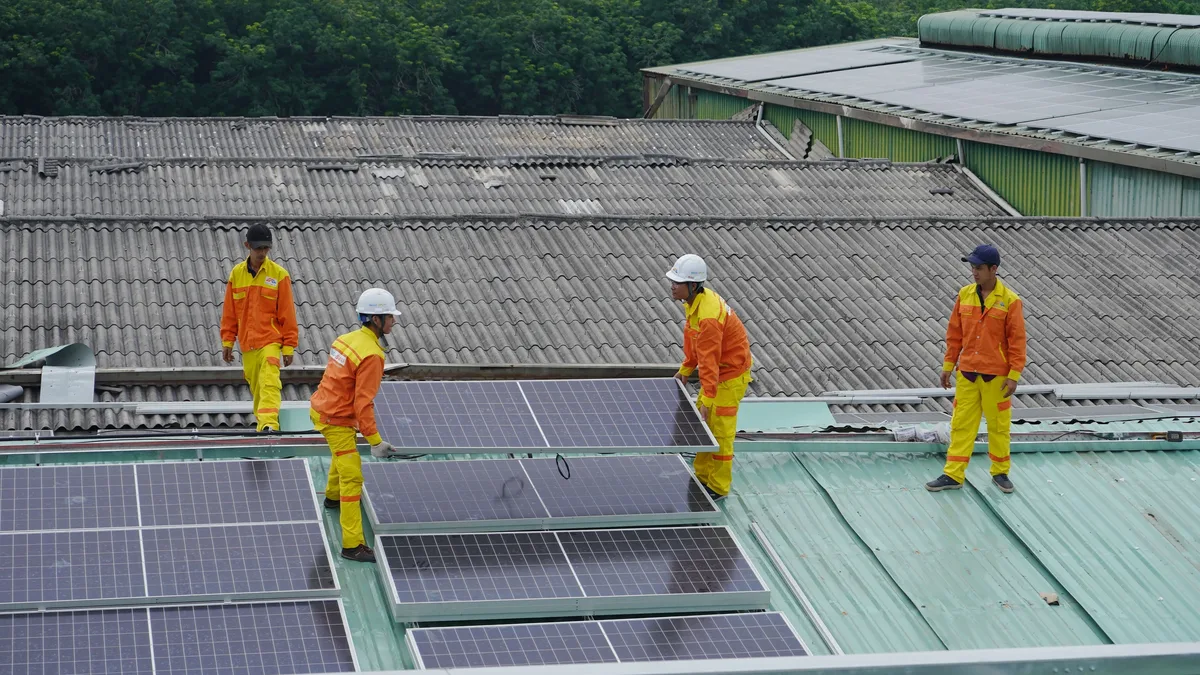
The foundational data underpinning nearly every credible life cycle assessment of PV solar electricity has just received its most comprehensive overhaul in more than a decade. A new report from IEA PVPS Task 12, “Life Cycle Inventories of Photovoltaic Systems,” provides updated inventory data covering the full crystalline silicon supply chain for TOPCon and PERC cell technologies, CdTe thin-film modules, string inverters, mounting structures, and reference systems for residential, commercial, and utility-scale installations.
## Introduction to the Update The centrepiece of this update is a large and well-documented dataset for monocrystalline silicon supply chains, assembled from 83 screened, factory-level life cycle assessments collected through France’s ADEME’s PV tender programme between 2022 and 2025. These data were originally collected in the context of the French photovoltaic tender process operated by ADEME and cover all relevant supply chain steps of selected PV module production lines.
## Data Coverage and Representativeness The 83 datasets retained after screening and consistency checks cover all key supply chain stages from polysilicon purification through ingot and brick production, wafer slicing, cell manufacturing, laminate production, and module assembly. The data represent approximately 29% of polysilicon, 16% of wafer, 7% of cell, and 9% of module production. The report notes that the c-Si datasets “may be slightly biased towards lower-carbon supply chains” due to the fact that the 83 factories are largely export-oriented Chinese plants that may use more advanced, material-efficient processes than the broader global average.
## Simulation-Based Inventories and Technology Transitions For the first time, the Task 12 report introduces a parallel category of modelled rather than measured LCI data, developed by Fraunhofer ISE. These datasets represent a simulated, optimised monocrystalline silicon manufacturing site of 5 GWp annual capacity, modelling advanced production processes, such as closed-loop water management, waste valorisation, and detailed infrastructure accounting. The report assumes efficiencies of 21.7% for p-type PERC and 23.2% for n-type TOPCon modules, reflecting 2024 commercial averages.
## Priorities for Future Updates The report’s outlook section sets out a ranked set of priorities for the next revision cycle, distinguishing between areas of highest urgency and those of comparatively lower urgency. The top priority is continued revision of crystalline silicon manufacturing data, which remains the dominant driver of environmental impacts in global PV electricity generation. The following table summarizes the current coverage of the report: | Technology | Coverage | | --- | --- | | Monocrystalline Silicon | 29% of polysilicon, 16% of wafer, 7% of cell, and 9% of module production | | CdTe Thin-Film Modules | Data provided directly by First Solar, covering more than 90% of global CdTe module production | | TOPCon and PERC Cell Technologies | Efficiencies of 21.7% for p-type PERC and 23.2% for n-type TOPCon modules, reflecting 2024 commercial averages |